Java Concurrency
Thread Basics
Creating Threads
// Method 1: Extend Thread
class MyThread extends Thread {
    @Override
    public void run() {
        System.out.println("Running in: " + Thread.currentThread().getName());
    }
}
MyThread t1 = new MyThread();
t1.start();

// Method 2: Implement Runnable (preferred)
class MyRunnable implements Runnable {
    @Override
    public void run() {
        System.out.println("Running in: " + Thread.currentThread().getName());
    }
}
Thread t2 = new Thread(new MyRunnable());
t2.start();

// Method 3: Lambda (Java 8+)
Thread t3 = new Thread(() -> {
    System.out.println("Running in: " + Thread.currentThread().getName());
});
t3.start();

// Method 4: Callable (returns value)
Callable<Integer> callable = () -> {
    Thread.sleep(1000);
    return 42;
};
Thread Lifecycle
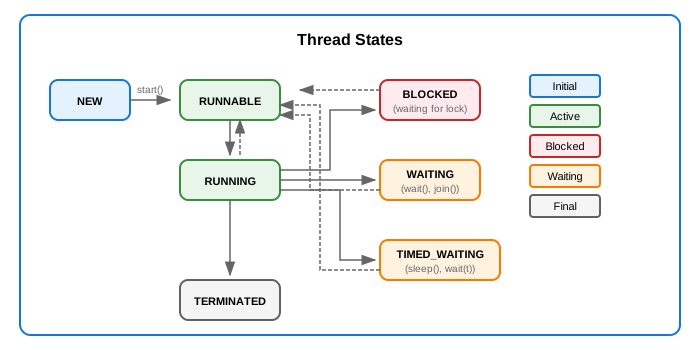
Basic Thread Operations
Thread thread = new Thread(() -> {
    // Do work
});

thread.start();                // Start execution
thread.join();                 // Wait for completion
thread.join(1000);             // Wait with timeout (ms)
thread.interrupt();            // Request interruption
thread.isInterrupted();        // Check interrupted status
Thread.interrupted();          // Check and clear interrupted status
Thread.sleep(1000);            // Sleep current thread (ms)
Thread.yield();                // Hint to scheduler
Thread.currentThread();        // Get current thread
thread.setDaemon(true);        // Set as daemon thread
thread.setPriority(Thread.MAX_PRIORITY);  // Set priority (1-10)
Synchronization
synchronized Keyword
public class Counter {
    private int count = 0;

    // Synchronized method
    public synchronized void increment() {
        count++;
    }

    // Synchronized block
    public void incrementBlock() {
        synchronized (this) {
            count++;
        }
    }

    // Synchronized on specific object
    private final Object lock = new Object();
    public void incrementWithLock() {
        synchronized (lock) {
            count++;
        }
    }

    // Synchronized static method (locks on Class object)
    public static synchronized void staticMethod() {
        // ...
    }
}
volatile Keyword
public class VolatileExample {
    // Ensures visibility across threads (not atomicity)
    private volatile boolean running = true;

    public void stop() {
        running = false;  // Visible to all threads immediately
    }

    public void run() {
        while (running) {
            // Do work
        }
    }
}

// volatile guarantees:
// 1. Visibility: Changes visible to all threads
// 2. Ordering: Prevents reordering
// Does NOT guarantee atomicity (use AtomicXxx for that)
wait(), notify(), notifyAll()
public class ProducerConsumer {
    private final Queue<Integer> queue = new LinkedList<>();
    private final int capacity = 10;

    public synchronized void produce(int item) throws InterruptedException {
        while (queue.size() == capacity) {
            wait();  // Wait until space available
        }
        queue.add(item);
        notifyAll();  // Notify consumers
    }

    public synchronized int consume() throws InterruptedException {
        while (queue.isEmpty()) {
            wait();  // Wait until item available
        }
        int item = queue.poll();
        notifyAll();  // Notify producers
        return item;
    }
}
Locks (java.util.concurrent.locks)
ReentrantLock
public class Counter {
    private final ReentrantLock lock = new ReentrantLock();
    private int count = 0;

    public void increment() {
        lock.lock();
        try {
            count++;
        } finally {
            lock.unlock();  // Always unlock in finally
        }
    }

    // Try lock (non-blocking)
    public boolean tryIncrement() {
        if (lock.tryLock()) {
            try {
                count++;
                return true;
            } finally {
                lock.unlock();
            }
        }
        return false;
    }

    // Try lock with timeout
    public boolean tryIncrementWithTimeout() throws InterruptedException {
        if (lock.tryLock(1, TimeUnit.SECONDS)) {
            try {
                count++;
                return true;
            } finally {
                lock.unlock();
            }
        }
        return false;
    }

    // Interruptible lock
    public void incrementInterruptibly() throws InterruptedException {
        lock.lockInterruptibly();
        try {
            count++;
        } finally {
            lock.unlock();
        }
    }
}
ReadWriteLock
public class Cache<K, V> {
    private final Map<K, V> map = new HashMap<>();
    private final ReadWriteLock rwLock = new ReentrantReadWriteLock();
    private final Lock readLock = rwLock.readLock();
    private final Lock writeLock = rwLock.writeLock();

    // Multiple readers can read concurrently
    public V get(K key) {
        readLock.lock();
        try {
            return map.get(key);
        } finally {
            readLock.unlock();
        }
    }

    // Only one writer at a time, blocks readers
    public void put(K key, V value) {
        writeLock.lock();
        try {
            map.put(key, value);
        } finally {
            writeLock.unlock();
        }
    }
}
StampedLock (Java 8+)
public class Point {
    private double x, y;
    private final StampedLock lock = new StampedLock();

    // Exclusive write lock
    public void move(double deltaX, double deltaY) {
        long stamp = lock.writeLock();
        try {
            x += deltaX;
            y += deltaY;
        } finally {
            lock.unlockWrite(stamp);
        }
    }

    // Optimistic read (no actual locking)
    public double distanceFromOrigin() {
        long stamp = lock.tryOptimisticRead();
        double currentX = x, currentY = y;

        // Check if write occurred during read
        if (!lock.validate(stamp)) {
            // Fallback to read lock
            stamp = lock.readLock();
            try {
                currentX = x;
                currentY = y;
            } finally {
                lock.unlockRead(stamp);
            }
        }
        return Math.sqrt(currentX * currentX + currentY * currentY);
    }
}
Atomic Classes
// AtomicInteger
AtomicInteger counter = new AtomicInteger(0);
counter.incrementAndGet();        // ++counter (returns new value)
counter.getAndIncrement();        // counter++ (returns old value)
counter.addAndGet(5);             // counter += 5
counter.compareAndSet(10, 20);    // CAS: if value==10, set to 20
counter.updateAndGet(x -> x * 2); // Atomic update with function

// AtomicLong
AtomicLong longCounter = new AtomicLong(0);

// AtomicBoolean
AtomicBoolean flag = new AtomicBoolean(false);
flag.compareAndSet(false, true);

// AtomicReference
AtomicReference<String> ref = new AtomicReference<>("initial");
ref.compareAndSet("initial", "updated");
ref.updateAndGet(s -> s.toUpperCase());

// AtomicIntegerArray
AtomicIntegerArray array = new AtomicIntegerArray(10);
array.incrementAndGet(0);  // Increment element at index 0

// LongAdder (better for high contention)
LongAdder adder = new LongAdder();
adder.increment();
adder.add(10);
long sum = adder.sum();
ExecutorService
Creating Executors
// Fixed thread pool
ExecutorService fixed = Executors.newFixedThreadPool(4);

// Cached thread pool (creates threads as needed)
ExecutorService cached = Executors.newCachedThreadPool();

// Single thread executor
ExecutorService single = Executors.newSingleThreadExecutor();

// Scheduled executor
ScheduledExecutorService scheduled = Executors.newScheduledThreadPool(2);

// Work-stealing pool (Java 8+)
ExecutorService workStealing = Executors.newWorkStealingPool();

// Custom ThreadPoolExecutor
ThreadPoolExecutor custom = new ThreadPoolExecutor(
    4,                      // Core pool size
    8,                      // Max pool size
    60L, TimeUnit.SECONDS,  // Keep-alive time
    new LinkedBlockingQueue<>(100),  // Work queue
    new ThreadPoolExecutor.CallerRunsPolicy()  // Rejection policy
);
Submitting Tasks
ExecutorService executor = Executors.newFixedThreadPool(4);

// Submit Runnable (no return value)
executor.execute(() -> System.out.println("Task executed"));

// Submit Runnable with Future
Future<?> future1 = executor.submit(() -> System.out.println("Task"));
future1.get();  // Returns null on completion

// Submit Callable (with return value)
Future<Integer> future2 = executor.submit(() -> {
    Thread.sleep(1000);
    return 42;
});
Integer result = future2.get();              // Blocking wait
Integer result2 = future2.get(5, TimeUnit.SECONDS);  // With timeout

// Check status
future2.isDone();
future2.isCancelled();
future2.cancel(true);  // Cancel with interrupt

// Shutdown
executor.shutdown();                  // Graceful shutdown
executor.shutdownNow();               // Force shutdown
executor.awaitTermination(60, TimeUnit.SECONDS);  // Wait for completion
invokeAll and invokeAny
List<Callable<Integer>> tasks = List.of(
    () -> { Thread.sleep(1000); return 1; },
    () -> { Thread.sleep(2000); return 2; },
    () -> { Thread.sleep(3000); return 3; }
);

// Wait for all tasks to complete
List<Future<Integer>> futures = executor.invokeAll(tasks);
for (Future<Integer> f : futures) {
    System.out.println(f.get());
}

// Get result of first completed task
Integer first = executor.invokeAny(tasks);
ScheduledExecutorService
ScheduledExecutorService scheduler = Executors.newScheduledThreadPool(2);

// Run after delay
scheduler.schedule(() -> System.out.println("Delayed"), 5, TimeUnit.SECONDS);

// Run at fixed rate (every 2 seconds)
scheduler.scheduleAtFixedRate(
    () -> System.out.println("Fixed rate"),
    0,                   // Initial delay
    2,                   // Period
    TimeUnit.SECONDS
);

// Run with fixed delay (2 seconds after previous completes)
scheduler.scheduleWithFixedDelay(
    () -> System.out.println("Fixed delay"),
    0,                   // Initial delay
    2,                   // Delay after completion
    TimeUnit.SECONDS
);
CompletableFuture
Creating CompletableFutures
// Run async task (no return value)
CompletableFuture<Void> cf1 = CompletableFuture.runAsync(() -> {
    System.out.println("Running async");
});

// Supply async task (with return value)
CompletableFuture<String> cf2 = CompletableFuture.supplyAsync(() -> {
    return "Hello";
});

// With custom executor
CompletableFuture<String> cf3 = CompletableFuture.supplyAsync(
    () -> "Hello",
    customExecutor
);

// Already completed
CompletableFuture<String> completed = CompletableFuture.completedFuture("Done");
Chaining Operations
CompletableFuture<String> future = CompletableFuture
    .supplyAsync(() -> "Hello")

    // Transform result (synchronous)
    .thenApply(s -> s + " World")

    // Transform result (asynchronous)
    .thenApplyAsync(s -> s.toUpperCase())

    // Consume result (no return)
    .thenAccept(s -> System.out.println(s))

    // Run after completion (no access to result)
    .thenRun(() -> System.out.println("Done"));

// Chain with another CompletableFuture
CompletableFuture<String> future2 = CompletableFuture
    .supplyAsync(() -> "Hello")
    .thenCompose(s -> CompletableFuture.supplyAsync(() -> s + " World"));
Combining Futures
CompletableFuture<String> cf1 = CompletableFuture.supplyAsync(() -> "Hello");
CompletableFuture<String> cf2 = CompletableFuture.supplyAsync(() -> "World");

// Combine two futures
CompletableFuture<String> combined = cf1.thenCombine(cf2, (s1, s2) -> s1 + " " + s2);

// Wait for both (no combining)
CompletableFuture<Void> both = cf1.thenAcceptBoth(cf2, (s1, s2) -> {
    System.out.println(s1 + " " + s2);
});

// Wait for all
CompletableFuture<Void> all = CompletableFuture.allOf(cf1, cf2);
all.thenRun(() -> {
    String result1 = cf1.join();
    String result2 = cf2.join();
});

// Wait for any
CompletableFuture<Object> any = CompletableFuture.anyOf(cf1, cf2);
Error Handling
CompletableFuture<String> future = CompletableFuture
    .supplyAsync(() -> {
        if (true) throw new RuntimeException("Error!");
        return "Success";
    })

    // Handle exception (return default)
    .exceptionally(ex -> {
        System.out.println("Error: " + ex.getMessage());
        return "Default";
    })

    // Handle both success and failure
    .handle((result, ex) -> {
        if (ex != null) {
            return "Error: " + ex.getMessage();
        }
        return result;
    })

    // Like handle but doesn't transform
    .whenComplete((result, ex) -> {
        if (ex != null) {
            System.out.println("Failed: " + ex);
        } else {
            System.out.println("Success: " + result);
        }
    });
Concurrent Collections
ConcurrentHashMap
ConcurrentHashMap<String, Integer> map = new ConcurrentHashMap<>();

// Thread-safe operations
map.put("key", 1);
map.putIfAbsent("key", 2);
map.computeIfAbsent("key", k -> expensiveComputation());
map.merge("key", 1, Integer::sum);

// Atomic operations
map.compute("counter", (k, v) -> v == null ? 1 : v + 1);

// Bulk operations (parallel)
map.forEach(1, (k, v) -> System.out.println(k + ": " + v));
long sum = map.reduceValues(1, Integer::sum);
CopyOnWriteArrayList
// Thread-safe list optimized for read-heavy workloads
CopyOnWriteArrayList<String> list = new CopyOnWriteArrayList<>();

list.add("item");  // Creates new copy of array
String item = list.get(0);  // Fast read, no locking

// Good for: Event listeners, rarely modified lists
// Bad for: Frequent modifications (expensive copies)
BlockingQueue
// ArrayBlockingQueue (bounded)
BlockingQueue<String> bounded = new ArrayBlockingQueue<>(100);

// LinkedBlockingQueue (optionally bounded)
BlockingQueue<String> unbounded = new LinkedBlockingQueue<>();

// PriorityBlockingQueue (priority ordered)
BlockingQueue<Task> priority = new PriorityBlockingQueue<>();

// Operations
queue.put(item);      // Blocks if full
queue.take();         // Blocks if empty
queue.offer(item);    // Returns false if full
queue.poll();         // Returns null if empty
queue.offer(item, 1, TimeUnit.SECONDS);  // With timeout

// Producer-Consumer pattern
BlockingQueue<Integer> queue = new LinkedBlockingQueue<>(10);

// Producer
executor.submit(() -> {
    while (true) {
        queue.put(produce());
    }
});

// Consumer
executor.submit(() -> {
    while (true) {
        Integer item = queue.take();
        consume(item);
    }
});
Synchronizers
CountDownLatch
// One-time barrier - wait for N events
CountDownLatch latch = new CountDownLatch(3);

for (int i = 0; i < 3; i++) {
    executor.submit(() -> {
        doWork();
        latch.countDown();  // Signal completion
    });
}

latch.await();  // Wait for all 3 to complete
System.out.println("All tasks completed");
CyclicBarrier
// Reusable barrier - all threads wait for each other
CyclicBarrier barrier = new CyclicBarrier(3, () -> {
    System.out.println("All threads reached barrier");
});

for (int i = 0; i < 3; i++) {
    executor.submit(() -> {
        doPhase1();
        barrier.await();  // Wait for all threads
        doPhase2();
        barrier.await();  // Barrier is reusable
        doPhase3();
    });
}
Semaphore
// Limit concurrent access to resource
Semaphore semaphore = new Semaphore(3);  // 3 permits

void accessResource() throws InterruptedException {
    semaphore.acquire();  // Get permit (blocks if none available)
    try {
        // Access limited resource
    } finally {
        semaphore.release();  // Return permit
    }
}

// Try with timeout
if (semaphore.tryAcquire(1, TimeUnit.SECONDS)) {
    try {
        // Access resource
    } finally {
        semaphore.release();
    }
}
Phaser
// Flexible synchronizer (like CountDownLatch + CyclicBarrier)
Phaser phaser = new Phaser(1);  // Register main thread

for (int i = 0; i < 3; i++) {
    phaser.register();  // Register worker
    executor.submit(() -> {
        doPhase1();
        phaser.arriveAndAwaitAdvance();  // Wait for phase 1
        doPhase2();
        phaser.arriveAndAwaitAdvance();  // Wait for phase 2
        phaser.arriveAndDeregister();    // Done
    });
}

phaser.arriveAndDeregister();  // Main thread done
Virtual Threads (Java 21+)
// Create virtual thread
Thread vThread = Thread.ofVirtual().start(() -> {
    System.out.println("Running in virtual thread");
});

// Virtual thread factory
ThreadFactory factory = Thread.ofVirtual().factory();
Thread t = factory.newThread(() -> doWork());

// Executor with virtual threads
try (ExecutorService executor = Executors.newVirtualThreadPerTaskExecutor()) {
    for (int i = 0; i < 10000; i++) {
        executor.submit(() -> {
            // Each task gets its own virtual thread
            // Can have millions of virtual threads
            Thread.sleep(1000);
        });
    }
}

// Virtual threads are:
// - Lightweight (low memory footprint)
// - Managed by JVM, not OS
// - Best for I/O-bound tasks
// - Don't pool - create new ones
Common Interview Questions
- synchronized vs Lock?
- Lock: More flexible (tryLock, timeout, interruptible)
-
synchronized: Simpler, auto-release, no forgetting unlock
-
volatile vs synchronized?
- volatile: Visibility only, no atomicity
-
synchronized: Both visibility and atomicity
-
wait() vs sleep()?
- wait(): Releases lock, must be in synchronized
-
sleep(): Doesn't release lock, can be anywhere
-
Why use Executor over new Thread()?
-
Thread pooling, resource management, better control
-
CompletableFuture vs Future?
-
CompletableFuture: Chaining, combining, non-blocking
-
When to use virtual threads?
- I/O-bound tasks, high concurrency, simple blocking code