Spring Reference: Spring Security
Overview
Spring Security provides authentication, authorization, and protection against common attacks.
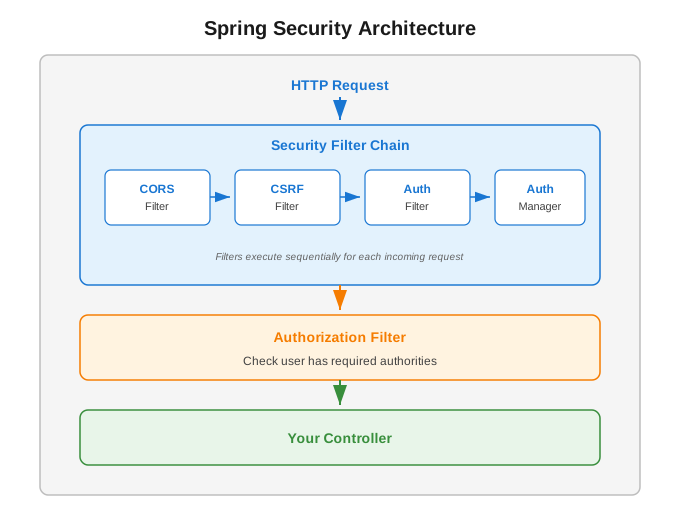
Basic Configuration
Security Filter Chain (Spring Security 6.x)
@Configuration
@EnableWebSecurity
public class SecurityConfig {

    @Bean
    public SecurityFilterChain securityFilterChain(HttpSecurity http) throws Exception {
        return http
            .csrf(csrf -> csrf
                .csrfTokenRepository(CookieCsrfTokenRepository.withHttpOnlyFalse())
            )
            .authorizeHttpRequests(auth -> auth
                .requestMatchers("/public/**", "/health").permitAll()
                .requestMatchers("/admin/**").hasRole("ADMIN")
                .requestMatchers("/api/**").authenticated()
                .anyRequest().denyAll()
            )
            .formLogin(form -> form
                .loginPage("/login")
                .defaultSuccessUrl("/dashboard")
                .permitAll()
            )
            .logout(logout -> logout
                .logoutUrl("/logout")
                .logoutSuccessUrl("/login?logout")
            )
            .build();
    }

    @Bean
    public PasswordEncoder passwordEncoder() {
        return new BCryptPasswordEncoder();
    }
}
User Details Service
@Service
public class CustomUserDetailsService implements UserDetailsService {

    private final UserRepository userRepository;

    @Override
    public UserDetails loadUserByUsername(String username) throws UsernameNotFoundException {
        User user = userRepository.findByUsername(username)
            .orElseThrow(() -> new UsernameNotFoundException("User not found: " + username));

        return org.springframework.security.core.userdetails.User.builder()
            .username(user.getUsername())
            .password(user.getPassword())  // Already encoded
            .roles(user.getRoles().toArray(String[]::new))
            .accountExpired(!user.isActive())
            .accountLocked(user.isLocked())
            .credentialsExpired(false)
            .disabled(!user.isEnabled())
            .build();
    }
}
In-Memory Users (Testing)
@Bean
public UserDetailsService userDetailsService() {
    UserDetails admin = User.builder()
        .username("admin")
        .password(passwordEncoder().encode("admin123"))
        .roles("ADMIN", "USER")
        .build();

    UserDetails user = User.builder()
        .username("user")
        .password(passwordEncoder().encode("user123"))
        .roles("USER")
        .build();

    return new InMemoryUserDetailsManager(admin, user);
}
Authentication
Authentication Manager
@Configuration
public class SecurityConfig {

    @Bean
    public AuthenticationManager authenticationManager(
            AuthenticationConfiguration config) throws Exception {
        return config.getAuthenticationManager();
    }

    @Bean
    public DaoAuthenticationProvider authenticationProvider(
            UserDetailsService userDetailsService,
            PasswordEncoder passwordEncoder) {
        DaoAuthenticationProvider provider = new DaoAuthenticationProvider();
        provider.setUserDetailsService(userDetailsService);
        provider.setPasswordEncoder(passwordEncoder);
        return provider;
    }
}
Custom Authentication Provider
@Component
public class CustomAuthenticationProvider implements AuthenticationProvider {

    private final LdapService ldapService;
    private final UserDetailsService userDetailsService;

    @Override
    public Authentication authenticate(Authentication authentication)
            throws AuthenticationException {
        String username = authentication.getName();
        String password = authentication.getCredentials().toString();

        // Custom authentication logic (e.g., LDAP)
        if (!ldapService.authenticate(username, password)) {
            throw new BadCredentialsException("Invalid credentials");
        }

        UserDetails userDetails = userDetailsService.loadUserByUsername(username);
        return new UsernamePasswordAuthenticationToken(
            userDetails, password, userDetails.getAuthorities());
    }

    @Override
    public boolean supports(Class<?> authentication) {
        return UsernamePasswordAuthenticationToken.class.isAssignableFrom(authentication);
    }
}
JWT Authentication
JWT Configuration
@Configuration
@EnableWebSecurity
public class JwtSecurityConfig {

    @Bean
    public SecurityFilterChain securityFilterChain(HttpSecurity http,
            JwtAuthenticationFilter jwtFilter) throws Exception {
        return http
            .csrf(csrf -> csrf.disable())  // Stateless, no CSRF needed
            .sessionManagement(session -> session
                .sessionCreationPolicy(SessionCreationPolicy.STATELESS)
            )
            .authorizeHttpRequests(auth -> auth
                .requestMatchers("/auth/**").permitAll()
                .anyRequest().authenticated()
            )
            .addFilterBefore(jwtFilter, UsernamePasswordAuthenticationFilter.class)
            .build();
    }
}
JWT Filter
@Component
public class JwtAuthenticationFilter extends OncePerRequestFilter {

    private final JwtService jwtService;
    private final UserDetailsService userDetailsService;

    @Override
    protected void doFilterInternal(HttpServletRequest request,
                                   HttpServletResponse response,
                                   FilterChain filterChain)
            throws ServletException, IOException {

        String authHeader = request.getHeader("Authorization");

        if (authHeader == null || !authHeader.startsWith("Bearer ")) {
            filterChain.doFilter(request, response);
            return;
        }

        String token = authHeader.substring(7);
        String username = jwtService.extractUsername(token);

        if (username != null && SecurityContextHolder.getContext().getAuthentication() == null) {
            UserDetails userDetails = userDetailsService.loadUserByUsername(username);

            if (jwtService.isTokenValid(token, userDetails)) {
                UsernamePasswordAuthenticationToken authToken =
                    new UsernamePasswordAuthenticationToken(
                        userDetails, null, userDetails.getAuthorities());
                authToken.setDetails(new WebAuthenticationDetailsSource()
                    .buildDetails(request));
                SecurityContextHolder.getContext().setAuthentication(authToken);
            }
        }

        filterChain.doFilter(request, response);
    }
}
JWT Service
@Service
public class JwtService {

    @Value("${jwt.secret}")
    private String secretKey;

    @Value("${jwt.expiration:3600000}")  // 1 hour default
    private long expiration;

    public String generateToken(UserDetails userDetails) {
        return generateToken(Map.of(), userDetails);
    }

    public String generateToken(Map<String, Object> extraClaims, UserDetails userDetails) {
        return Jwts.builder()
            .setClaims(extraClaims)
            .setSubject(userDetails.getUsername())
            .setIssuedAt(new Date())
            .setExpiration(new Date(System.currentTimeMillis() + expiration))
            .signWith(getSigningKey(), SignatureAlgorithm.HS256)
            .compact();
    }

    public String extractUsername(String token) {
        return extractClaim(token, Claims::getSubject);
    }

    public boolean isTokenValid(String token, UserDetails userDetails) {
        String username = extractUsername(token);
        return username.equals(userDetails.getUsername()) && !isTokenExpired(token);
    }

    private boolean isTokenExpired(String token) {
        return extractClaim(token, Claims::getExpiration).before(new Date());
    }

    private <T> T extractClaim(String token, Function<Claims, T> claimsResolver) {
        Claims claims = Jwts.parserBuilder()
            .setSigningKey(getSigningKey())
            .build()
            .parseClaimsJws(token)
            .getBody();
        return claimsResolver.apply(claims);
    }

    private Key getSigningKey() {
        byte[] keyBytes = Decoders.BASE64.decode(secretKey);
        return Keys.hmacShaKeyFor(keyBytes);
    }
}
Auth Controller
@RestController
@RequestMapping("/auth")
public class AuthController {

    private final AuthenticationManager authenticationManager;
    private final JwtService jwtService;
    private final UserDetailsService userDetailsService;

    @PostMapping("/login")
    public AuthResponse login(@RequestBody @Valid LoginRequest request) {
        authenticationManager.authenticate(
            new UsernamePasswordAuthenticationToken(
                request.username(), request.password()));

        UserDetails userDetails = userDetailsService.loadUserByUsername(request.username());
        String token = jwtService.generateToken(userDetails);

        return new AuthResponse(token);
    }

    @PostMapping("/refresh")
    public AuthResponse refresh(@RequestHeader("Authorization") String authHeader) {
        String oldToken = authHeader.substring(7);
        String username = jwtService.extractUsername(oldToken);
        UserDetails userDetails = userDetailsService.loadUserByUsername(username);
        String newToken = jwtService.generateToken(userDetails);
        return new AuthResponse(newToken);
    }
}
OAuth2 / OpenID Connect
OAuth2 Resource Server (JWT)
@Configuration
@EnableWebSecurity
public class OAuth2ResourceServerConfig {

    @Bean
    public SecurityFilterChain securityFilterChain(HttpSecurity http) throws Exception {
        return http
            .authorizeHttpRequests(auth -> auth
                .requestMatchers("/public/**").permitAll()
                .anyRequest().authenticated()
            )
            .oauth2ResourceServer(oauth2 -> oauth2
                .jwt(jwt -> jwt.jwtAuthenticationConverter(jwtAuthenticationConverter()))
            )
            .build();
    }

    @Bean
    public JwtAuthenticationConverter jwtAuthenticationConverter() {
        JwtGrantedAuthoritiesConverter authoritiesConverter =
            new JwtGrantedAuthoritiesConverter();
        authoritiesConverter.setAuthoritiesClaimName("roles");
        authoritiesConverter.setAuthorityPrefix("ROLE_");

        JwtAuthenticationConverter converter = new JwtAuthenticationConverter();
        converter.setJwtGrantedAuthoritiesConverter(authoritiesConverter);
        return converter;
    }
}
# application.yml
spring:
  security:
    oauth2:
      resourceserver:
        jwt:
          issuer-uri: https://auth.example.com
          # OR
          jwk-set-uri: https://auth.example.com/.well-known/jwks.json
OAuth2 Client
spring:
  security:
    oauth2:
      client:
        registration:
          google:
            client-id: ${GOOGLE_CLIENT_ID}
            client-secret: ${GOOGLE_CLIENT_SECRET}
            scope: openid, profile, email
          github:
            client-id: ${GITHUB_CLIENT_ID}
            client-secret: ${GITHUB_CLIENT_SECRET}
            scope: read:user, user:email
@Configuration
@EnableWebSecurity
public class OAuth2ClientConfig {

    @Bean
    public SecurityFilterChain securityFilterChain(HttpSecurity http) throws Exception {
        return http
            .authorizeHttpRequests(auth -> auth
                .requestMatchers("/", "/login/**").permitAll()
                .anyRequest().authenticated()
            )
            .oauth2Login(oauth2 -> oauth2
                .loginPage("/login")
                .defaultSuccessUrl("/dashboard")
                .userInfoEndpoint(userInfo -> userInfo
                    .userService(customOAuth2UserService())
                )
            )
            .build();
    }

    @Bean
    public OAuth2UserService<OAuth2UserRequest, OAuth2User> customOAuth2UserService() {
        return new CustomOAuth2UserService();
    }
}
Method Security
Enable Method Security
@Configuration
@EnableMethodSecurity(
    prePostEnabled = true,   // @PreAuthorize, @PostAuthorize
    securedEnabled = true,   // @Secured
    jsr250Enabled = true     // @RolesAllowed
)
public class MethodSecurityConfig {
}
Annotations
@Service
public class OrderService {

    // Role-based
    @PreAuthorize("hasRole('ADMIN')")
    public void deleteOrder(Long id) { }

    // Multiple roles
    @PreAuthorize("hasAnyRole('ADMIN', 'MANAGER')")
    public void updateOrder(Order order) { }

    // Permission-based
    @PreAuthorize("hasAuthority('ORDER_READ')")
    public Order getOrder(Long id) { }

    // SpEL expressions
    @PreAuthorize("hasRole('ADMIN') or #order.customerId == authentication.principal.id")
    public void modifyOrder(Order order) { }

    // Parameter access
    @PreAuthorize("#id == authentication.principal.id or hasRole('ADMIN')")
    public UserProfile getProfile(@Param("id") Long id) { }

    // Post-authorize (filter return value)
    @PostAuthorize("returnObject.customerId == authentication.principal.id")
    public Order findOrder(Long id) { }

    // Filter collections
    @PostFilter("filterObject.owner == authentication.principal.username")
    public List<Document> getDocuments() { }

    @PreFilter("filterObject.status != 'DELETED'")
    public void processOrders(List<Order> orders) { }

    // Legacy annotations
    @Secured("ROLE_ADMIN")
    public void adminOnly() { }

    @RolesAllowed({"ADMIN", "MANAGER"})
    public void managersAndAdmins() { }
}
Custom Permission Evaluator
@Component
public class CustomPermissionEvaluator implements PermissionEvaluator {

    @Override
    public boolean hasPermission(Authentication auth, Object targetDomainObject,
            Object permission) {
        if (targetDomainObject instanceof Order order) {
            String perm = (String) permission;
            String username = auth.getName();

            return switch (perm) {
                case "READ" -> canReadOrder(order, username);
                case "WRITE" -> canWriteOrder(order, username);
                case "DELETE" -> canDeleteOrder(order, username);
                default -> false;
            };
        }
        return false;
    }

    @Override
    public boolean hasPermission(Authentication auth, Serializable targetId,
            String targetType, Object permission) {
        // Load object by ID and check permission
        return false;
    }
}

// Usage
@PreAuthorize("hasPermission(#order, 'WRITE')")
public void updateOrder(Order order) { }
CORS Configuration
@Configuration
public class CorsConfig {

    @Bean
    public CorsConfigurationSource corsConfigurationSource() {
        CorsConfiguration config = new CorsConfiguration();
        config.setAllowedOrigins(List.of("https://example.com", "https://app.example.com"));
        config.setAllowedMethods(List.of("GET", "POST", "PUT", "DELETE", "OPTIONS"));
        config.setAllowedHeaders(List.of("*"));
        config.setExposedHeaders(List.of("Authorization", "X-Request-Id"));
        config.setAllowCredentials(true);
        config.setMaxAge(3600L);

        UrlBasedCorsConfigurationSource source = new UrlBasedCorsConfigurationSource();
        source.registerCorsConfiguration("/api/**", config);
        return source;
    }
}

// In SecurityFilterChain
http.cors(cors -> cors.configurationSource(corsConfigurationSource()))
CSRF Protection
@Configuration
public class CsrfConfig {

    @Bean
    public SecurityFilterChain securityFilterChain(HttpSecurity http) throws Exception {
        return http
            // For SPAs with cookie-based CSRF
            .csrf(csrf -> csrf
                .csrfTokenRepository(CookieCsrfTokenRepository.withHttpOnlyFalse())
                .csrfTokenRequestHandler(new CsrfTokenRequestAttributeHandler())
            )
            // Ignore CSRF for specific paths
            .csrf(csrf -> csrf
                .ignoringRequestMatchers("/api/webhooks/**")
            )
            .build();
    }
}

// Disable for stateless APIs (use JWT instead)
http.csrf(csrf -> csrf.disable())
Security Context
@RestController
public class ProfileController {

    @GetMapping("/profile")
    public UserProfile getProfile() {
        // Get current authenticated user
        Authentication auth = SecurityContextHolder.getContext().getAuthentication();
        String username = auth.getName();

        // Or inject directly
        return getProfile(auth.getName());
    }

    @GetMapping("/profile2")
    public UserProfile getProfile2(@AuthenticationPrincipal UserDetails userDetails) {
        return getProfile(userDetails.getUsername());
    }

    // Custom principal
    @GetMapping("/profile3")
    public UserProfile getProfile3(@AuthenticationPrincipal CustomUserPrincipal principal) {
        return getProfile(principal.getId());
    }
}
Async Security Context
@Configuration
public class AsyncSecurityConfig {

    @Bean
    public DelegatingSecurityContextAsyncTaskExecutor taskExecutor() {
        return new DelegatingSecurityContextAsyncTaskExecutor(
            new SimpleAsyncTaskExecutor());
    }
}

// Or enable globally
@Configuration
@EnableAsync
public class AsyncConfig implements AsyncConfigurer {

    @Override
    public Executor getAsyncExecutor() {
        return new DelegatingSecurityContextExecutorService(
            Executors.newCachedThreadPool());
    }
}
Security Headers
@Bean
public SecurityFilterChain securityFilterChain(HttpSecurity http) throws Exception {
    return http
        .headers(headers -> headers
            .contentSecurityPolicy(csp -> csp
                .policyDirectives("default-src 'self'; script-src 'self'")
            )
            .frameOptions(frame -> frame.deny())
            .httpStrictTransportSecurity(hsts -> hsts
                .includeSubDomains(true)
                .maxAgeInSeconds(31536000)
            )
            .xssProtection(xss -> xss.disable())  // Modern browsers have this built-in
        )
        .build();
}
Testing Security
@WebMvcTest(OrderController.class)
@Import(SecurityConfig.class)
class OrderControllerSecurityTest {

    @Autowired
    private MockMvc mockMvc;

    @MockBean
    private OrderService orderService;

    @Test
    void shouldDenyUnauthenticated() throws Exception {
        mockMvc.perform(get("/api/orders"))
            .andExpect(status().isUnauthorized());
    }

    @Test
    @WithMockUser(roles = "USER")
    void shouldAllowAuthenticatedUser() throws Exception {
        when(orderService.findAll()).thenReturn(List.of());

        mockMvc.perform(get("/api/orders"))
            .andExpect(status().isOk());
    }

    @Test
    @WithMockUser(roles = "ADMIN")
    void adminCanDelete() throws Exception {
        mockMvc.perform(delete("/api/orders/1"))
            .andExpect(status().isNoContent());
    }

    @Test
    @WithMockUser(roles = "USER")
    void userCannotDelete() throws Exception {
        mockMvc.perform(delete("/api/orders/1"))
            .andExpect(status().isForbidden());
    }

    @Test
    @WithUserDetails("[email protected]")  // Load from UserDetailsService
    void withRealUser() throws Exception {
        // Uses actual user from database/service
    }
}

// Custom annotation for common test users
@Target(ElementType.METHOD)
@Retention(RetentionPolicy.RUNTIME)
@WithMockUser(username = "admin", roles = {"ADMIN", "USER"})
public @interface WithAdmin {}
Common Interview Questions
- How does Spring Security filter chain work?
- Series of filters processing each request
- Authentication filter validates credentials
-
Authorization filter checks permissions
-
JWT vs Session authentication?
- JWT: Stateless, scalable, contains claims
-
Session: Server-side state, easier to invalidate
-
@PreAuthorize vs @Secured?
- @PreAuthorize: SpEL expressions, more flexible
-
@Secured: Simple role check, less powerful
-
How to handle CORS?
- Configure CorsConfigurationSource
-
Register with security filter chain
-
OAuth2 Resource Server vs Client?
- Resource Server: Validates tokens (API)
- Client: Obtains tokens (web app)
- *