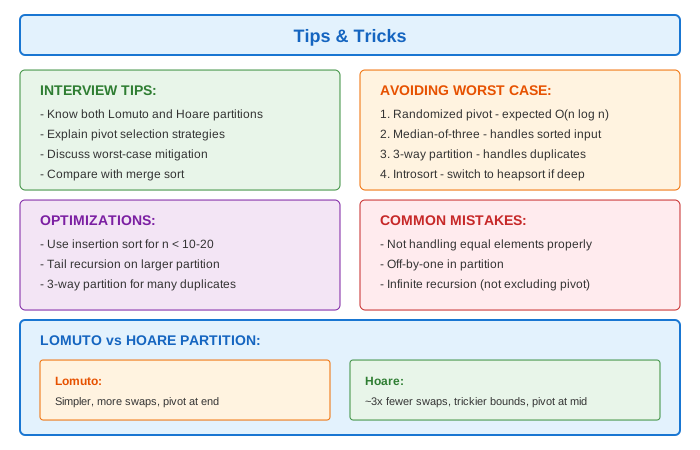
Quick Sort
Definition
A divide-and-conquer sorting algorithm that selects a 'pivot' element and partitions the array around it, placing smaller elements left and larger elements right.
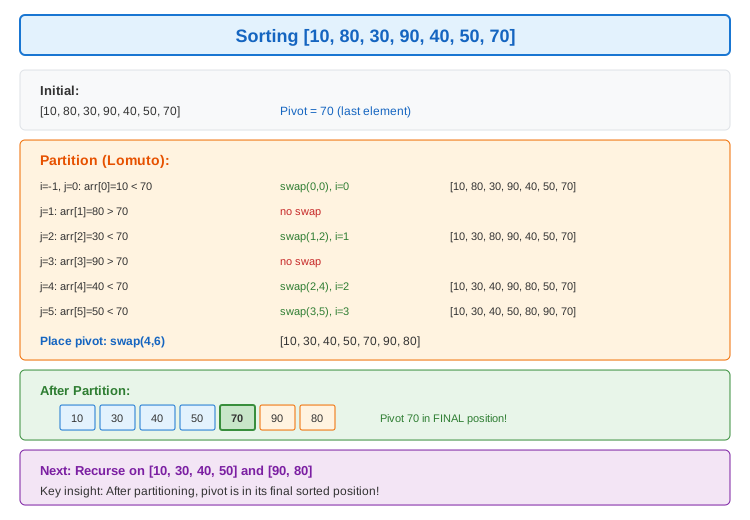
Key Insight: After partitioning, pivot is in its FINAL sorted position.
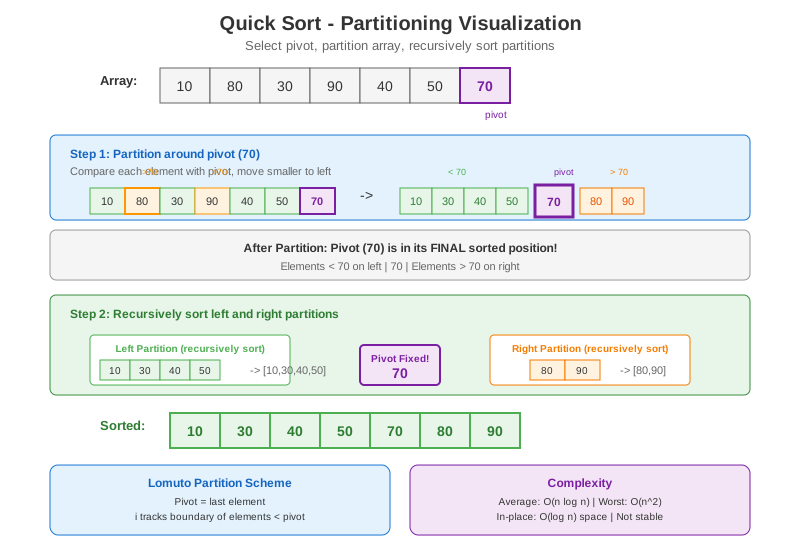
Big O Complexity
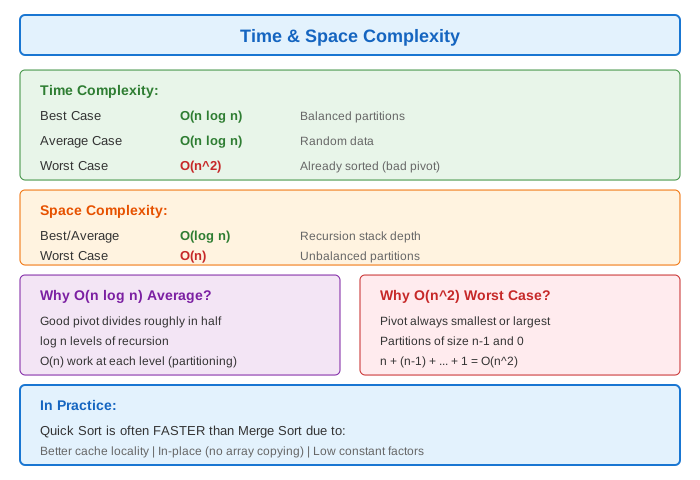
When to Use
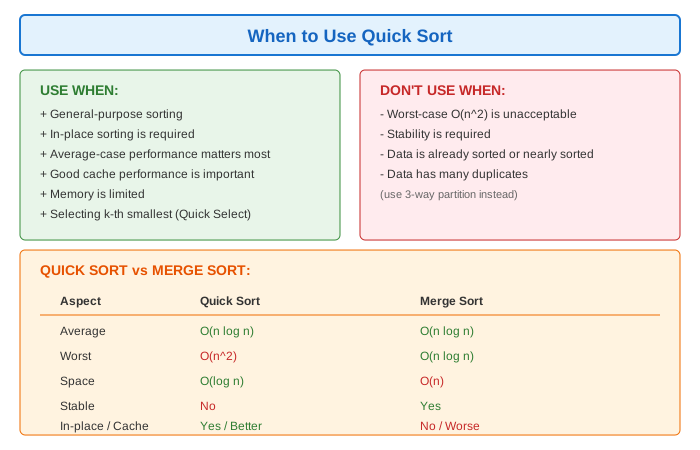
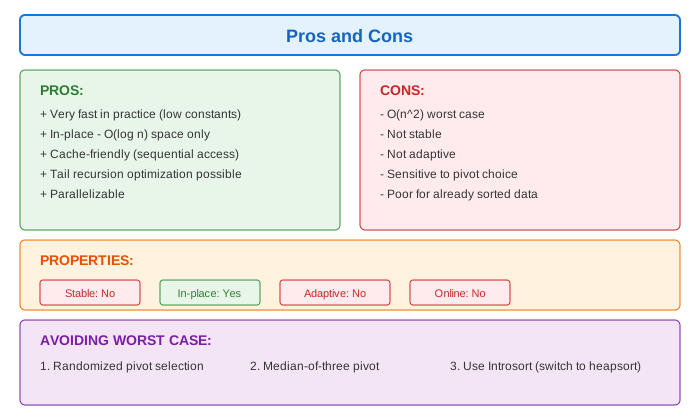
Pros and Cons
Implementation
Lomuto Partition (Simple)
public void quickSort(int[] arr) {
    quickSort(arr, 0, arr.length - 1);
}

private void quickSort(int[] arr, int low, int high) {
    if (low < high) {
        int pivotIndex = partition(arr, low, high);
        quickSort(arr, low, pivotIndex - 1);
        quickSort(arr, pivotIndex + 1, high);
    }
}

// Lomuto partition - pivot is last element
private int partition(int[] arr, int low, int high) {
    int pivot = arr[high];
    int i = low - 1;  // Boundary of elements < pivot

    for (int j = low; j < high; j++) {
        if (arr[j] < pivot) {
            i++;
            swap(arr, i, j);
        }
    }

    swap(arr, i + 1, high);  // Place pivot in correct position
    return i + 1;
}

private void swap(int[] arr, int i, int j) {
    int temp = arr[i];
    arr[i] = arr[j];
    arr[j] = temp;
}
Hoare Partition (Efficient)
// Hoare partition - fewer swaps on average
private int partitionHoare(int[] arr, int low, int high) {
    int pivot = arr[low + (high - low) / 2];
    int i = low - 1;
    int j = high + 1;

    while (true) {
        do { i++; } while (arr[i] < pivot);
        do { j--; } while (arr[j] > pivot);

        if (i >= j) return j;

        swap(arr, i, j);
    }
}

// Quick sort using Hoare
private void quickSortHoare(int[] arr, int low, int high) {
    if (low < high) {
        int p = partitionHoare(arr, low, high);
        quickSortHoare(arr, low, p);      // Note: includes p
        quickSortHoare(arr, p + 1, high);
    }
}
Randomized Quick Sort
private Random random = new Random();

private int partitionRandomized(int[] arr, int low, int high) {
    // Random pivot selection
    int randomIndex = low + random.nextInt(high - low + 1);
    swap(arr, randomIndex, high);

    return partition(arr, low, high);  // Standard Lomuto
}
Median-of-Three Pivot
private int medianOfThree(int[] arr, int low, int high) {
    int mid = low + (high - low) / 2;

    // Sort low, mid, high
    if (arr[low] > arr[mid]) swap(arr, low, mid);
    if (arr[low] > arr[high]) swap(arr, low, high);
    if (arr[mid] > arr[high]) swap(arr, mid, high);

    // Place median at high-1
    swap(arr, mid, high - 1);
    return arr[high - 1];  // Return pivot value
}
3-Way Quick Sort (Dutch National Flag)
// Efficient for arrays with many duplicates
private void quickSort3Way(int[] arr, int low, int high) {
    if (low >= high) return;

    int lt = low;      // arr[low..lt-1] < pivot
    int gt = high;     // arr[gt+1..high] > pivot
    int i = low + 1;   // arr[lt..i-1] == pivot
    int pivot = arr[low];

    while (i <= gt) {
        if (arr[i] < pivot) {
            swap(arr, lt++, i++);
        } else if (arr[i] > pivot) {
            swap(arr, i, gt--);
        } else {
            i++;
        }
    }

    // arr[low..lt-1] < pivot = arr[lt..gt] < arr[gt+1..high]
    quickSort3Way(arr, low, lt - 1);
    quickSort3Way(arr, gt + 1, high);
}
Iterative Quick Sort (No Recursion)
public void quickSortIterative(int[] arr) {
    Stack<int[]> stack = new Stack<>();
    stack.push(new int[]{0, arr.length - 1});

    while (!stack.isEmpty()) {
        int[] range = stack.pop();
        int low = range[0];
        int high = range[1];

        if (low < high) {
            int pivotIndex = partition(arr, low, high);

            // Push larger subarray first (tail call optimization)
            if (pivotIndex - low > high - pivotIndex) {
                stack.push(new int[]{low, pivotIndex - 1});
                stack.push(new int[]{pivotIndex + 1, high});
            } else {
                stack.push(new int[]{pivotIndex + 1, high});
                stack.push(new int[]{low, pivotIndex - 1});
            }
        }
    }
}
Tail-Recursive Optimization
// Reduces stack space by iterating on larger half
private void quickSortTailOptimized(int[] arr, int low, int high) {
    while (low < high) {
        int pivotIndex = partition(arr, low, high);

        // Recurse on smaller half, iterate on larger
        if (pivotIndex - low < high - pivotIndex) {
            quickSortTailOptimized(arr, low, pivotIndex - 1);
            low = pivotIndex + 1;
        } else {
            quickSortTailOptimized(arr, pivotIndex + 1, high);
            high = pivotIndex - 1;
        }
    }
}
Quick Select (K-th Smallest)
// Find k-th smallest element in O(n) average time
public int quickSelect(int[] arr, int k) {
    return quickSelect(arr, 0, arr.length - 1, k - 1);
}

private int quickSelect(int[] arr, int low, int high, int k) {
    if (low == high) return arr[low];

    int pivotIndex = partitionRandomized(arr, low, high);

    if (k == pivotIndex) {
        return arr[k];
    } else if (k < pivotIndex) {
        return quickSelect(arr, low, pivotIndex - 1, k);
    } else {
        return quickSelect(arr, pivotIndex + 1, high, k);
    }
}
Hybrid: Introsort
// Switches to heapsort when recursion too deep
public void introSort(int[] arr) {
    int maxDepth = (int) (2 * Math.log(arr.length) / Math.log(2));
    introSort(arr, 0, arr.length - 1, maxDepth);
}

private void introSort(int[] arr, int low, int high, int depthLimit) {
    int size = high - low + 1;

    if (size < 16) {
        // Use insertion sort for small arrays
        insertionSort(arr, low, high);
        return;
    }

    if (depthLimit == 0) {
        // Switch to heapsort
        heapSort(arr, low, high);
        return;
    }

    int pivot = partition(arr, low, high);
    introSort(arr, low, pivot - 1, depthLimit - 1);
    introSort(arr, pivot + 1, high, depthLimit - 1);
}
Step-by-Step Example
Dual-Pivot Quick Sort
// Java 7+ uses dual-pivot for primitives
private void dualPivotQuickSort(int[] arr, int low, int high) {
    if (low >= high) return;

    // Choose two pivots
    if (arr[low] > arr[high]) swap(arr, low, high);
    int pivot1 = arr[low];
    int pivot2 = arr[high];

    int lt = low + 1;   // arr[low+1..lt-1] < pivot1
    int gt = high - 1;  // arr[gt+1..high-1] > pivot2
    int i = lt;         // arr[lt..i-1] in [pivot1, pivot2]

    while (i <= gt) {
        if (arr[i] < pivot1) {
            swap(arr, i++, lt++);
        } else if (arr[i] > pivot2) {
            swap(arr, i, gt--);
        } else {
            i++;
        }
    }

    // Place pivots
    swap(arr, low, --lt);
    swap(arr, high, ++gt);

    // Recurse on three parts
    dualPivotQuickSort(arr, low, lt - 1);
    dualPivotQuickSort(arr, lt + 1, gt - 1);
    dualPivotQuickSort(arr, gt + 1, high);
}
Tips & Tricks