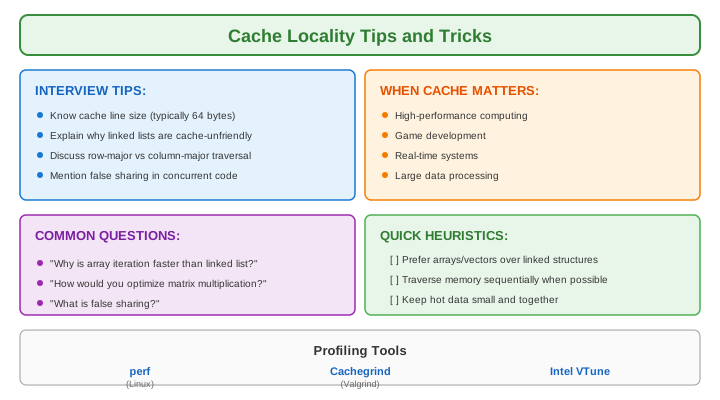
Cache Locality
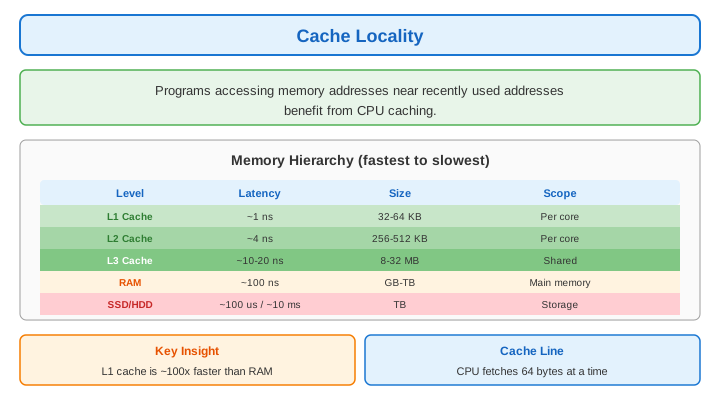
Definition
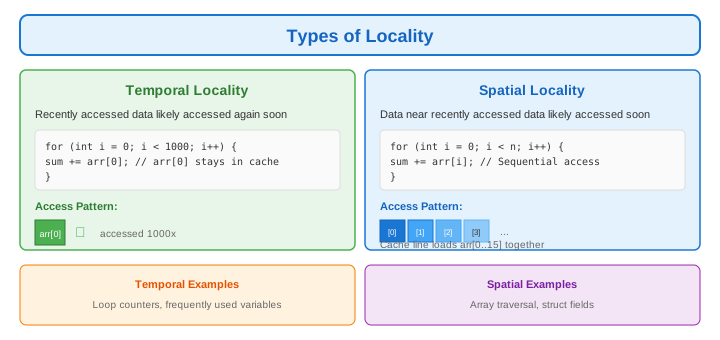
Types of Locality
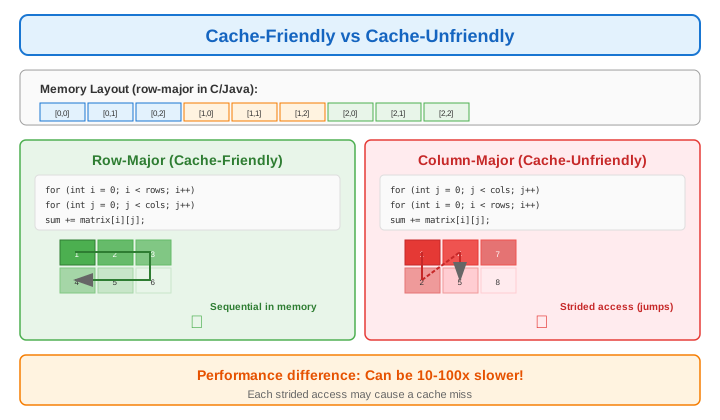
Cache-Friendly vs Cache-Unfriendly
Data Structure Impact
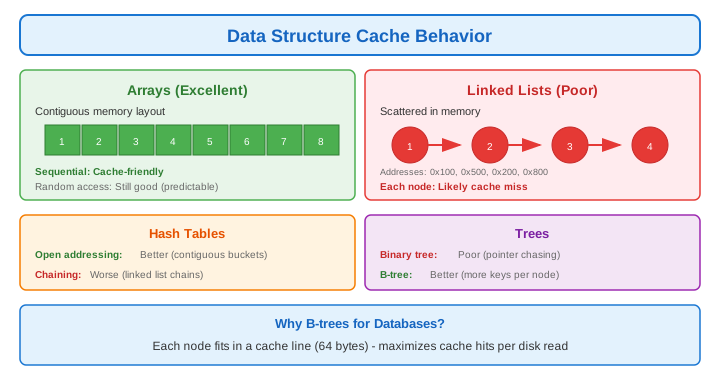
Code Examples
// Example 1: Matrix traversal
public class MatrixSum {

    // Cache-friendly: ~10x faster for large matrices
    public long sumRowMajor(int[][] matrix) {
        long sum = 0;
        for (int i = 0; i < matrix.length; i++) {
            for (int j = 0; j < matrix[0].length; j++) {
                sum += matrix[i][j];  // Sequential access
            }
        }
        return sum;
    }

    // Cache-unfriendly
    public long sumColMajor(int[][] matrix) {
        long sum = 0;
        for (int j = 0; j < matrix[0].length; j++) {
            for (int i = 0; i < matrix.length; i++) {
                sum += matrix[i][j];  // Strided access
            }
        }
        return sum;
    }
}

// Example 2: Array of Structs vs Struct of Arrays
// Array of Structs (AoS) - cache-friendly when accessing all fields
class Particle {
    float x, y, z;    // Position
    float vx, vy, vz; // Velocity
}
Particle[] particles = new Particle[1000];

// Process all fields of each particle - good cache usage
for (Particle p : particles) {
    p.x += p.vx;
    p.y += p.vy;
    p.z += p.vz;
}

// Struct of Arrays (SoA) - better when accessing one field at a time
class ParticleSystem {
    float[] x, y, z;    // Positions contiguous
    float[] vx, vy, vz; // Velocities contiguous
}

// Process only x coordinates - excellent cache usage
for (int i = 0; i < n; i++) {
    x[i] += vx[i];  // Sequential access
}

// Example 3: Loop tiling for cache optimization
public class MatrixMultiply {

    // Naive: Poor cache usage for large matrices
    public void multiplyNaive(int[][] A, int[][] B, int[][] C, int n) {
        for (int i = 0; i < n; i++)
            for (int j = 0; j < n; j++)
                for (int k = 0; k < n; k++)
                    C[i][j] += A[i][k] * B[k][j];
    }

    // Tiled: Better cache usage
    public void multiplyTiled(int[][] A, int[][] B, int[][] C, int n) {
        int TILE = 64;  // Fits in L1 cache
        for (int ii = 0; ii < n; ii += TILE)
            for (int jj = 0; jj < n; jj += TILE)
                for (int kk = 0; kk < n; kk += TILE)
                    for (int i = ii; i < Math.min(ii+TILE, n); i++)
                        for (int j = jj; j < Math.min(jj+TILE, n); j++)
                            for (int k = kk; k < Math.min(kk+TILE, n); k++)
                                C[i][j] += A[i][k] * B[k][j];
    }
}
Optimization Techniques
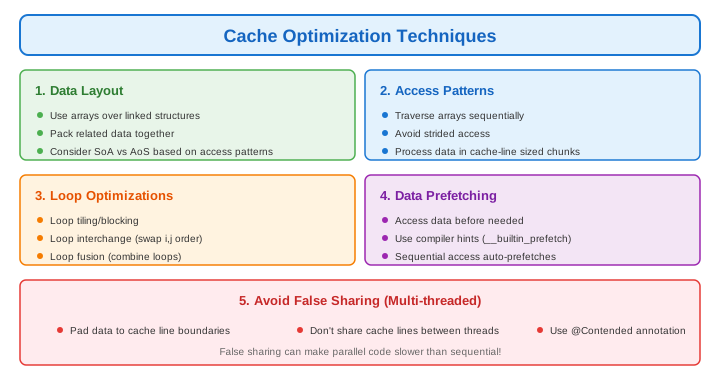
False Sharing
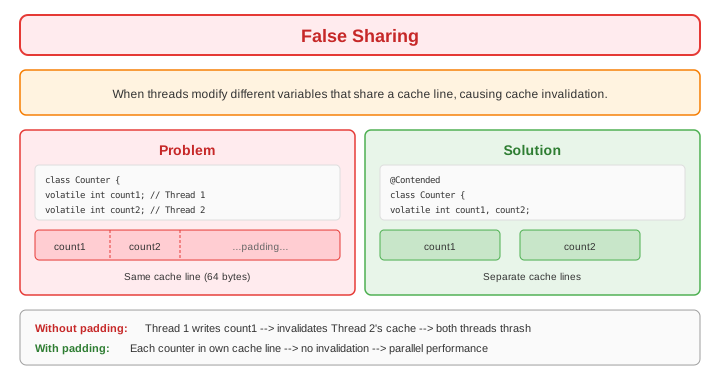
Tips & Tricks