Domain Driven Design
What is Domain-Driven Design?
An approach to software development that centers the design around the business domain and its logic.
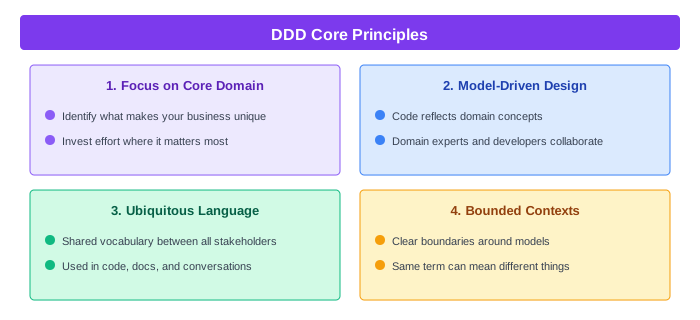
Strategic Design
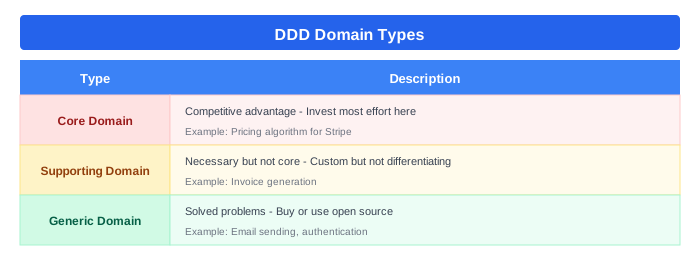
Domain Types
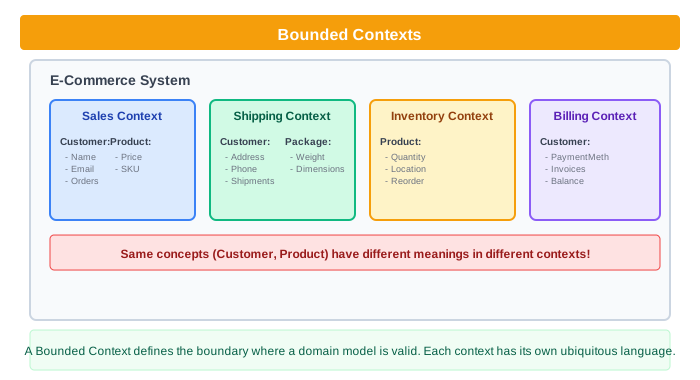
Bounded Contexts
A boundary within which a domain model is defined and applicable.
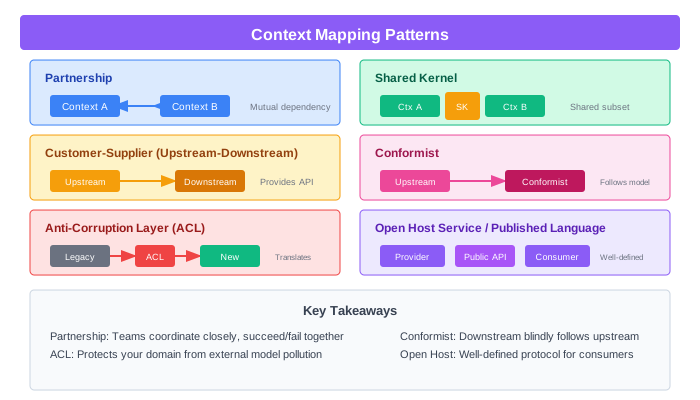
Context Mapping
Relationships between bounded contexts.
Tactical Design
Building Blocks
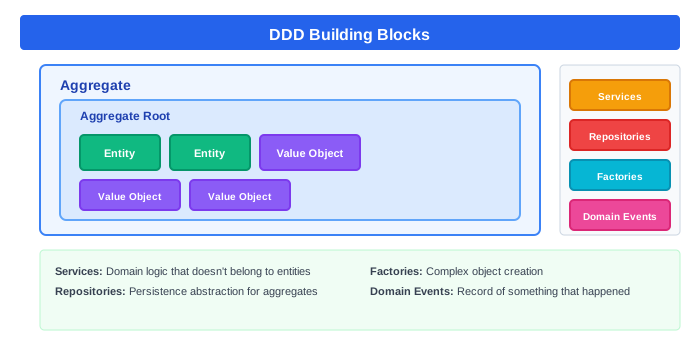
Entities
Objects with identity that persists over time.
public class Order {
    private final OrderId id;           // Identity
    private CustomerId customerId;
    private OrderStatus status;
    private List<OrderLine> lines;
    private Money total;
    private Instant createdAt;

    // Identity comparison
    @Override
    public boolean equals(Object o) {
        if (this == o) return true;
        if (!(o instanceof Order)) return false;
        Order order = (Order) o;
        return id.equals(order.id);  // Only compare by ID
    }

    @Override
    public int hashCode() {
        return Objects.hash(id);
    }

    // Business logic belongs in entity
    public void addLine(Product product, int quantity) {
        if (status != OrderStatus.DRAFT) {
            throw new IllegalStateException("Cannot modify confirmed order");
        }
        lines.add(new OrderLine(product, quantity));
        recalculateTotal();
    }

    public void confirm() {
        if (lines.isEmpty()) {
            throw new IllegalStateException("Cannot confirm empty order");
        }
        this.status = OrderStatus.CONFIRMED;
    }
}
Value Objects
Immutable objects defined by their attributes, not identity.
// Value Object - defined by attributes, immutable
public record Money(BigDecimal amount, Currency currency) {

    public Money {
        if (amount.compareTo(BigDecimal.ZERO) < 0) {
            throw new IllegalArgumentException("Amount cannot be negative");
        }
        Objects.requireNonNull(currency);
    }

    public Money add(Money other) {
        if (!this.currency.equals(other.currency)) {
            throw new IllegalArgumentException("Cannot add different currencies");
        }
        return new Money(this.amount.add(other.amount), this.currency);
    }

    public Money multiply(int quantity) {
        return new Money(this.amount.multiply(BigDecimal.valueOf(quantity)), this.currency);
    }
}

// Another example
public record Address(
    String street,
    String city,
    String state,
    String zipCode,
    String country
) {
    public Address {
        Objects.requireNonNull(street);
        Objects.requireNonNull(city);
        Objects.requireNonNull(zipCode);
        Objects.requireNonNull(country);
    }
}

// Usage
Money price1 = new Money(new BigDecimal("10.00"), Currency.USD);
Money price2 = new Money(new BigDecimal("5.00"), Currency.USD);
Money total = price1.add(price2);  // New object created

// Value objects are equal if attributes match
Address addr1 = new Address("123 Main", "NYC", "NY", "10001", "USA");
Address addr2 = new Address("123 Main", "NYC", "NY", "10001", "USA");
addr1.equals(addr2);  // true
Aggregates
Cluster of entities and value objects with defined boundaries.
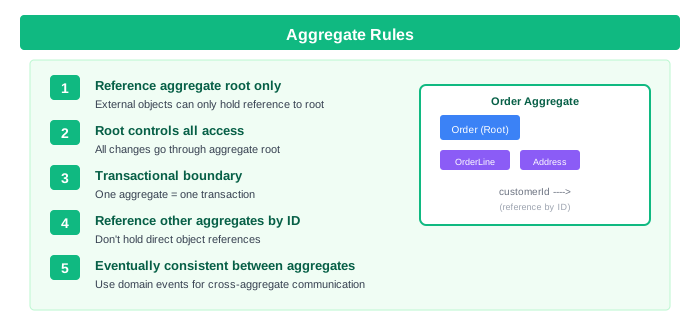
// Order Aggregate
public class Order {  // Aggregate Root
    private final OrderId id;
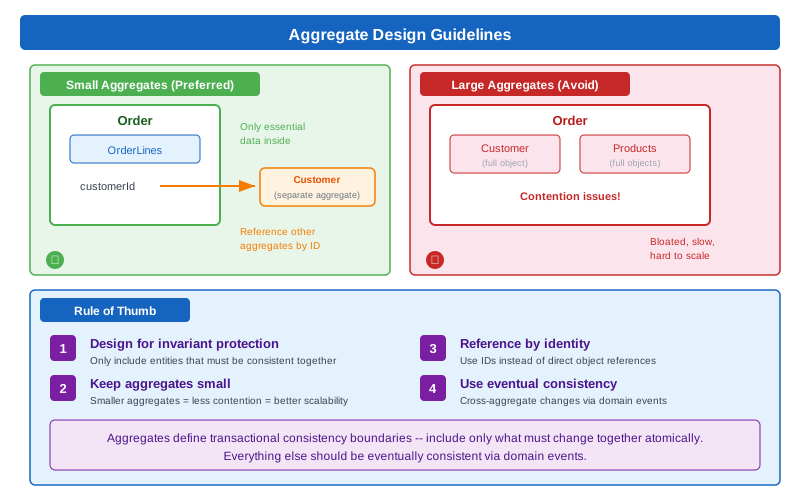
    private final CustomerId customerId;  // Reference by ID, not Customer object
    private OrderStatus status;
    private final List<OrderLine> lines = new ArrayList<>();  // Internal entity
    private ShippingAddress shippingAddress;  // Value object

    // All modifications through root
    public void addLine(ProductId productId, int quantity, Money unitPrice) {
        validateCanModify();
        OrderLine line = new OrderLine(productId, quantity, unitPrice);
        lines.add(line);
    }

    public void removeLine(ProductId productId) {
        validateCanModify();
        lines.removeIf(line -> line.getProductId().equals(productId));
    }

    public void updateShippingAddress(ShippingAddress address) {
        validateCanModify();
        this.shippingAddress = address;
    }

    public void submit() {
        if (lines.isEmpty()) {
            throw new OrderEmptyException(id);
        }
        if (shippingAddress == null) {
            throw new ShippingAddressRequiredException(id);
        }
        this.status = OrderStatus.SUBMITTED;
        // Register domain event
        registerEvent(new OrderSubmitted(id, customerId, getTotal()));
    }

    private void validateCanModify() {
        if (status != OrderStatus.DRAFT) {
            throw new OrderNotModifiableException(id);
        }
    }

    // Expose immutable view of internal state
    public List<OrderLine> getLines() {
        return Collections.unmodifiableList(lines);
    }
}

// Internal entity (not accessible directly from outside)
public class OrderLine {
    private final ProductId productId;
    private int quantity;
    private final Money unitPrice;

    public Money getSubtotal() {
        return unitPrice.multiply(quantity);
    }
}
Aggregate Design Guidelines
Domain Services
Operations that don't naturally belong to an entity or value object.
// Domain Service - cross-aggregate business logic
public class PricingService {

    private final DiscountPolicy discountPolicy;
    private final TaxCalculator taxCalculator;

    public Money calculateOrderTotal(Order order, Customer customer) {
        Money subtotal = order.getSubtotal();

        // Apply customer-specific discounts
        Money discount = discountPolicy.calculate(customer, subtotal);
        Money discountedTotal = subtotal.subtract(discount);

        // Calculate tax based on shipping address
        Money tax = taxCalculator.calculate(
            discountedTotal,
            order.getShippingAddress()
        );

        return discountedTotal.add(tax);
    }
}

// Another example - Transfer between accounts
public class TransferService {

    public void transfer(Account from, Account to, Money amount) {
        if (!from.canWithdraw(amount)) {
            throw new InsufficientFundsException();
        }

        from.withdraw(amount);
        to.deposit(amount);

        // Publish event
        eventPublisher.publish(new TransferCompleted(
            from.getId(), to.getId(), amount
        ));
    }
}
Repositories
Abstract persistence for aggregates.
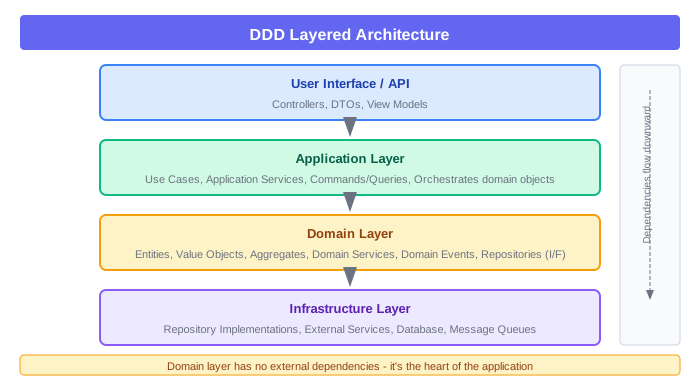
// Repository interface (domain layer)
public interface OrderRepository {
    Optional<Order> findById(OrderId id);
    Order save(Order order);
    void delete(Order order);
    List<Order> findByCustomerId(CustomerId customerId);
}

// Implementation (infrastructure layer)
@Repository
public class JpaOrderRepository implements OrderRepository {

    private final OrderJpaRepository jpaRepo;
    private final OrderMapper mapper;

    @Override
    public Optional<Order> findById(OrderId id) {
        return jpaRepo.findById(id.value())
            .map(mapper::toDomain);
    }

    @Override
    public Order save(Order order) {
        OrderEntity entity = mapper.toEntity(order);
        OrderEntity saved = jpaRepo.save(entity);
        return mapper.toDomain(saved);
    }
}

// Repository returns aggregates, not entities
// One repository per aggregate root
Domain Events
Record of something significant that happened in the domain.
// Domain Event
public record OrderSubmitted(
    OrderId orderId,
    CustomerId customerId,
    Money totalAmount,
    Instant occurredAt
) implements DomainEvent {
    public OrderSubmitted(OrderId orderId, CustomerId customerId, Money totalAmount) {
        this(orderId, customerId, totalAmount, Instant.now());
    }
}

// Aggregate with event registration
public abstract class AggregateRoot {
    private final List<DomainEvent> domainEvents = new ArrayList<>();

    protected void registerEvent(DomainEvent event) {
        domainEvents.add(event);
    }

    public List<DomainEvent> getDomainEvents() {
        return Collections.unmodifiableList(domainEvents);
    }

    public void clearDomainEvents() {
        domainEvents.clear();
    }
}

public class Order extends AggregateRoot {

    public void submit() {
        // Business logic...
        this.status = OrderStatus.SUBMITTED;

        // Register event for publishing
        registerEvent(new OrderSubmitted(id, customerId, getTotal()));
    }
}

// Event publishing in application service
@Service
public class OrderApplicationService {

    @Transactional
    public void submitOrder(OrderId orderId) {
        Order order = orderRepository.findById(orderId)
            .orElseThrow(() -> new OrderNotFoundException(orderId));

        order.submit();

        orderRepository.save(order);

        // Publish events after transaction
        order.getDomainEvents().forEach(eventPublisher::publish);
        order.clearDomainEvents();
    }
}
Factories
Encapsulate complex object creation.
// Factory for complex aggregate creation
public class OrderFactory {

    private final CustomerRepository customerRepository;
    private final ProductCatalog productCatalog;
    private final PricingService pricingService;

    public Order createOrder(CreateOrderRequest request) {
        // Validate customer exists
        Customer customer = customerRepository.findById(request.customerId())
            .orElseThrow(() -> new CustomerNotFoundException(request.customerId()));

        // Create order
        Order order = new Order(
            OrderId.generate(),
            customer.getId(),
            request.shippingAddress()
        );

        // Add lines with current pricing
        for (OrderLineRequest lineRequest : request.lines()) {
            Product product = productCatalog.getProduct(lineRequest.productId());
            Money price = pricingService.getPrice(product, customer);
            order.addLine(product.getId(), lineRequest.quantity(), price);
        }

        return order;
    }
}
Layered Architecture
Anti-Corruption Layer
Protect your domain from external models.
// External system's model (legacy or third-party)
public class LegacyCustomerDTO {
    public String cust_id;
    public String cust_name;
    public String addr_line1;
    public String addr_city;
    public int cust_status;  // 0=inactive, 1=active, 2=premium
}

// Your domain model
public record Customer(
    CustomerId id,
    CustomerName name,
    Address address,
    CustomerTier tier
) {}

// Anti-Corruption Layer
@Component
public class CustomerAntiCorruptionLayer {

    public Customer translate(LegacyCustomerDTO legacy) {
        return new Customer(
            new CustomerId(legacy.cust_id),
            new CustomerName(legacy.cust_name),
            new Address(legacy.addr_line1, legacy.addr_city, /* ... */),
            translateTier(legacy.cust_status)
        );
    }

    private CustomerTier translateTier(int status) {
        return switch (status) {
            case 0 -> CustomerTier.INACTIVE;
            case 1 -> CustomerTier.STANDARD;
            case 2 -> CustomerTier.PREMIUM;
            default -> throw new IllegalArgumentException("Unknown status: " + status);
        };
    }

    public LegacyCustomerDTO translateBack(Customer customer) {
        LegacyCustomerDTO dto = new LegacyCustomerDTO();
        dto.cust_id = customer.id().value();
        dto.cust_name = customer.name().value();
        // ... more translations
        return dto;
    }
}
Common Interview Questions
- Entity vs Value Object?
- Entity: Has identity, mutable, compared by ID
-
Value Object: No identity, immutable, compared by attributes
-
What is an Aggregate?
- Cluster of entities/value objects with consistency boundary
- Accessed only through root
-
One transaction per aggregate
-
How to handle cross-aggregate transactions?
- Use eventual consistency
- Domain events and Saga pattern
-
Avoid distributed transactions
-
What is a Bounded Context?
- Explicit boundary where domain model applies
- Same term can mean different things in different contexts
-
Maps to microservice boundaries
-
How does DDD relate to microservices?
- Bounded contexts → Service boundaries
- Aggregates → Transaction boundaries
- Domain events → Service communication