Microservices Patterns
What are Microservices?
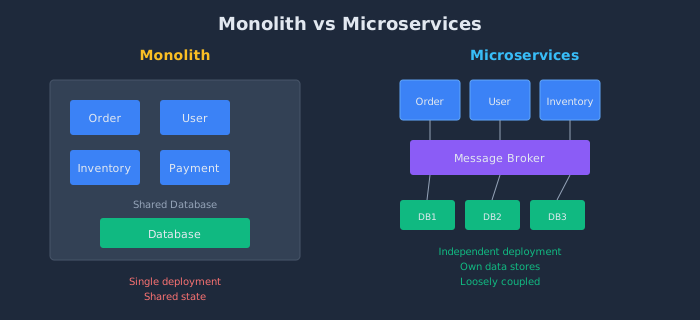
Architectural style where application is composed of small, independent services that communicate over well-defined APIs.
Service Decomposition
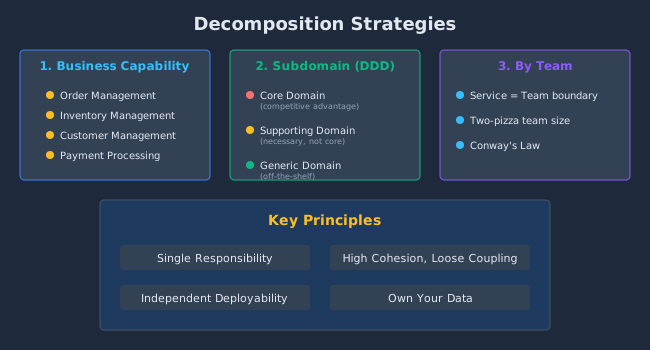
Decomposition Strategies
Communication Patterns
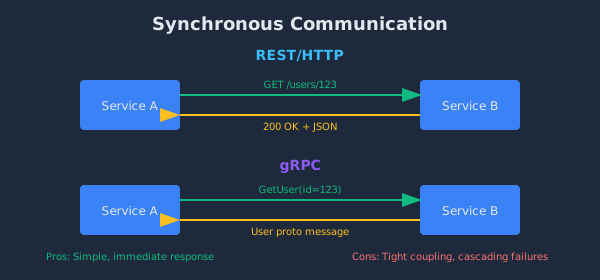
Synchronous Communication
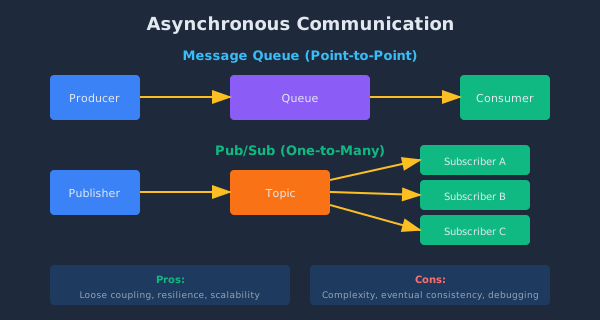
Asynchronous Communication
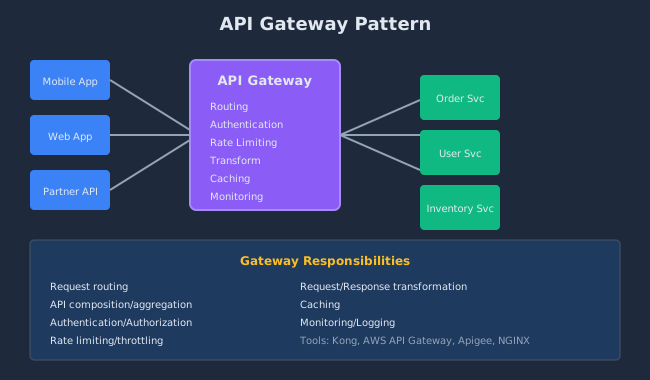
API Gateway Pattern
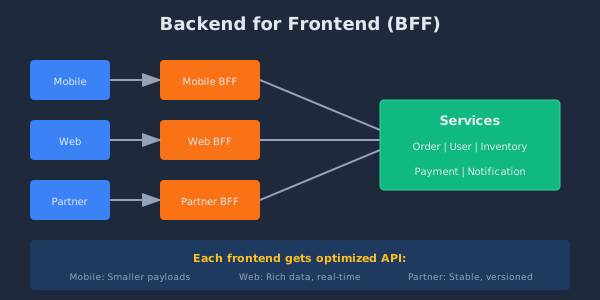
Backend for Frontend (BFF)
Service Discovery
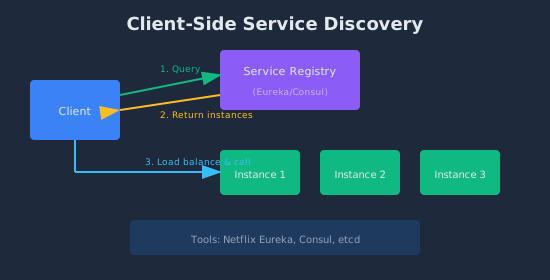
Client-Side Discovery
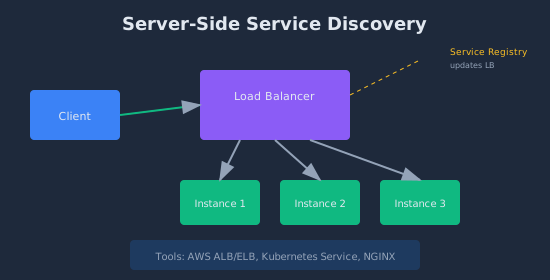
Server-Side Discovery
Circuit Breaker Pattern
Prevents cascading failures by failing fast when a service is unavailable.
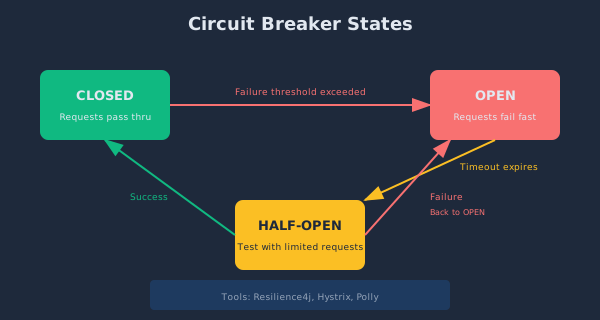
// Resilience4j example
@CircuitBreaker(name = "paymentService", fallbackMethod = "paymentFallback")
public PaymentResponse processPayment(PaymentRequest request) {
    return paymentClient.charge(request);
}

public PaymentResponse paymentFallback(PaymentRequest request, Exception e) {
    // Queue for retry, return cached response, or degrade gracefully
    return PaymentResponse.pending("Payment queued for processing");
}

// Configuration
resilience4j.circuitbreaker:
  instances:
    paymentService:
      failureRateThreshold: 50          # Open at 50% failure rate
      waitDurationInOpenState: 60000    # 60s before half-open
      permittedNumberOfCallsInHalfOpenState: 3
      slidingWindowSize: 10
Bulkhead Pattern
Isolates failures to prevent resource exhaustion.
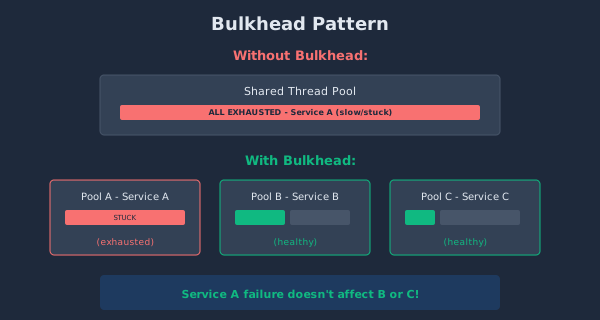
// Thread pool bulkhead
@Bulkhead(name = "paymentService", type = Bulkhead.Type.THREADPOOL)
public PaymentResponse processPayment(PaymentRequest request) {
    return paymentClient.charge(request);
}

// Semaphore bulkhead (limits concurrent calls)
@Bulkhead(name = "inventoryService", type = Bulkhead.Type.SEMAPHORE)
public InventoryResponse checkInventory(String productId) {
    return inventoryClient.check(productId);
}

// Configuration
resilience4j.bulkhead:
  instances:
    paymentService:
      maxConcurrentCalls: 10
      maxWaitDuration: 500ms
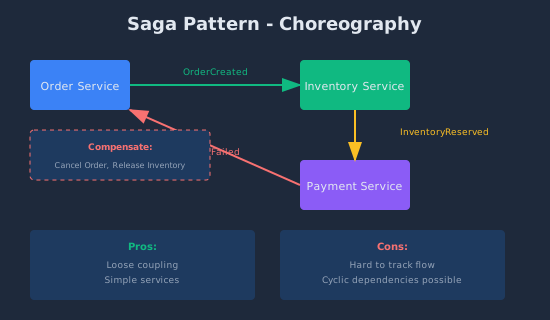
Saga Pattern
Manages distributed transactions across services.
Choreography (Event-Based)
Orchestration (Central Coordinator)
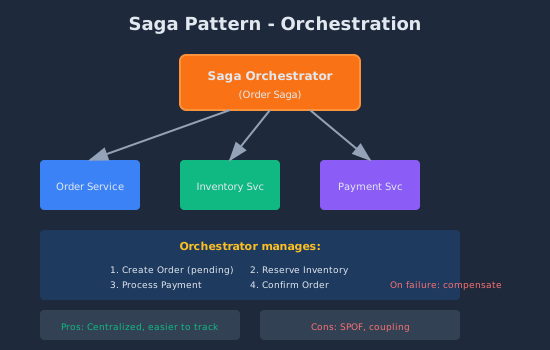
// Orchestration example
public class OrderSagaOrchestrator {

    public void createOrder(CreateOrderCommand command) {
        try {
            // Step 1: Create order
            Order order = orderService.create(command);

            // Step 2: Reserve inventory
            inventoryService.reserve(order.getItems());

            // Step 3: Process payment
            paymentService.charge(order.getPayment());

            // Step 4: Confirm order
            orderService.confirm(order.getId());

        } catch (InventoryException e) {
            orderService.cancel(order.getId());
            throw e;
        } catch (PaymentException e) {
            inventoryService.release(order.getItems());
            orderService.cancel(order.getId());
            throw e;
        }
    }
}
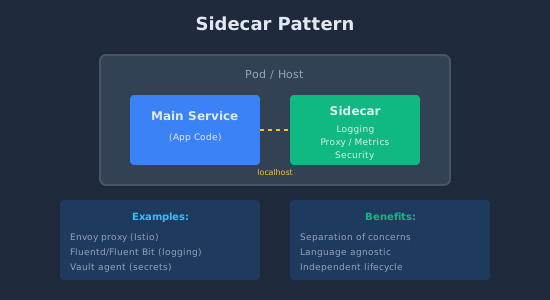
Sidecar Pattern
Deploy helper components alongside main service.
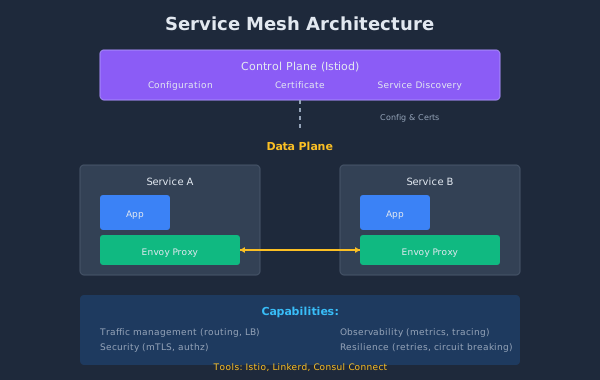
Service Mesh
Infrastructure layer for service-to-service communication.
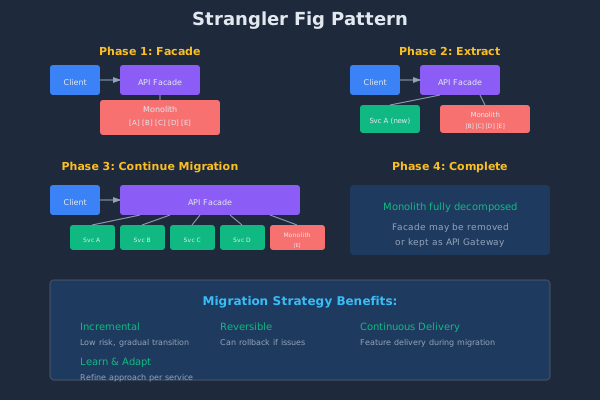
Strangler Fig Pattern
Incrementally migrate from monolith to microservices.
Data Patterns
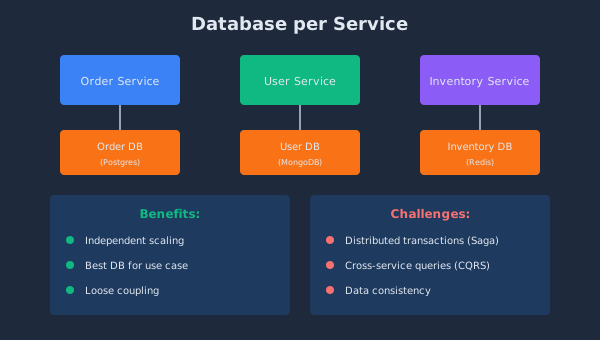
Database per Service
API Composition
// Aggregate data from multiple services
@RestController
public class OrderDetailsController {

    @GetMapping("/order-details/{orderId}")
    public OrderDetails getOrderDetails(@PathVariable String orderId) {
        // Parallel calls to services
        CompletableFuture<Order> orderFuture =
            CompletableFuture.supplyAsync(() -> orderService.getOrder(orderId));
        CompletableFuture<Customer> customerFuture =
            orderFuture.thenCompose(order ->
                CompletableFuture.supplyAsync(() ->
                    customerService.getCustomer(order.getCustomerId())));
        CompletableFuture<List<Product>> productsFuture =
            orderFuture.thenCompose(order ->
                CompletableFuture.supplyAsync(() ->
                    productService.getProducts(order.getProductIds())));

        // Combine results
        return CompletableFuture.allOf(orderFuture, customerFuture, productsFuture)
            .thenApply(v -> new OrderDetails(
                orderFuture.join(),
                customerFuture.join(),
                productsFuture.join()
            )).join();
    }
}
Common Interview Questions
- How do you handle distributed transactions?
- Saga pattern (choreography or orchestration)
-
Avoid 2PC, embrace eventual consistency
-
How do you prevent cascading failures?
-
Circuit breaker, bulkhead, timeouts, retries with backoff
-
Sync vs async communication?
- Sync: Simple, immediate response, tight coupling
-
Async: Loose coupling, resilient, complex
-
How to decompose a monolith?
- Strangler fig pattern
- Start with bounded contexts
-
Extract by business capability
-
Service discovery approaches?
- Client-side: Eureka, Consul
- Server-side: Kubernetes, load balancers