Data Modeling
Normalization
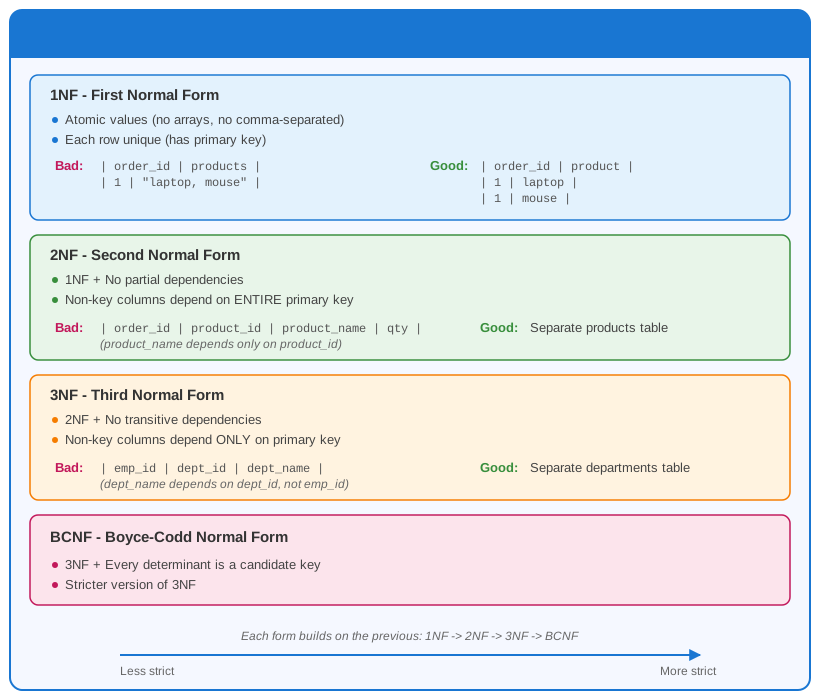
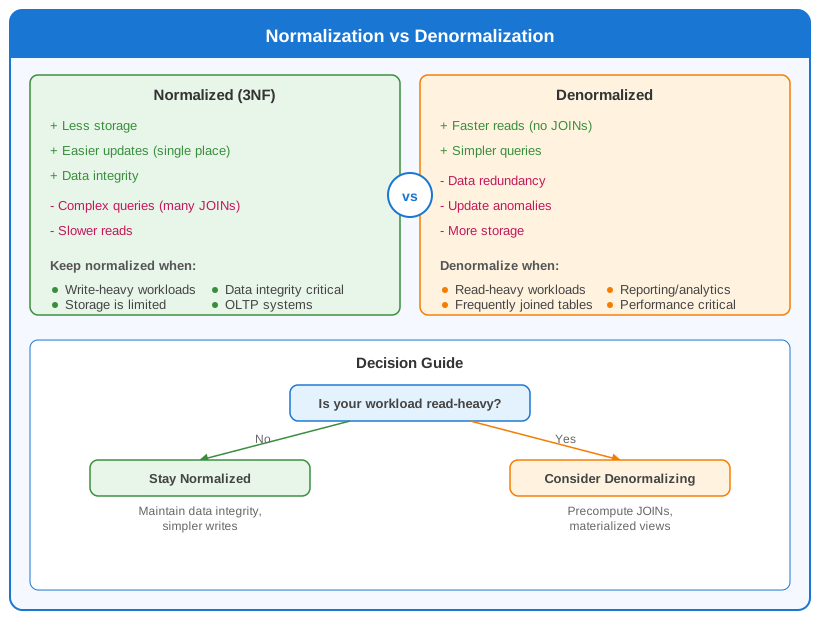
When to Denormalize
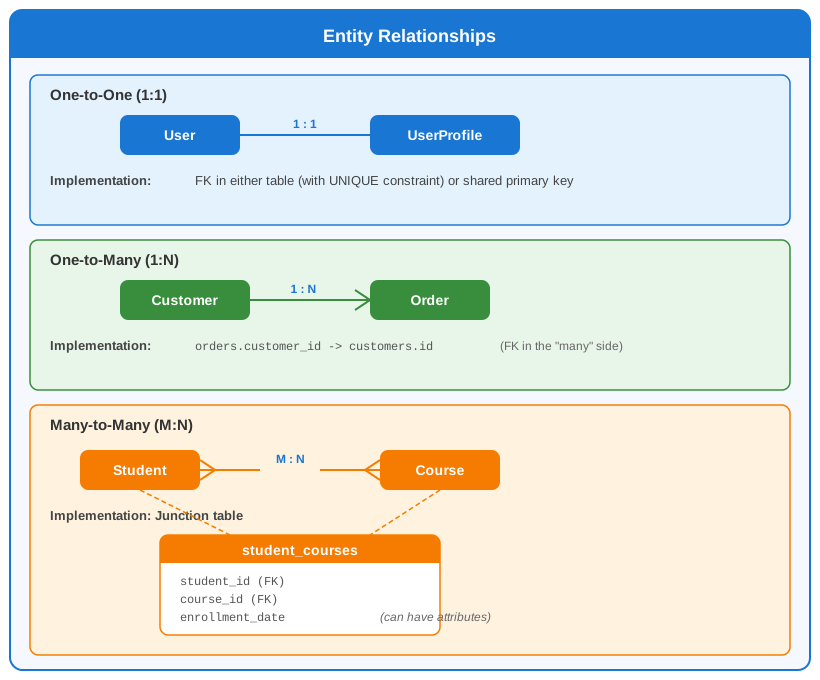
Entity Relationship Modeling
Relationships
E-commerce Schema Example
-- Core entities
CREATE TABLE customers (
    id BIGSERIAL PRIMARY KEY,
    email VARCHAR(255) UNIQUE NOT NULL,
    name VARCHAR(255) NOT NULL,
    created_at TIMESTAMP DEFAULT NOW()
);

CREATE TABLE products (
    id BIGSERIAL PRIMARY KEY,
    sku VARCHAR(50) UNIQUE NOT NULL,
    name VARCHAR(255) NOT NULL,
    price DECIMAL(10,2) NOT NULL,
    category_id BIGINT REFERENCES categories(id),
    created_at TIMESTAMP DEFAULT NOW()
);

CREATE TABLE orders (
    id BIGSERIAL PRIMARY KEY,
    order_number VARCHAR(50) UNIQUE NOT NULL,
    customer_id BIGINT NOT NULL REFERENCES customers(id),
    status VARCHAR(20) NOT NULL DEFAULT 'pending',
    total DECIMAL(12,2) NOT NULL,
    shipping_address_id BIGINT REFERENCES addresses(id),
    created_at TIMESTAMP DEFAULT NOW(),

    -- Indexes for common queries
    CONSTRAINT valid_status CHECK (status IN ('pending', 'confirmed', 'shipped', 'delivered', 'cancelled'))
);

CREATE INDEX idx_orders_customer ON orders(customer_id);
CREATE INDEX idx_orders_status ON orders(status);
CREATE INDEX idx_orders_created ON orders(created_at DESC);

-- Junction table with attributes
CREATE TABLE order_items (
    id BIGSERIAL PRIMARY KEY,
    order_id BIGINT NOT NULL REFERENCES orders(id),
    product_id BIGINT NOT NULL REFERENCES products(id),
    quantity INT NOT NULL CHECK (quantity > 0),
    unit_price DECIMAL(10,2) NOT NULL,  -- Denormalized (price at time of order)

    UNIQUE(order_id, product_id)
);

-- Polymorphic association (addresses for multiple entities)
CREATE TABLE addresses (
    id BIGSERIAL PRIMARY KEY,
    addressable_type VARCHAR(50) NOT NULL,  -- 'customer', 'order'
    addressable_id BIGINT NOT NULL,
    address_type VARCHAR(20),  -- 'billing', 'shipping'
    line1 VARCHAR(255) NOT NULL,
    city VARCHAR(100) NOT NULL,
    postal_code VARCHAR(20) NOT NULL,
    country VARCHAR(2) NOT NULL,

    INDEX idx_addressable (addressable_type, addressable_id)
);
NoSQL Data Modeling
Document Model (MongoDB)
// Embedded (denormalized) - for 1:few, frequently accessed together
{
  "_id": "order_123",
  "customer": {
    "id": "cust_456",
    "name": "John Doe",
    "email": "[email protected]"  // Denormalized
  },
  "items": [
    {
      "product_id": "prod_789",
      "name": "Laptop",           // Denormalized
      "quantity": 1,
      "price": 999.99
    }
  ],
  "shipping_address": {
    "line1": "123 Main St",
    "city": "NYC",
    "country": "US"
  },
  "status": "pending",
  "total": 999.99,
  "created_at": ISODate("2024-01-15T10:00:00Z")
}

// Referenced - for 1:many, large documents, frequently updated
// Order document
{
  "_id": "order_123",
  "customer_id": "cust_456",  // Reference
  "item_ids": ["item_1", "item_2"],  // References
  "status": "pending"
}

// Guidelines:
// Embed when:
// - Data is read together
// - "Contains" relationship
// - Few child documents
// - Children don't change often

// Reference when:
// - Data accessed independently
// - Many child documents (unbounded)
// - Children frequently updated
// - Many-to-many relationships
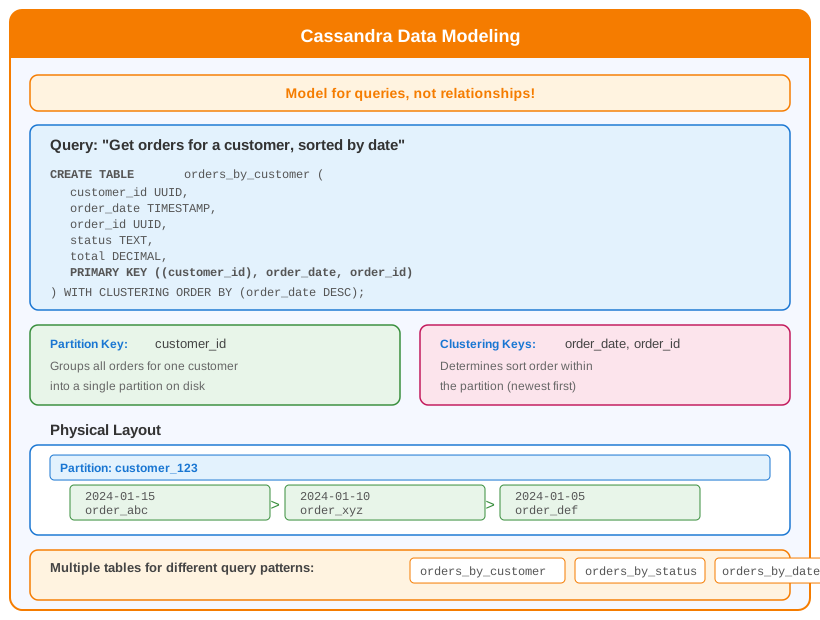
Wide-Column Model (Cassandra)
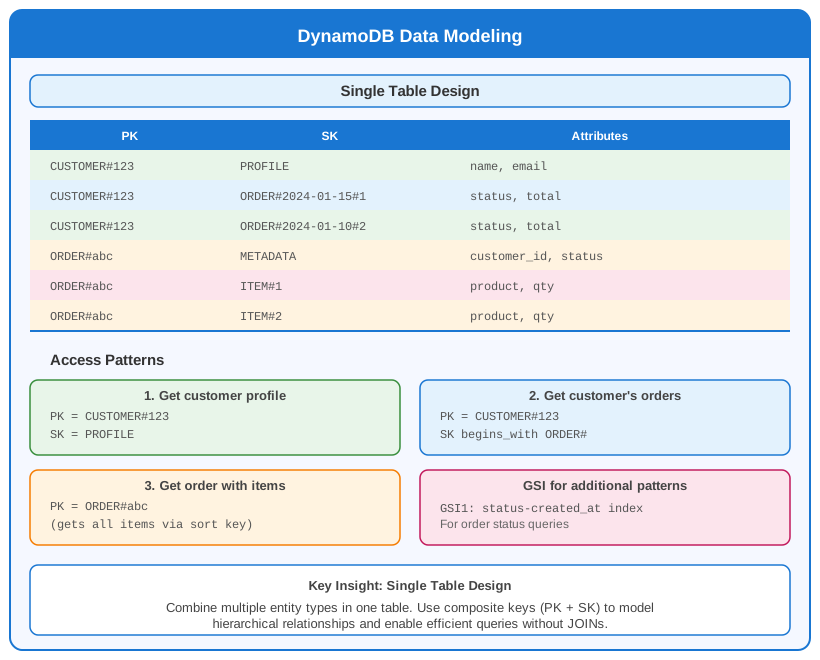
Key-Value Model (DynamoDB)
Time-Series Data Modeling
-- Partitioned by time for efficient queries and retention
CREATE TABLE metrics (
    metric_name VARCHAR(100) NOT NULL,
    tags JSONB,
    timestamp TIMESTAMPTZ NOT NULL,
    value DOUBLE PRECISION NOT NULL,

    PRIMARY KEY (metric_name, timestamp)
) PARTITION BY RANGE (timestamp);

-- Create partitions
CREATE TABLE metrics_2024_01 PARTITION OF metrics
    FOR VALUES FROM ('2024-01-01') TO ('2024-02-01');

-- TimescaleDB hypertable (automatic partitioning)
SELECT create_hypertable('metrics', 'timestamp',
    chunk_time_interval => INTERVAL '1 day');

-- Continuous aggregates for rollups
CREATE MATERIALIZED VIEW metrics_hourly
WITH (timescaledb.continuous) AS
SELECT
    metric_name,
    time_bucket('1 hour', timestamp) AS hour,
    AVG(value) AS avg_value,
    MAX(value) AS max_value,
    MIN(value) AS min_value,
    COUNT(*) AS sample_count
FROM metrics
GROUP BY metric_name, time_bucket('1 hour', timestamp);

-- Retention policy
SELECT add_retention_policy('metrics', INTERVAL '90 days');
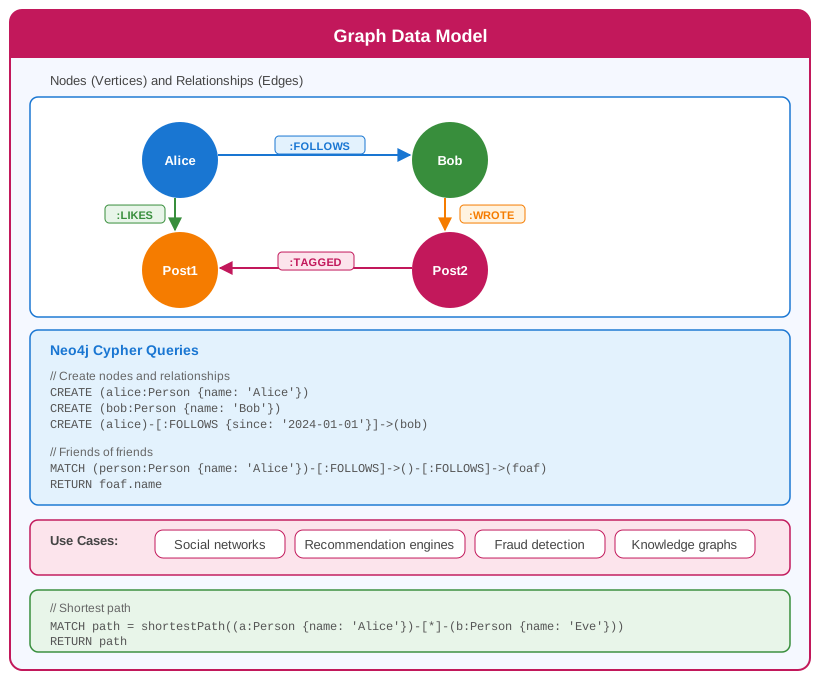
Graph Data Modeling
Schema Evolution
Relational Schema Migration
-- Safe migration patterns

-- Add column (backward compatible)
ALTER TABLE orders ADD COLUMN notes TEXT;

-- Add column with default
ALTER TABLE orders ADD COLUMN priority INT DEFAULT 0;

-- Rename column (two-step deployment)
-- Step 1: Add new column, backfill, write to both
ALTER TABLE orders ADD COLUMN order_total DECIMAL(12,2);
UPDATE orders SET order_total = total;
-- Application writes to both columns

-- Step 2: After all code deployed
ALTER TABLE orders DROP COLUMN total;

-- Add index concurrently (no lock)
CREATE INDEX CONCURRENTLY idx_orders_status ON orders(status);

-- Change column type (careful!)
-- Option 1: Add new column, migrate, drop old
-- Option 2: If compatible, direct alter
ALTER TABLE orders ALTER COLUMN status TYPE VARCHAR(50);
Document Schema Evolution
// MongoDB schema versioning
{
  "_id": "doc_123",
  "schema_version": 2,
  "name": "Product",
  // v2 fields
  "price": {
    "amount": 1999,
    "currency": "USD"
  }
}

// Migration on read (lazy)
function migrateDocument(doc) {
  if (doc.schema_version === 1) {
    // Migrate v1 to v2
    doc.price = {
      amount: doc.price_cents,
      currency: "USD"
    };
    delete doc.price_cents;
    doc.schema_version = 2;
  }
  return doc;
}

// Or use MongoDB's $addFields in aggregation
db.products.aggregate([
  {
    $addFields: {
      price: {
        $cond: {
          if: { $eq: ["$schema_version", 1] },
          then: { amount: "$price_cents", currency: "USD" },
          else: "$price"
        }
      }
    }
  }
]);
Common Interview Questions
- When to normalize vs denormalize?
- Normalize: Write-heavy, data integrity critical
-
Denormalize: Read-heavy, performance critical
-
Document vs Relational model?
- Document: Flexible schema, nested data, read together
-
Relational: Strong consistency, complex queries, relationships
-
How to model many-to-many?
- Relational: Junction table
-
Document: Array of references or embedded if bounded
-
Cassandra data modeling principles?
- Design for queries, not relationships
- Denormalize heavily
-
One table per query pattern
-
Schema evolution strategies?
- Add columns with defaults
- Two-phase migrations
- Version documents for NoSQL