Infrastructure as Code
IaC Overview
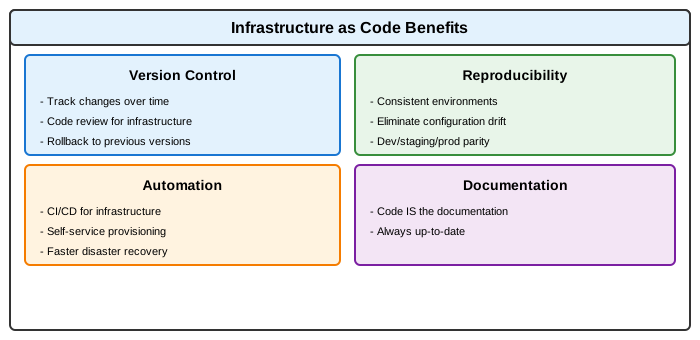
Terraform
Basic Structure
# main.tf

terraform {
  required_version = ">= 1.5.0"

  required_providers {
    aws = {
      source  = "hashicorp/aws"
      version = "~> 5.0"
    }
  }

  backend "s3" {
    bucket         = "my-terraform-state"
    key            = "production/terraform.tfstate"
    region         = "us-east-1"
    dynamodb_table = "terraform-locks"
    encrypt        = true
  }
}

provider "aws" {
  region = var.aws_region

  default_tags {
    tags = {
      Environment = var.environment
      ManagedBy   = "Terraform"
      Project     = var.project_name
    }
  }
}
Variables
# variables.tf

variable "environment" {
  description = "Environment name"
  type        = string
  validation {
    condition     = contains(["dev", "staging", "production"], var.environment)
    error_message = "Environment must be dev, staging, or production."
  }
}

variable "instance_type" {
  description = "EC2 instance type"
  type        = string
  default     = "t3.medium"
}

variable "vpc_cidr" {
  description = "VPC CIDR block"
  type        = string
  default     = "10.0.0.0/16"
}

variable "availability_zones" {
  description = "List of availability zones"
  type        = list(string)
  default     = ["us-east-1a", "us-east-1b", "us-east-1c"]
}

variable "tags" {
  description = "Additional tags"
  type        = map(string)
  default     = {}
}

# terraform.tfvars
environment = "production"
instance_type = "t3.large"
Resources
# VPC and Networking
resource "aws_vpc" "main" {
  cidr_block           = var.vpc_cidr
  enable_dns_hostnames = true
  enable_dns_support   = true

  tags = {
    Name = "${var.project_name}-vpc"
  }
}

resource "aws_subnet" "private" {
  count             = length(var.availability_zones)
  vpc_id            = aws_vpc.main.id
  cidr_block        = cidrsubnet(var.vpc_cidr, 4, count.index)
  availability_zone = var.availability_zones[count.index]

  tags = {
    Name = "${var.project_name}-private-${count.index + 1}"
  }
}

# ECS Cluster
resource "aws_ecs_cluster" "main" {
  name = "${var.project_name}-cluster"

  setting {
    name  = "containerInsights"
    value = "enabled"
  }
}

# ECS Service
resource "aws_ecs_service" "app" {
  name            = "${var.project_name}-service"
  cluster         = aws_ecs_cluster.main.id
  task_definition = aws_ecs_task_definition.app.arn
  desired_count   = var.desired_count
  launch_type     = "FARGATE"

  network_configuration {
    subnets         = aws_subnet.private[*].id
    security_groups = [aws_security_group.ecs.id]
  }

  load_balancer {
    target_group_arn = aws_lb_target_group.app.arn
    container_name   = "app"
    container_port   = 8080
  }

  lifecycle {
    ignore_changes = [desired_count]  # Allow autoscaling
  }
}
Modules
# modules/vpc/main.tf
resource "aws_vpc" "this" {
  cidr_block = var.cidr_block
  # ...
}

output "vpc_id" {
  value = aws_vpc.this.id
}

# main.tf (usage)
module "vpc" {
  source = "./modules/vpc"

  cidr_block = "10.0.0.0/16"
  environment = var.environment
}

module "vpc_prod" {
  source  = "terraform-aws-modules/vpc/aws"
  version = "5.0.0"

  name = "production-vpc"
  cidr = "10.0.0.0/16"

  azs             = ["us-east-1a", "us-east-1b", "us-east-1c"]
  private_subnets = ["10.0.1.0/24", "10.0.2.0/24", "10.0.3.0/24"]
  public_subnets  = ["10.0.101.0/24", "10.0.102.0/24", "10.0.103.0/24"]

  enable_nat_gateway = true
  single_nat_gateway = false
}
Data Sources
# Look up existing resources
data "aws_ami" "amazon_linux" {
  most_recent = true
  owners      = ["amazon"]

  filter {
    name   = "name"
    values = ["amzn2-ami-hvm-*-x86_64-gp2"]
  }
}

data "aws_caller_identity" "current" {}

data "aws_region" "current" {}

# Use in resources
resource "aws_instance" "web" {
  ami           = data.aws_ami.amazon_linux.id
  instance_type = var.instance_type
}
Outputs
# outputs.tf

output "vpc_id" {
  description = "ID of the VPC"
  value       = aws_vpc.main.id
}

output "load_balancer_dns" {
  description = "DNS name of the load balancer"
  value       = aws_lb.main.dns_name
}

output "database_endpoint" {
  description = "RDS endpoint"
  value       = aws_db_instance.main.endpoint
  sensitive   = true
}
Terraform Commands
# Initialize
terraform init
terraform init -upgrade  # Upgrade providers

# Plan
terraform plan
terraform plan -out=tfplan  # Save plan
terraform plan -target=aws_instance.web  # Specific resource

# Apply
terraform apply
terraform apply tfplan  # Apply saved plan
terraform apply -auto-approve  # Skip confirmation

# Destroy
terraform destroy
terraform destroy -target=aws_instance.web

# State management
terraform state list
terraform state show aws_instance.web
terraform state mv aws_instance.web aws_instance.new_name
terraform state rm aws_instance.web
terraform import aws_instance.web i-1234567890

# Workspace (for multiple environments)
terraform workspace list
terraform workspace new staging
terraform workspace select production

# Format and validate
terraform fmt
terraform fmt -recursive
terraform validate

# Output
terraform output
terraform output -json
State Management
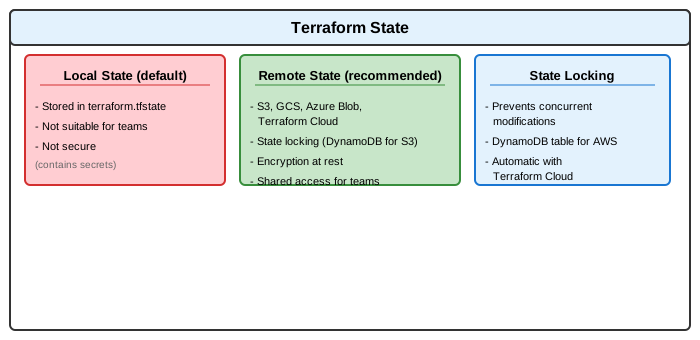
# Remote state configuration
terraform {
  backend "s3" {
    bucket         = "my-terraform-state"
    key            = "production/terraform.tfstate"
    region         = "us-east-1"
    dynamodb_table = "terraform-locks"
    encrypt        = true
  }
}

# Reference remote state
data "terraform_remote_state" "network" {
  backend = "s3"
  config = {
    bucket = "my-terraform-state"
    key    = "network/terraform.tfstate"
    region = "us-east-1"
  }
}

# Use outputs from remote state
resource "aws_instance" "web" {
  subnet_id = data.terraform_remote_state.network.outputs.subnet_id
}
Best Practices
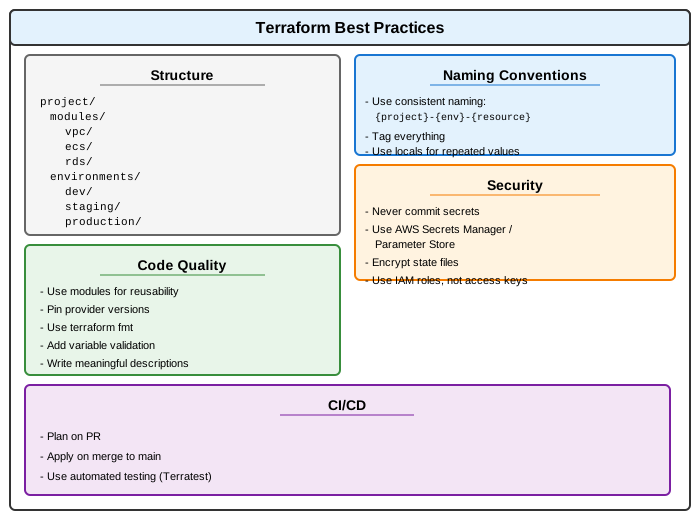
Comparison: Terraform vs CloudFormation vs Pulumi
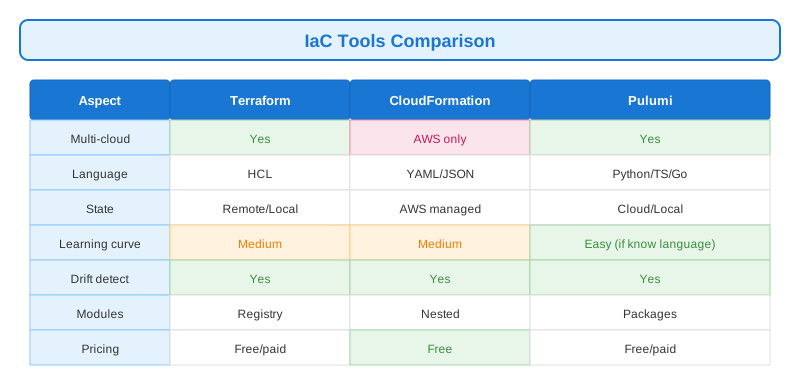
Pulumi Example
# Python Pulumi example
import pulumi
import pulumi_aws as aws

# Create VPC
vpc = aws.ec2.Vpc("main-vpc",
    cidr_block="10.0.0.0/16",
    enable_dns_hostnames=True,
    tags={"Name": "main-vpc"}
)

# Create subnet
subnet = aws.ec2.Subnet("main-subnet",
    vpc_id=vpc.id,
    cidr_block="10.0.1.0/24",
    availability_zone="us-east-1a",
    tags={"Name": "main-subnet"}
)

# Create ECS cluster
cluster = aws.ecs.Cluster("app-cluster",
    settings=[aws.ecs.ClusterSettingArgs(
        name="containerInsights",
        value="enabled"
    )]
)

# Export outputs
pulumi.export("vpc_id", vpc.id)
pulumi.export("cluster_arn", cluster.arn)
Common Interview Questions
- What is Terraform state?
- Maps real infrastructure to config
- Tracks resource metadata
-
Should be stored remotely for teams
-
How to manage multiple environments?
- Workspaces
- Separate directories
-
Variable files per environment
-
Terraform vs CloudFormation?
- Terraform: Multi-cloud, HCL, community modules
-
CF: AWS-native, managed state, deep AWS integration
-
What is drift?
- When real infrastructure differs from code
- Detected with
terraform plan -
Reconciled with
terraform apply -
How to handle secrets?
- Don't store in code
- Use AWS Secrets Manager, Vault
- Mark outputs as sensitive
- *