Application Security
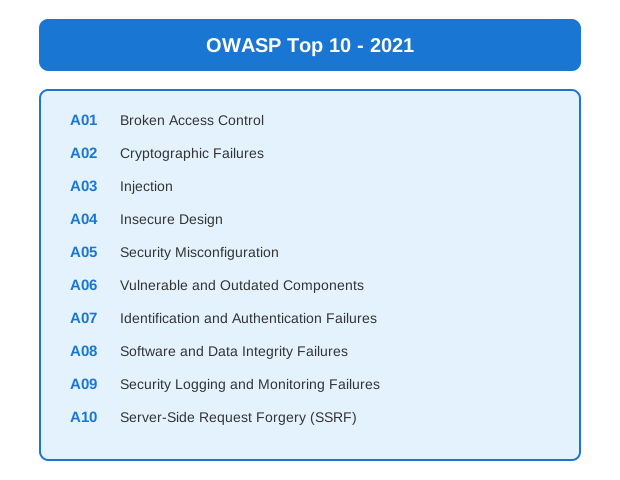
OWASP Top 10 (2021)
A01: Broken Access Control
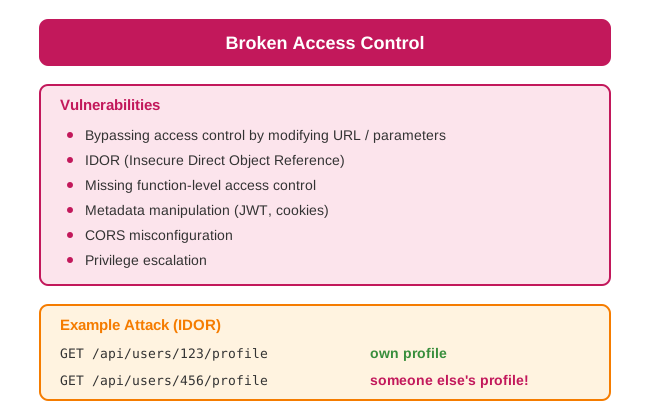
Prevention
// BAD: Direct object reference without authorization
@GetMapping("/api/orders/{orderId}")
public Order getOrder(@PathVariable Long orderId) {
    return orderRepository.findById(orderId);  // Anyone can access any order!
}

// GOOD: Verify ownership before returning data
@GetMapping("/api/orders/{orderId}")
public Order getOrder(@PathVariable Long orderId, Principal principal) {
    Order order = orderRepository.findById(orderId)
        .orElseThrow(() -> new NotFoundException("Order not found"));

    if (!order.getUserId().equals(principal.getName())) {
        throw new ForbiddenException("Access denied");
    }
    return order;
}

// BETTER: Use authorization at repository level
@GetMapping("/api/orders/{orderId}")
public Order getOrder(@PathVariable Long orderId, Principal principal) {
    return orderRepository.findByIdAndUserId(orderId, principal.getName())
        .orElseThrow(() -> new NotFoundException("Order not found"));
}
A02: Cryptographic Failures
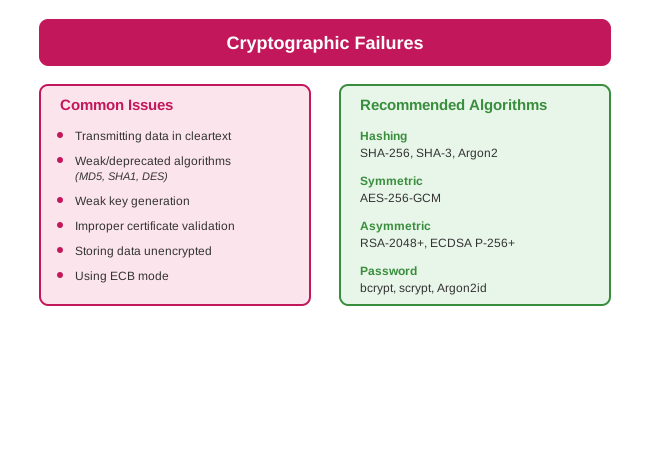
Password Hashing
// BAD: Plain text or weak hash
String hashedPassword = DigestUtils.md5Hex(password);  // NEVER DO THIS

// GOOD: Use bcrypt with appropriate cost factor
import org.springframework.security.crypto.bcrypt.BCryptPasswordEncoder;

BCryptPasswordEncoder encoder = new BCryptPasswordEncoder(12);  // cost factor
String hashedPassword = encoder.encode(rawPassword);

// Verify password
boolean matches = encoder.matches(rawPassword, hashedPassword);
Data Encryption
// AES-256-GCM encryption
public class EncryptionService {
    private static final int GCM_IV_LENGTH = 12;
    private static final int GCM_TAG_LENGTH = 128;

    public byte[] encrypt(byte[] plaintext, SecretKey key) throws Exception {
        byte[] iv = new byte[GCM_IV_LENGTH];
        SecureRandom random = new SecureRandom();
        random.nextBytes(iv);

        Cipher cipher = Cipher.getInstance("AES/GCM/NoPadding");
        GCMParameterSpec spec = new GCMParameterSpec(GCM_TAG_LENGTH, iv);
        cipher.init(Cipher.ENCRYPT_MODE, key, spec);

        byte[] ciphertext = cipher.doFinal(plaintext);

        // Prepend IV to ciphertext
        byte[] result = new byte[iv.length + ciphertext.length];
        System.arraycopy(iv, 0, result, 0, iv.length);
        System.arraycopy(ciphertext, 0, result, iv.length, ciphertext.length);
        return result;
    }
}
A03: Injection
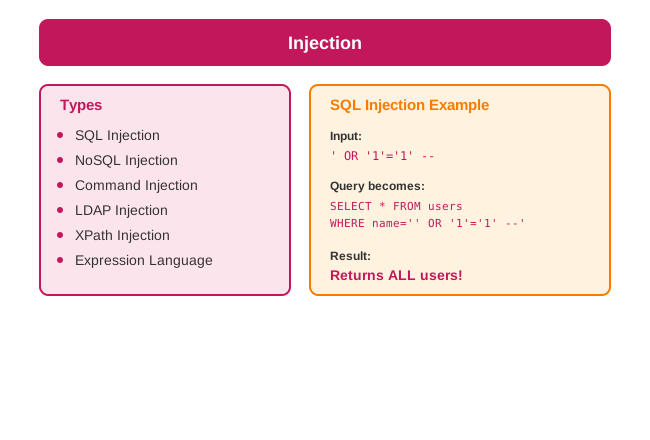
SQL Injection Prevention
// BAD: String concatenation
String query = "SELECT * FROM users WHERE username = '" + username + "'";
Statement stmt = connection.createStatement();
ResultSet rs = stmt.executeQuery(query);

// GOOD: Parameterized queries
String query = "SELECT * FROM users WHERE username = ?";
PreparedStatement pstmt = connection.prepareStatement(query);
pstmt.setString(1, username);
ResultSet rs = pstmt.executeQuery();

// GOOD: JPA Named Parameters
@Query("SELECT u FROM User u WHERE u.username = :username")
User findByUsername(@Param("username") String username);

// GOOD: Criteria API
CriteriaBuilder cb = entityManager.getCriteriaBuilder();
CriteriaQuery<User> query = cb.createQuery(User.class);
Root<User> root = query.from(User.class);
query.where(cb.equal(root.get("username"), username));
Command Injection Prevention
// BAD: Direct command execution
Runtime.getRuntime().exec("ping " + userInput);

// GOOD: Use ProcessBuilder with array (no shell interpretation)
ProcessBuilder pb = new ProcessBuilder("ping", "-c", "4", validatedHost);
pb.redirectErrorStream(true);
Process process = pb.start();

// BETTER: Avoid shell commands entirely, use libraries
InetAddress address = InetAddress.getByName(validatedHost);
boolean reachable = address.isReachable(5000);
A04: Insecure Design
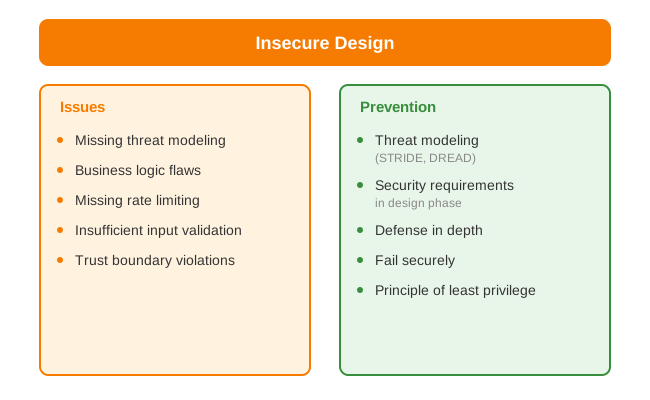
Secure Design Patterns
// Rate limiting
@RateLimiter(name = "loginAttempts", fallbackMethod = "loginRateLimited")
public AuthResponse login(LoginRequest request) {
    // Login logic
}

// Account lockout
public class LoginService {
    private static final int MAX_ATTEMPTS = 5;
    private static final Duration LOCKOUT_DURATION = Duration.ofMinutes(15);

    public AuthResponse login(LoginRequest request) {
        User user = userRepository.findByEmail(request.getEmail());

        if (user.isLocked() && user.getLockoutExpiry().isAfter(Instant.now())) {
            throw new AccountLockedException("Account locked. Try again later.");
        }

        if (!passwordEncoder.matches(request.getPassword(), user.getPassword())) {
            user.incrementFailedAttempts();
            if (user.getFailedAttempts() >= MAX_ATTEMPTS) {
                user.lock(LOCKOUT_DURATION);
            }
            userRepository.save(user);
            throw new BadCredentialsException("Invalid credentials");
        }

        user.resetFailedAttempts();
        userRepository.save(user);
        return generateToken(user);
    }
}
A05: Security Misconfiguration
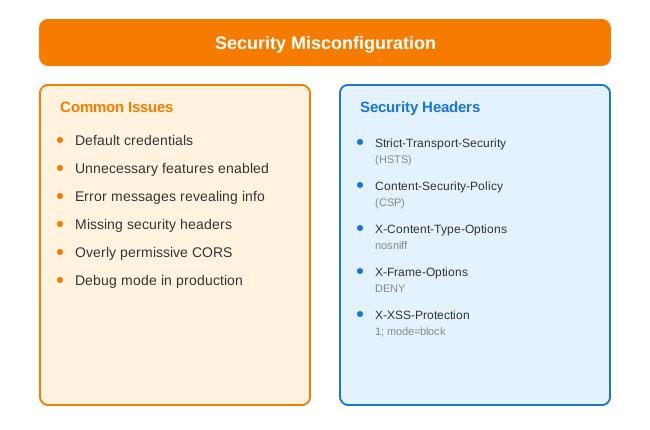
Security Headers Configuration
@Configuration
@EnableWebSecurity
public class SecurityConfig {

    @Bean
    public SecurityFilterChain filterChain(HttpSecurity http) throws Exception {
        http
            .headers(headers -> headers
                .contentSecurityPolicy(csp -> csp
                    .policyDirectives("default-src 'self'; script-src 'self'"))
                .frameOptions(frame -> frame.deny())
                .xssProtection(xss -> xss.block(true))
                .contentTypeOptions(Customizer.withDefaults())
                .httpStrictTransportSecurity(hsts -> hsts
                    .includeSubDomains(true)
                    .maxAgeInSeconds(31536000))
            );
        return http.build();
    }
}
Error Handling
// BAD: Exposing stack traces
@ExceptionHandler(Exception.class)
public ResponseEntity<String> handleException(Exception e) {
    return ResponseEntity.status(500).body(e.getMessage());  // Leaks info!
}

// GOOD: Generic error messages
@ExceptionHandler(Exception.class)
public ResponseEntity<ErrorResponse> handleException(Exception e) {
    log.error("Internal error", e);  // Log details internally
    return ResponseEntity.status(500)
        .body(new ErrorResponse("An unexpected error occurred",
                                UUID.randomUUID().toString()));  // Correlation ID
}
A06: Vulnerable Components
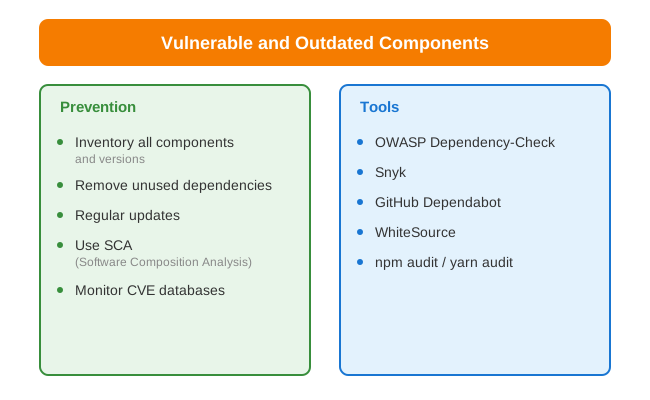
Dependency Scanning
<!-- Maven: OWASP Dependency Check -->
<plugin>
    <groupId>org.owasp</groupId>
    <artifactId>dependency-check-maven</artifactId>
    <version>8.4.0</version>
    <executions>
        <execution>
            <goals>
                <goal>check</goal>
            </goals>
        </execution>
    </executions>
    <configuration>
        <failBuildOnCVSS>7</failBuildOnCVSS>
    </configuration>
</plugin>
# Run dependency check
mvn dependency-check:check

# Gradle
./gradlew dependencyCheckAnalyze

# NPM
npm audit
npm audit fix

# Snyk
snyk test
snyk monitor
Cross-Site Scripting (XSS)
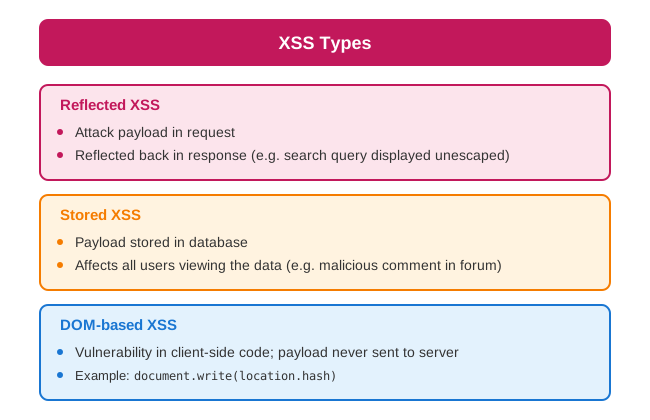
XSS Prevention
// Server-side: Use templating engine with auto-escaping
// Thymeleaf automatically escapes by default
<p th:text="${userInput}">User input here</p>  // Safe
<p th:utext="${userInput}">DANGER</p>  // Unescaped - avoid!

// Manual encoding
import org.owasp.encoder.Encode;

String safe = Encode.forHtml(userInput);
String safeJs = Encode.forJavaScript(userInput);
String safeUrl = Encode.forUriComponent(userInput);
// Client-side: Use textContent, not innerHTML
// BAD
element.innerHTML = userInput;

// GOOD
element.textContent = userInput;

// For HTML, use DOMPurify
import DOMPurify from 'dompurify';
element.innerHTML = DOMPurify.sanitize(userInput);
Content Security Policy
Content-Security-Policy:
    default-src 'self';
    script-src 'self' 'nonce-abc123';
    style-src 'self' 'unsafe-inline';
    img-src 'self' data: https:;
    font-src 'self';
    connect-src 'self' https://api.example.com;
    frame-ancestors 'none';
Cross-Site Request Forgery (CSRF)
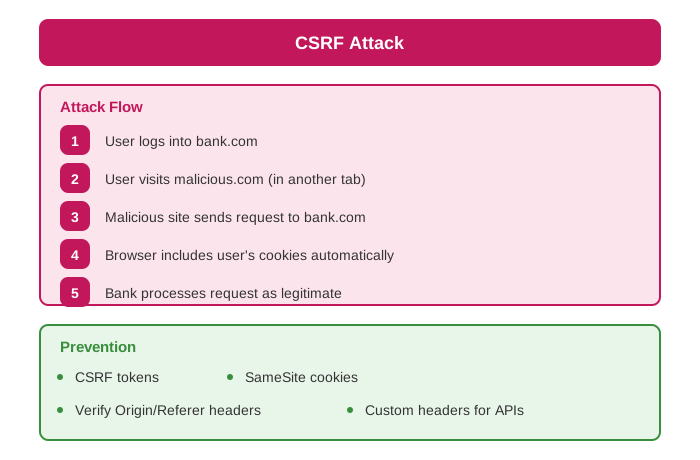
CSRF Prevention
// Spring Security CSRF (enabled by default)
@Configuration
@EnableWebSecurity
public class SecurityConfig {
    @Bean
    public SecurityFilterChain filterChain(HttpSecurity http) throws Exception {
        http
            .csrf(csrf -> csrf
                .csrfTokenRepository(CookieCsrfTokenRepository.withHttpOnlyFalse())
            );
        return http.build();
    }
}

// For APIs using JWT (stateless), CSRF can be disabled
http.csrf(csrf -> csrf.disable());  // Only if using token auth
SameSite Cookies
// Set SameSite attribute
@Bean
public CookieSerializer cookieSerializer() {
    DefaultCookieSerializer serializer = new DefaultCookieSerializer();
    serializer.setSameSite("Strict");  // or "Lax"
    serializer.setUseSecureCookie(true);
    serializer.setUseHttpOnlyCookie(true);
    return serializer;
}
Server-Side Request Forgery (SSRF)
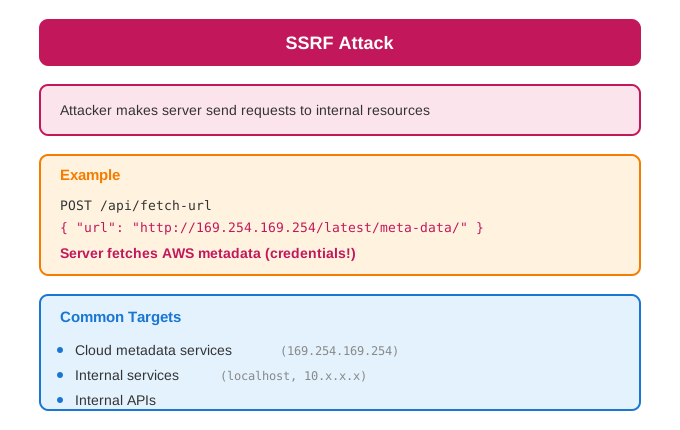
SSRF Prevention
public class UrlValidator {
    private static final Set<String> BLOCKED_HOSTS = Set.of(
        "localhost", "127.0.0.1", "0.0.0.0", "169.254.169.254"
    );

    private static final Set<String> ALLOWED_SCHEMES = Set.of("http", "https");

    public boolean isUrlSafe(String urlString) {
        try {
            URL url = new URL(urlString);

            // Check scheme
            if (!ALLOWED_SCHEMES.contains(url.getProtocol())) {
                return false;
            }

            // Check for blocked hosts
            String host = url.getHost().toLowerCase();
            if (BLOCKED_HOSTS.contains(host)) {
                return false;
            }

            // Resolve and check IP
            InetAddress address = InetAddress.getByName(host);
            if (address.isLoopbackAddress() ||
                address.isLinkLocalAddress() ||
                address.isSiteLocalAddress()) {
                return false;
            }

            return true;
        } catch (Exception e) {
            return false;
        }
    }
}
Input Validation
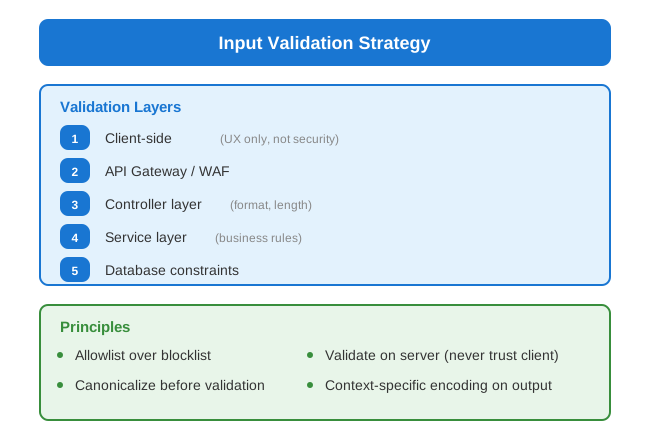
Validation Example
@RestController
public class UserController {

    @PostMapping("/api/users")
    public ResponseEntity<User> createUser(@Valid @RequestBody CreateUserRequest request) {
        // Request already validated by Bean Validation
        return ResponseEntity.ok(userService.create(request));
    }
}

public class CreateUserRequest {

    @NotBlank(message = "Email is required")
    @Email(message = "Invalid email format")
    @Size(max = 255)
    private String email;

    @NotBlank(message = "Name is required")
    @Size(min = 2, max = 100)
    @Pattern(regexp = "^[a-zA-Z\\s-']+$", message = "Invalid characters in name")
    private String name;

    @NotBlank
    @Size(min = 8, max = 128)
    @Pattern(regexp = "^(?=.*[a-z])(?=.*[A-Z])(?=.*\\d)(?=.*[@$!%*?&]).+$",
             message = "Password must contain uppercase, lowercase, number, and special char")
    private String password;

    @Past
    private LocalDate birthDate;
}
Security Testing
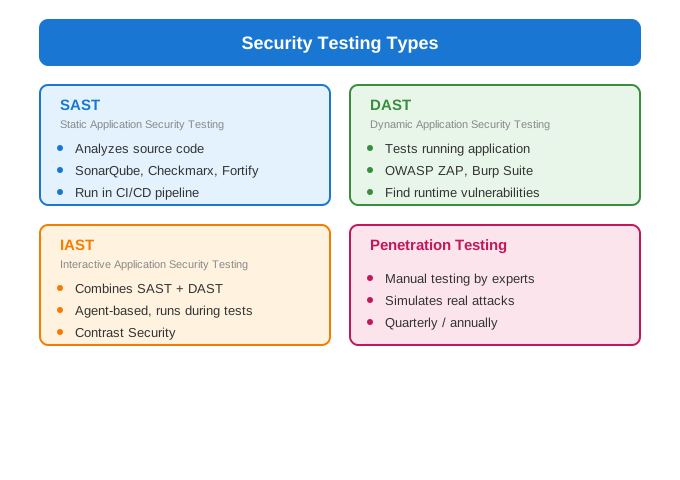
Common Interview Questions
- What is OWASP Top 10?
- List of most critical web security risks
- Updated periodically (latest 2021)
-
Covers injection, broken auth, XSS, etc.
-
How to prevent SQL injection?
- Parameterized queries / prepared statements
- Use ORM frameworks properly
-
Input validation and escaping
-
XSS vs CSRF?
- XSS: Inject malicious scripts into pages
- CSRF: Trick user into unwanted actions
-
Different attack vectors, different mitigations
-
How to store passwords securely?
- Never store plain text
- Use bcrypt, Argon2, or scrypt
-
Use unique salt per password
-
What is defense in depth?
- Multiple layers of security controls
- If one fails, others still protect
- Example: WAF + input validation + parameterized queries
- *