Cryptography Basics
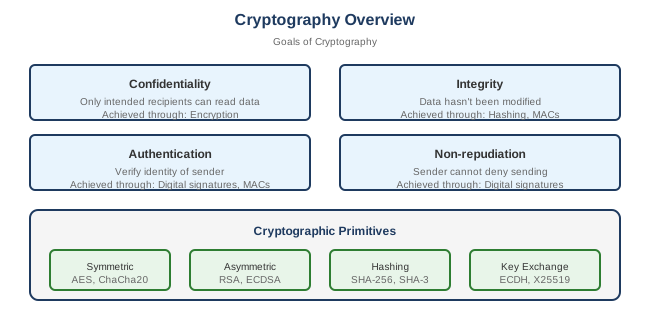
Cryptography Overview
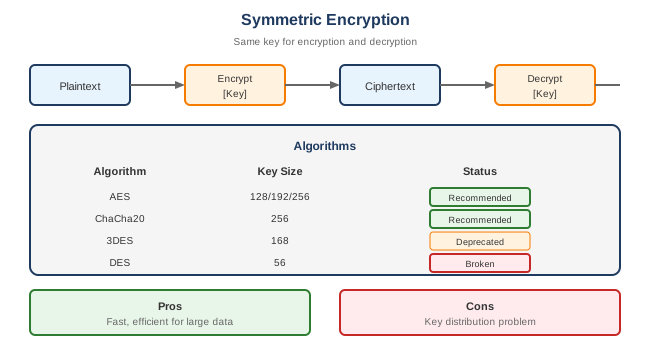
Symmetric Encryption
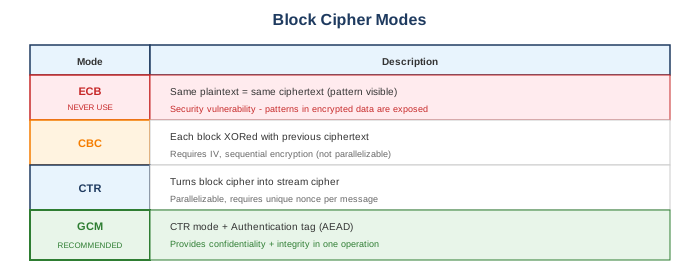
Block Cipher Modes
AES-GCM Implementation
import javax.crypto.Cipher;
import javax.crypto.SecretKey;
import javax.crypto.spec.GCMParameterSpec;
import java.security.SecureRandom;

public class AesGcmEncryption {

    private static final int GCM_IV_LENGTH = 12;  // 96 bits recommended
    private static final int GCM_TAG_LENGTH = 128; // bits

    public byte[] encrypt(byte[] plaintext, SecretKey key) throws Exception {
        // Generate random IV
        byte[] iv = new byte[GCM_IV_LENGTH];
        SecureRandom random = new SecureRandom();
        random.nextBytes(iv);

        // Initialize cipher
        Cipher cipher = Cipher.getInstance("AES/GCM/NoPadding");
        GCMParameterSpec spec = new GCMParameterSpec(GCM_TAG_LENGTH, iv);
        cipher.init(Cipher.ENCRYPT_MODE, key, spec);

        // Encrypt
        byte[] ciphertext = cipher.doFinal(plaintext);

        // Prepend IV to ciphertext (IV || Ciphertext || Tag)
        byte[] result = new byte[iv.length + ciphertext.length];
        System.arraycopy(iv, 0, result, 0, iv.length);
        System.arraycopy(ciphertext, 0, result, iv.length, ciphertext.length);

        return result;
    }

    public byte[] decrypt(byte[] encryptedData, SecretKey key) throws Exception {
        // Extract IV
        byte[] iv = new byte[GCM_IV_LENGTH];
        System.arraycopy(encryptedData, 0, iv, 0, iv.length);

        // Extract ciphertext
        byte[] ciphertext = new byte[encryptedData.length - GCM_IV_LENGTH];
        System.arraycopy(encryptedData, GCM_IV_LENGTH, ciphertext, 0, ciphertext.length);

        // Initialize cipher
        Cipher cipher = Cipher.getInstance("AES/GCM/NoPadding");
        GCMParameterSpec spec = new GCMParameterSpec(GCM_TAG_LENGTH, iv);
        cipher.init(Cipher.DECRYPT_MODE, key, spec);

        // Decrypt and verify
        return cipher.doFinal(ciphertext);
    }

    public SecretKey generateKey() throws Exception {
        KeyGenerator keyGen = KeyGenerator.getInstance("AES");
        keyGen.init(256, new SecureRandom());
        return keyGen.generateKey();
    }
}
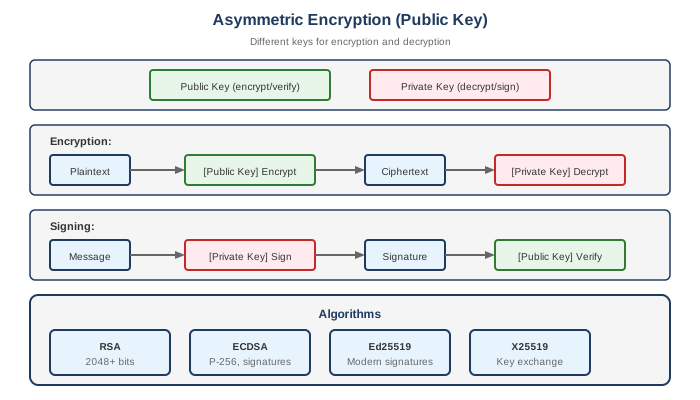
Asymmetric Encryption (Public Key)
RSA Implementation
import java.security.*;
import javax.crypto.Cipher;

public class RsaEncryption {

    public KeyPair generateKeyPair() throws Exception {
        KeyPairGenerator generator = KeyPairGenerator.getInstance("RSA");
        generator.initialize(2048, new SecureRandom());
        return generator.generateKeyPair();
    }

    public byte[] encrypt(byte[] plaintext, PublicKey publicKey) throws Exception {
        Cipher cipher = Cipher.getInstance("RSA/ECB/OAEPWithSHA-256AndMGF1Padding");
        cipher.init(Cipher.ENCRYPT_MODE, publicKey);
        return cipher.doFinal(plaintext);
    }

    public byte[] decrypt(byte[] ciphertext, PrivateKey privateKey) throws Exception {
        Cipher cipher = Cipher.getInstance("RSA/ECB/OAEPWithSHA-256AndMGF1Padding");
        cipher.init(Cipher.DECRYPT_MODE, privateKey);
        return cipher.doFinal(ciphertext);
    }
}
Digital Signatures
import java.security.*;

public class DigitalSignature {

    public byte[] sign(byte[] data, PrivateKey privateKey) throws Exception {
        Signature signature = Signature.getInstance("SHA256withRSA");
        signature.initSign(privateKey);
        signature.update(data);
        return signature.sign();
    }

    public boolean verify(byte[] data, byte[] signatureBytes,
                          PublicKey publicKey) throws Exception {
        Signature signature = Signature.getInstance("SHA256withRSA");
        signature.initVerify(publicKey);
        signature.update(data);
        return signature.verify(signatureBytes);
    }
}

// Ed25519 (modern, recommended)
public class Ed25519Signature {

    public KeyPair generateKeyPair() throws Exception {
        KeyPairGenerator generator = KeyPairGenerator.getInstance("Ed25519");
        return generator.generateKeyPair();
    }

    public byte[] sign(byte[] data, PrivateKey privateKey) throws Exception {
        Signature signature = Signature.getInstance("Ed25519");
        signature.initSign(privateKey);
        signature.update(data);
        return signature.sign();
    }

    public boolean verify(byte[] data, byte[] sig,
                          PublicKey publicKey) throws Exception {
        Signature signature = Signature.getInstance("Ed25519");
        signature.initVerify(publicKey);
        signature.update(data);
        return signature.verify(sig);
    }
}
Hybrid Encryption
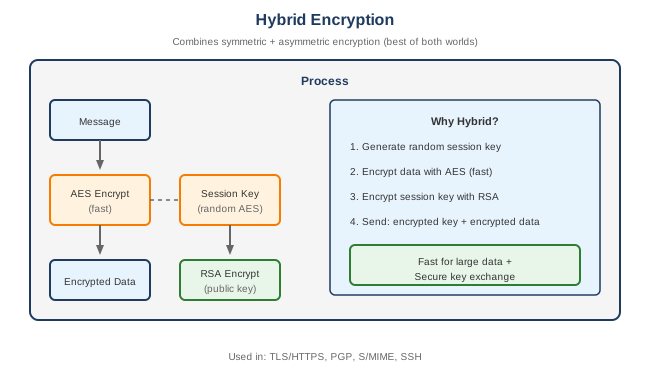
public class HybridEncryption {

    public EncryptedMessage encrypt(byte[] plaintext, PublicKey recipientPublicKey)
            throws Exception {
        // Generate random AES key
        KeyGenerator keyGen = KeyGenerator.getInstance("AES");
        keyGen.init(256, new SecureRandom());
        SecretKey sessionKey = keyGen.generateKey();

        // Encrypt data with AES
        AesGcmEncryption aes = new AesGcmEncryption();
        byte[] encryptedData = aes.encrypt(plaintext, sessionKey);

        // Encrypt session key with RSA
        RsaEncryption rsa = new RsaEncryption();
        byte[] encryptedKey = rsa.encrypt(sessionKey.getEncoded(), recipientPublicKey);

        return new EncryptedMessage(encryptedKey, encryptedData);
    }

    public byte[] decrypt(EncryptedMessage message, PrivateKey recipientPrivateKey)
            throws Exception {
        // Decrypt session key
        RsaEncryption rsa = new RsaEncryption();
        byte[] sessionKeyBytes = rsa.decrypt(message.getEncryptedKey(), recipientPrivateKey);
        SecretKey sessionKey = new SecretKeySpec(sessionKeyBytes, "AES");

        // Decrypt data
        AesGcmEncryption aes = new AesGcmEncryption();
        return aes.decrypt(message.getEncryptedData(), sessionKey);
    }
}
Hashing
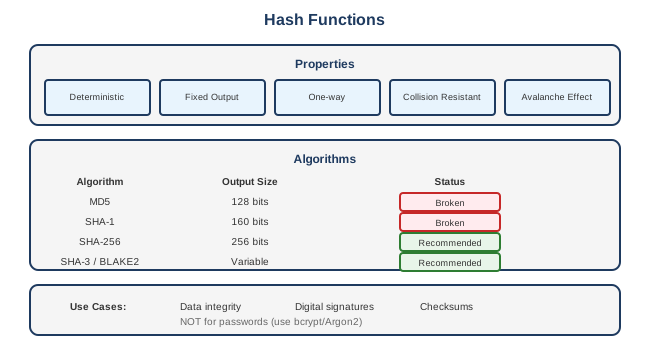
import java.security.MessageDigest;

public class HashingExample {

    public byte[] sha256(byte[] data) throws Exception {
        MessageDigest digest = MessageDigest.getInstance("SHA-256");
        return digest.digest(data);
    }

    public String sha256Hex(String input) throws Exception {
        byte[] hash = sha256(input.getBytes(StandardCharsets.UTF_8));
        return bytesToHex(hash);
    }

    private String bytesToHex(byte[] bytes) {
        StringBuilder sb = new StringBuilder();
        for (byte b : bytes) {
            sb.append(String.format("%02x", b));
        }
        return sb.toString();
    }
}
Password Hashing
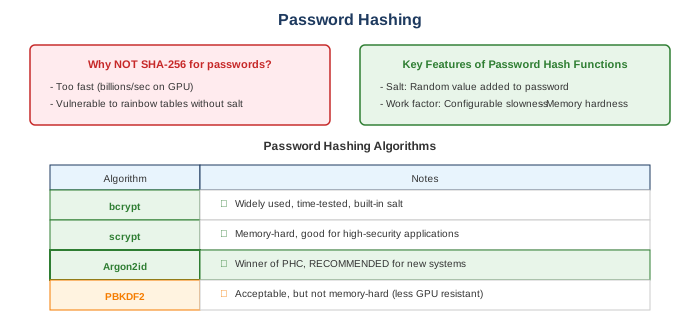
bcrypt Implementation
import org.springframework.security.crypto.bcrypt.BCryptPasswordEncoder;

public class PasswordService {

    // Cost factor: 2^12 = 4096 iterations
    // Increase over time as hardware improves
    private final BCryptPasswordEncoder encoder = new BCryptPasswordEncoder(12);

    public String hashPassword(String rawPassword) {
        // Salt is automatically generated and stored in the hash
        return encoder.encode(rawPassword);
    }

    public boolean verifyPassword(String rawPassword, String hashedPassword) {
        return encoder.matches(rawPassword, hashedPassword);
    }
}

// bcrypt hash format:
// $2a$12$R9h/cIPz0gi.URNNX3kh2OPST9/PgBkqquzi.Ss7KIUgO2t0jWMUW
// $2a$ = algorithm identifier
// 12   = cost factor
// R9h/cIPz0gi.URNNX3kh2O = salt (22 chars)
// PST9/PgBkqquzi.Ss7KIUgO2t0jWMUW = hash (31 chars)
Argon2 Implementation
import org.bouncycastle.crypto.generators.Argon2BytesGenerator;
import org.bouncycastle.crypto.params.Argon2Parameters;

public class Argon2PasswordService {

    private static final int SALT_LENGTH = 16;
    private static final int HASH_LENGTH = 32;
    private static final int PARALLELISM = 1;
    private static final int MEMORY = 65536;  // 64 MB
    private static final int ITERATIONS = 3;

    public String hashPassword(String password) {
        byte[] salt = new byte[SALT_LENGTH];
        new SecureRandom().nextBytes(salt);

        Argon2Parameters params = new Argon2Parameters.Builder(Argon2Parameters.ARGON2_id)
            .withSalt(salt)
            .withParallelism(PARALLELISM)
            .withMemoryAsKB(MEMORY)
            .withIterations(ITERATIONS)
            .build();

        Argon2BytesGenerator generator = new Argon2BytesGenerator();
        generator.init(params);

        byte[] hash = new byte[HASH_LENGTH];
        generator.generateBytes(password.toCharArray(), hash);

        // Encode salt + hash for storage
        return Base64.getEncoder().encodeToString(salt) + "$" +
               Base64.getEncoder().encodeToString(hash);
    }
}
Message Authentication Code (MAC)
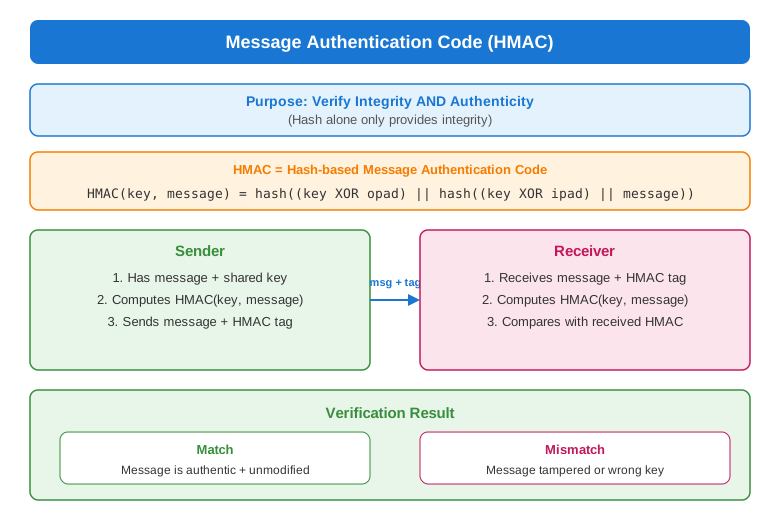
import javax.crypto.Mac;
import javax.crypto.spec.SecretKeySpec;

public class HmacService {

    public byte[] generateHmac(byte[] data, byte[] key) throws Exception {
        Mac mac = Mac.getInstance("HmacSHA256");
        SecretKeySpec secretKey = new SecretKeySpec(key, "HmacSHA256");
        mac.init(secretKey);
        return mac.doFinal(data);
    }

    public boolean verifyHmac(byte[] data, byte[] key, byte[] expectedHmac)
            throws Exception {
        byte[] actualHmac = generateHmac(data, key);
        return MessageDigest.isEqual(actualHmac, expectedHmac);  // Constant-time comparison
    }
}

// Use case: API request signing
public class ApiSigner {

    public String signRequest(String method, String path, String body,
                              String apiSecret, long timestamp) throws Exception {
        String stringToSign = method + "\n" + path + "\n" + timestamp + "\n" + body;

        Mac mac = Mac.getInstance("HmacSHA256");
        mac.init(new SecretKeySpec(apiSecret.getBytes(), "HmacSHA256"));
        byte[] signature = mac.doFinal(stringToSign.getBytes(StandardCharsets.UTF_8));

        return Base64.getEncoder().encodeToString(signature);
    }
}
Key Exchange
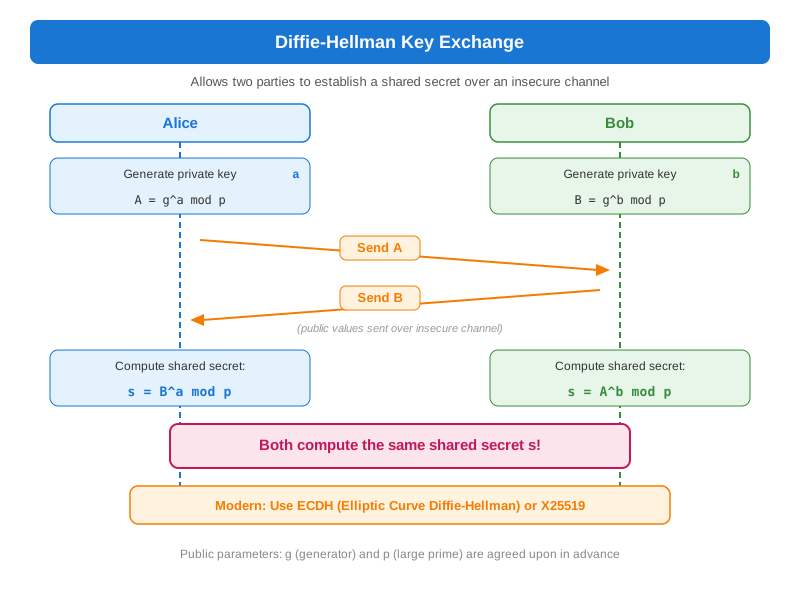
import java.security.*;
import javax.crypto.KeyAgreement;

public class EcdhKeyExchange {

    public KeyPair generateKeyPair() throws Exception {
        KeyPairGenerator keyGen = KeyPairGenerator.getInstance("EC");
        keyGen.initialize(new ECGenParameterSpec("secp256r1"));
        return keyGen.generateKeyPair();
    }

    public byte[] deriveSharedSecret(PrivateKey privateKey,
                                      PublicKey otherPublicKey) throws Exception {
        KeyAgreement keyAgreement = KeyAgreement.getInstance("ECDH");
        keyAgreement.init(privateKey);
        keyAgreement.doPhase(otherPublicKey, true);
        return keyAgreement.generateSecret();
    }

    // Derive AES key from shared secret
    public SecretKey deriveAesKey(byte[] sharedSecret) throws Exception {
        MessageDigest sha256 = MessageDigest.getInstance("SHA-256");
        byte[] keyBytes = sha256.digest(sharedSecret);
        return new SecretKeySpec(keyBytes, "AES");
    }
}
TLS/SSL
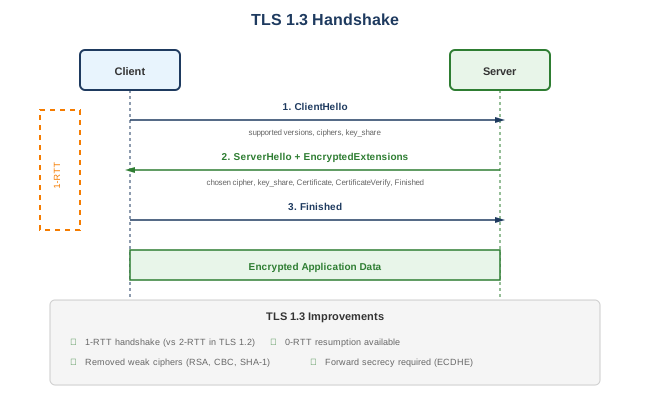
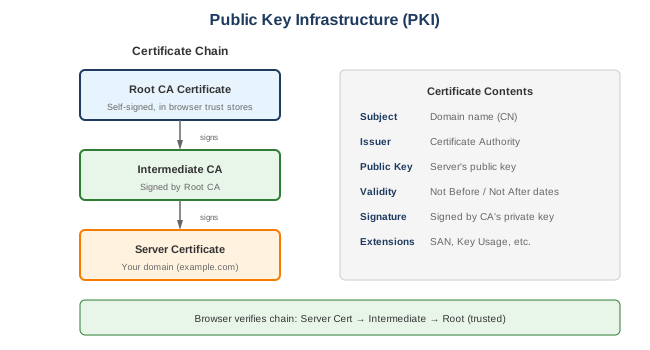
Certificates and PKI
Random Number Generation
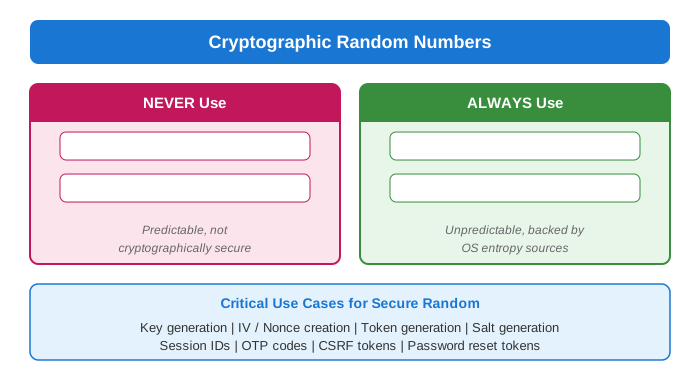
import java.security.SecureRandom;

public class SecureRandomExample {

    private final SecureRandom random = new SecureRandom();

    public byte[] generateKey(int bits) {
        byte[] key = new byte[bits / 8];
        random.nextBytes(key);
        return key;
    }

    public String generateToken(int length) {
        byte[] bytes = new byte[length];
        random.nextBytes(bytes);
        return Base64.getUrlEncoder().withoutPadding().encodeToString(bytes);
    }

    public String generateOtp(int digits) {
        int max = (int) Math.pow(10, digits);
        int otp = random.nextInt(max);
        return String.format("%0" + digits + "d", otp);
    }
}
Common Interview Questions
- Symmetric vs Asymmetric encryption?
- Symmetric: Same key, fast, for bulk data
-
Asymmetric: Key pair, slow, for key exchange/signatures
-
Why use AES-GCM?
- Provides encryption + authentication
- Fast, parallelizable
-
Industry standard
-
How is HTTPS secured?
- TLS handshake establishes encrypted channel
- Certificate verifies server identity
-
Symmetric encryption for data
-
Why bcrypt for passwords?
- Intentionally slow (configurable work factor)
- Built-in salt
-
Resistant to GPU attacks
-
What is forward secrecy?
- Compromised long-term key doesn't reveal past sessions
- Each session uses ephemeral keys
- ECDHE provides forward secrecy
- *