Zookeeper
What is ZooKeeper?
Apache ZooKeeper is a centralized service for maintaining configuration information, naming, providing distributed synchronization, and group services in distributed systems.
- Type: Distributed coordination service
- Written in: Java
- License: Apache 2.0
- Protocol: Custom binary protocol over TCP
- Default Ports: 2181 (client), 2888 (follower), 3888 (election)
- Originally developed by: Yahoo!
Core Concepts
Data Model (ZNode Tree)
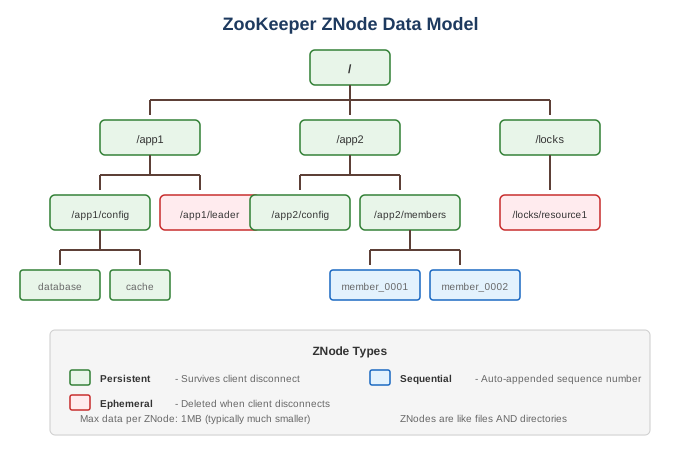
ZNode Types
| Type | Description |
|---|---|
| Persistent | Survives client disconnect |
| Ephemeral | Deleted when client disconnects |
| Sequential | Auto-appended sequence number |
| Persistent Sequential | Persistent + sequence |
| Ephemeral Sequential | Ephemeral + sequence |
Architecture
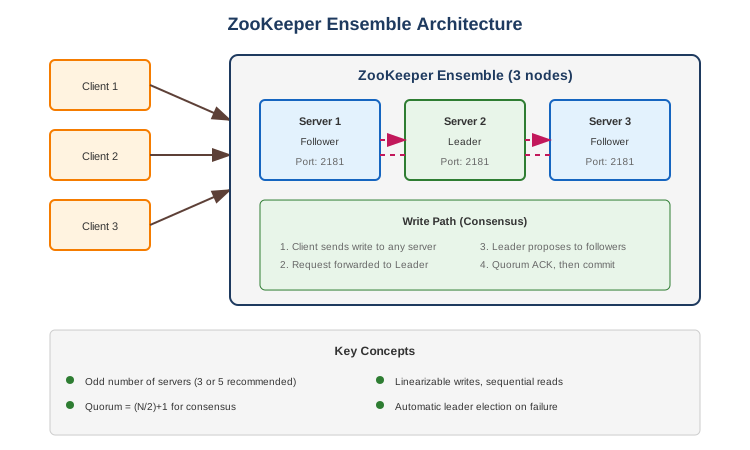
Consistency Model
• Linearizable writes (all writes go through leader)
• Sequential consistency for reads
• Watches provide eventual notification

Write path:
Client → Leader → Propose → Quorum Ack → Commit → Response

Read path (default):
Client → Any Server (may be stale)

Read path (sync):
Client → sync() → read() (guaranteed fresh)
Core Features
ZooKeeper offers: - Distributed coordination - Leader election - Configuration management - Service discovery - Distributed locks - Cluster membership - Barriers/synchronization - Strong consistency guarantees
Common Use Cases
1. Configuration Management
// Store configuration
public class ConfigManager {
    private ZooKeeper zk;

    public void saveConfig(String path, String config) throws Exception {
        Stat stat = zk.exists(path, false);
        if (stat == null) {
            zk.create(path, config.getBytes(), ZooDefs.Ids.OPEN_ACL_UNSAFE,
                     CreateMode.PERSISTENT);
        } else {
            zk.setData(path, config.getBytes(), stat.getVersion());
        }
    }

    public String getConfig(String path) throws Exception {
        byte[] data = zk.getData(path, false, null);
        return new String(data);
    }

    // Watch for changes
    public void watchConfig(String path, Consumer<String> callback) throws Exception {
        Watcher watcher = new Watcher() {
            @Override
            public void process(WatchedEvent event) {
                if (event.getType() == Event.EventType.NodeDataChanged) {
                    try {
                        String newConfig = getConfig(path);
                        callback.accept(newConfig);
                        // Re-register watch (one-time by default)
                        watchConfig(path, callback);
                    } catch (Exception e) {
                        e.printStackTrace();
                    }
                }
            }
        };
        zk.getData(path, watcher, null);
    }
}
2. Leader Election
public class LeaderElection implements Watcher {
    private ZooKeeper zk;
    private String electionPath = "/election";
    private String myNode;
    private Runnable onBecomingLeader;

    public void participate() throws Exception {
        // Create ephemeral sequential node
        myNode = zk.create(electionPath + "/candidate_",
                          null,
                          ZooDefs.Ids.OPEN_ACL_UNSAFE,
                          CreateMode.EPHEMERAL_SEQUENTIAL);

        checkLeadership();
    }

    private void checkLeadership() throws Exception {
        List<String> children = zk.getChildren(electionPath, false);
        Collections.sort(children);

        String smallest = electionPath + "/" + children.get(0);

        if (myNode.equals(smallest)) {
            // I am the leader!
            onBecomingLeader.run();
        } else {
            // Watch the node before me
            int myIndex = children.indexOf(myNode.substring(electionPath.length() + 1));
            String nodeToWatch = electionPath + "/" + children.get(myIndex - 1);

            Stat stat = zk.exists(nodeToWatch, this);
            if (stat == null) {
                // Node disappeared, check again
                checkLeadership();
            }
        }
    }

    @Override
    public void process(WatchedEvent event) {
        if (event.getType() == Event.EventType.NodeDeleted) {
            try {
                checkLeadership();
            } catch (Exception e) {
                e.printStackTrace();
            }
        }
    }
}
3. Distributed Locking
public class DistributedLock {
    private ZooKeeper zk;
    private String lockPath;
    private String myLockNode;

    public DistributedLock(ZooKeeper zk, String resource) {
        this.zk = zk;
        this.lockPath = "/locks/" + resource;
    }

    public void acquire() throws Exception {
        // Create lock base path if needed
        if (zk.exists(lockPath, false) == null) {
            try {
                zk.create(lockPath, null, ZooDefs.Ids.OPEN_ACL_UNSAFE,
                         CreateMode.PERSISTENT);
            } catch (KeeperException.NodeExistsException e) {
                // Another thread created it
            }
        }

        // Create ephemeral sequential node
        myLockNode = zk.create(lockPath + "/lock_",
                               null,
                               ZooDefs.Ids.OPEN_ACL_UNSAFE,
                               CreateMode.EPHEMERAL_SEQUENTIAL);

        // Wait until we have the lock
        while (true) {
            List<String> children = zk.getChildren(lockPath, false);
            Collections.sort(children);

            String smallest = lockPath + "/" + children.get(0);

            if (myLockNode.equals(smallest)) {
                // We have the lock!
                return;
            }

            // Wait for the node before us
            int myIndex = children.indexOf(myLockNode.substring(lockPath.length() + 1));
            String nodeToWatch = lockPath + "/" + children.get(myIndex - 1);

            CountDownLatch latch = new CountDownLatch(1);
            Stat stat = zk.exists(nodeToWatch, event -> {
                if (event.getType() == Watcher.Event.EventType.NodeDeleted) {
                    latch.countDown();
                }
            });

            if (stat != null) {
                latch.await();
            }
            // Loop again to check if we're now first
        }
    }

    public void release() throws Exception {
        zk.delete(myLockNode, -1);
    }
}
4. Service Discovery
public class ServiceRegistry {
    private ZooKeeper zk;
    private String servicesPath = "/services";

    // Register a service instance
    public String register(String serviceName, String address) throws Exception {
        String servicePath = servicesPath + "/" + serviceName;

        // Create service path if needed
        if (zk.exists(servicePath, false) == null) {
            zk.create(servicePath, null, ZooDefs.Ids.OPEN_ACL_UNSAFE,
                     CreateMode.PERSISTENT);
        }

        // Create ephemeral node for this instance
        return zk.create(servicePath + "/instance_",
                        address.getBytes(),
                        ZooDefs.Ids.OPEN_ACL_UNSAFE,
                        CreateMode.EPHEMERAL_SEQUENTIAL);
    }

    // Get all instances of a service
    public List<String> discover(String serviceName) throws Exception {
        String servicePath = servicesPath + "/" + serviceName;
        List<String> instances = new ArrayList<>();

        List<String> children = zk.getChildren(servicePath, false);
        for (String child : children) {
            byte[] data = zk.getData(servicePath + "/" + child, false, null);
            instances.add(new String(data));
        }

        return instances;
    }

    // Watch for changes
    public void watch(String serviceName, Consumer<List<String>> callback) throws Exception {
        String servicePath = servicesPath + "/" + serviceName;

        Watcher watcher = new Watcher() {
            @Override
            public void process(WatchedEvent event) {
                if (event.getType() == Event.EventType.NodeChildrenChanged) {
                    try {
                        List<String> instances = discover(serviceName);
                        callback.accept(instances);
                        watch(serviceName, callback); // Re-register
                    } catch (Exception e) {
                        e.printStackTrace();
                    }
                }
            }
        };

        zk.getChildren(servicePath, watcher);
    }
}
5. Barrier / Synchronization
public class DistributedBarrier {
    private ZooKeeper zk;
    private String barrierPath;
    private int expectedParticipants;
    private String myNode;

    public DistributedBarrier(ZooKeeper zk, String name, int participants) {
        this.zk = zk;
        this.barrierPath = "/barriers/" + name;
        this.expectedParticipants = participants;
    }

    public void enter() throws Exception {
        // Create barrier path
        if (zk.exists(barrierPath, false) == null) {
            try {
                zk.create(barrierPath, null, ZooDefs.Ids.OPEN_ACL_UNSAFE,
                         CreateMode.PERSISTENT);
            } catch (KeeperException.NodeExistsException e) {
                // OK
            }
        }

        // Register as participant
        myNode = zk.create(barrierPath + "/participant_",
                          null,
                          ZooDefs.Ids.OPEN_ACL_UNSAFE,
                          CreateMode.EPHEMERAL_SEQUENTIAL);

        // Wait until all participants arrive
        while (true) {
            List<String> children = zk.getChildren(barrierPath, false);
            if (children.size() >= expectedParticipants) {
                return; // All arrived, proceed
            }

            // Wait for more participants
            CountDownLatch latch = new CountDownLatch(1);
            zk.getChildren(barrierPath, event -> {
                if (event.getType() == Watcher.Event.EventType.NodeChildrenChanged) {
                    latch.countDown();
                }
            });
            latch.await(1, TimeUnit.SECONDS);
        }
    }

    public void leave() throws Exception {
        zk.delete(myNode, -1);
    }
}
Curator Framework
Apache Curator provides higher-level abstractions over ZooKeeper.
// Setup
CuratorFramework client = CuratorFrameworkFactory.newClient(
    "zk1:2181,zk2:2181,zk3:2181",
    new ExponentialBackoffRetry(1000, 3)
);
client.start();

// Leader Election
LeaderSelector selector = new LeaderSelector(client, "/leader", new LeaderSelectorListener() {
    @Override
    public void takeLeadership(CuratorFramework client) throws Exception {
        // I am the leader now
        // Method should block while leader
        Thread.sleep(Long.MAX_VALUE);
    }

    @Override
    public void stateChanged(CuratorFramework client, ConnectionState newState) {
        // Handle connection state changes
    }
});
selector.start();

// Distributed Lock
InterProcessMutex lock = new InterProcessMutex(client, "/locks/mylock");
if (lock.acquire(10, TimeUnit.SECONDS)) {
    try {
        // Do work
    } finally {
        lock.release();
    }
}

// Service Discovery
ServiceDiscovery<InstanceDetails> discovery = ServiceDiscoveryBuilder.builder(InstanceDetails.class)
    .client(client)
    .basePath("/services")
    .build();
discovery.start();

// Register
ServiceInstance<InstanceDetails> instance = ServiceInstance.<InstanceDetails>builder()
    .name("myservice")
    .address("10.0.0.1")
    .port(8080)
    .build();
discovery.registerService(instance);

// Discover
Collection<ServiceInstance<InstanceDetails>> instances =
    discovery.queryForInstances("myservice");

// Cache (with automatic updates)
PathChildrenCache cache = new PathChildrenCache(client, "/config", true);
cache.getListenable().addListener((client1, event) -> {
    switch (event.getType()) {
        case CHILD_ADDED:
        case CHILD_UPDATED:
        case CHILD_REMOVED:
            // Handle change
            break;
    }
});
cache.start();
Operations
Session Management
// Session timeout: 10-40 seconds typical
ZooKeeper zk = new ZooKeeper(
    "zk1:2181,zk2:2181,zk3:2181",
    30000,  // Session timeout in ms
    watchedEvent -> {
        switch (watchedEvent.getState()) {
            case SyncConnected:
                // Connected
                break;
            case Disconnected:
                // Temporarily disconnected (will retry)
                break;
            case Expired:
                // Session expired, need to recreate
                break;
        }
    }
);
Watches
// One-time watches (need to re-register)
zk.getData("/path", event -> {
    // Called once when data changes
}, null);

zk.getChildren("/path", event -> {
    // Called once when children change
});

zk.exists("/path", event -> {
    // Called once when node created/deleted
});
Trade-offs
| Pros | Cons |
|---|---|
| Strong consistency | Limited storage (in-memory) |
| Simple API | Complex clustering setup |
| Ordered operations | Session management complexity |
| Ephemeral nodes | Single write leader (bottleneck) |
| Watches | Watch storm potential |
| Mature and proven | JVM dependency |
| High availability | Limited throughput |
Performance Characteristics
| Metric | Typical Value |
|---|---|
| Read throughput | 10,000+ ops/sec |
| Write throughput | 1,000-5,000 ops/sec |
| Latency | 1-10ms |
| Max ZNode size | 1 MB |
| Max children | Millions (practical: thousands) |
| Session timeout | 10-40 seconds |
When to Use ZooKeeper
Good For: - Distributed coordination - Leader election - Configuration management - Service discovery - Distributed locks - Cluster membership - Barriers/synchronization
Not Good For: - Large data storage - Message queuing (use Kafka) - General-purpose database - High write throughput - Large numbers of clients per node
ZooKeeper vs Alternatives
| Feature | ZooKeeper | etcd | Consul |
|---|---|---|---|
| Consistency | CP (linearizable writes) | CP (Raft) | CP (Raft) |
| Language | Java | Go | Go |
| Protocol | Custom | gRPC | HTTP/gRPC |
| Watch | Yes | Yes | Yes |
| TTL | Session-based | Key-based | Both |
| ACL | Yes | Yes | Yes |
| UI | No (third-party) | No | Yes |
| Multi-DC | No | No | Yes |
Best Practices
- Use odd number of servers - 3 or 5 (never even)
- Separate ZK from application - Dedicated servers
- Use Curator - Higher-level API, handles edge cases
- Handle session expiry - Recreate ephemeral nodes
- Keep znodes small - < 1KB typically
- Limit children - Thousands, not millions
- Re-register watches - They are one-time
- Monitor ensemble - Four-letter commands, JMX
- Use transactions - Multi-op for atomicity
- Set appropriate session timeout - Balance between detection and stability
Four-Letter Commands
# Server status
echo stat | nc localhost 2181

# Configuration
echo conf | nc localhost 2181

# Connection info
echo cons | nc localhost 2181

# Server mode (leader/follower)
echo srvr | nc localhost 2181

# Watch info
echo wchs | nc localhost 2181

# Is server alive
echo ruok | nc localhost 2181

# Dump sessions
echo dump | nc localhost 2181
Ensemble Configuration
# zoo.cfg
tickTime=2000
dataDir=/var/lib/zookeeper
clientPort=2181
initLimit=10
syncLimit=5

# Ensemble members
server.1=zk1:2888:3888
server.2=zk2:2888:3888
server.3=zk3:2888:3888

# Create myid file
# On zk1: echo "1" > /var/lib/zookeeper/myid
# On zk2: echo "2" > /var/lib/zookeeper/myid
# On zk3: echo "3" > /var/lib/zookeeper/myid