Load Balancing
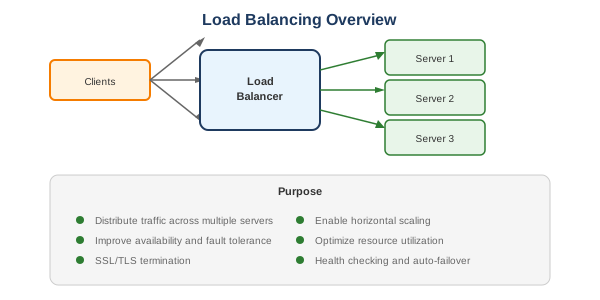
Overview
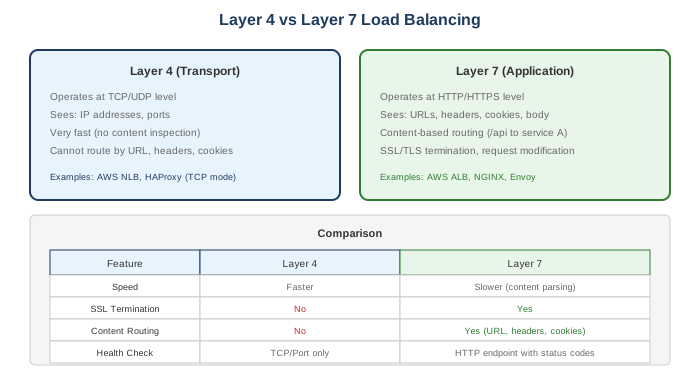
Layer 4 vs Layer 7 Load Balancing
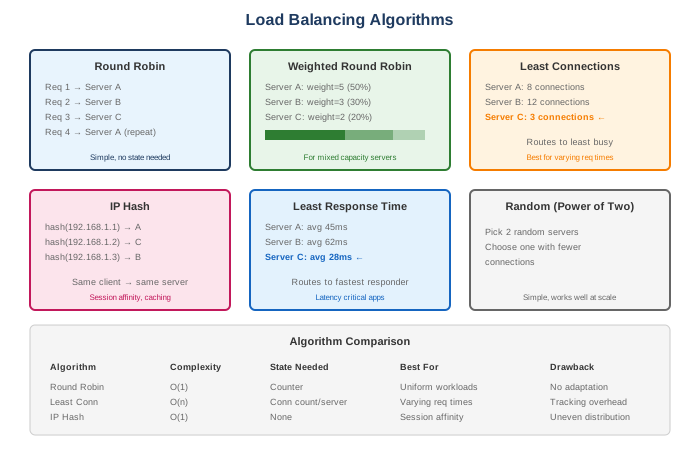
Load Balancing Algorithms
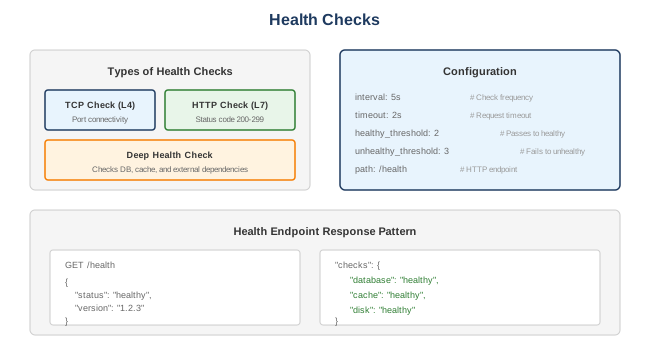
Health Checks
Session Persistence (Sticky Sessions)
Problem
User state stored in server memory requires routing same user to same server.
Methods
- Cookie-Based: Load balancer sets cookie with server ID
- IP-Based: Hash client IP (problem: NAT, shared IPs)
- URL/Header Based: Use session ID in URL or header
Drawbacks of Sticky Sessions
- Server failure loses session data
- Uneven load distribution
- Scaling complications
Better Alternative
Externalize session to Redis/Memcached so any server can handle any request.
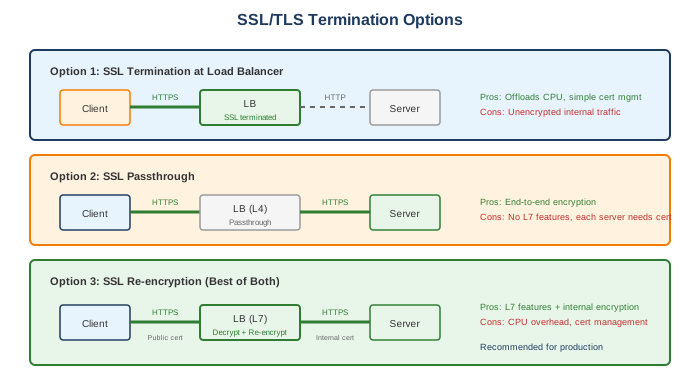
SSL/TLS Termination
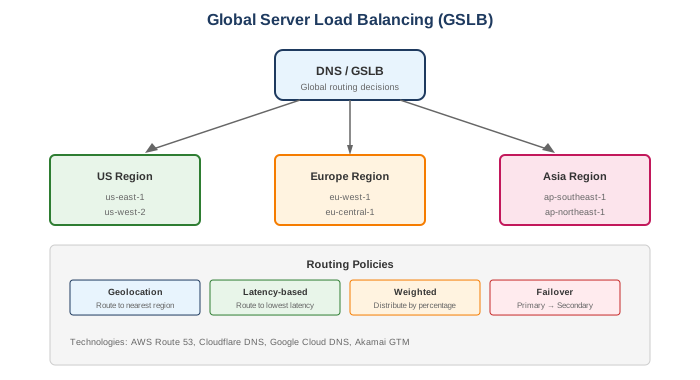
Global Load Balancing (GSLB)
Load Balancer Architectures
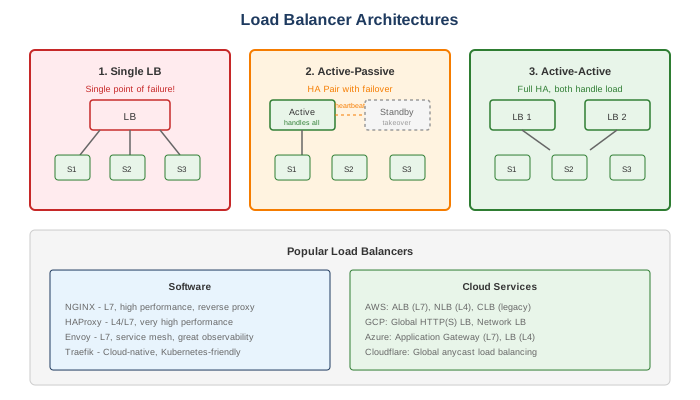
Popular Load Balancers
Software
- NGINX: L7 load balancer and reverse proxy, high performance
- HAProxy: L4/L7 load balancer, very high performance
- Envoy: Modern L7 proxy, service mesh data plane (Istio)
- Traefik: Cloud-native, Kubernetes-friendly
Cloud Services
- AWS: ALB (L7), NLB (L4), CLB (legacy)
- GCP: Global HTTP(S) Load Balancer, Network Load Balancer
- Azure: Application Gateway (L7), Load Balancer (L4)
NGINX Configuration Example
# Layer 7 load balancing configuration
upstream backend {
    # Load balancing algorithm
    least_conn;  # or: round_robin, ip_hash, random

    # Backend servers with weights
    server 10.0.0.1:8080 weight=5;
    server 10.0.0.2:8080 weight=3;
    server 10.0.0.3:8080 weight=2 backup;

    # Keep alive connections to backend
    keepalive 32;

    # Health check (NGINX Plus only)
    # health_check interval=5s fails=3 passes=2;
}

server {
    listen 443 ssl http2;
    server_name api.example.com;

    # SSL termination
    ssl_certificate /etc/ssl/certs/cert.pem;
    ssl_certificate_key /etc/ssl/private/key.pem;

    location / {
        proxy_pass http://backend;

        # Headers
        proxy_set_header Host $host;
        proxy_set_header X-Real-IP $remote_addr;
        proxy_set_header X-Forwarded-For $proxy_add_x_forwarded_for;
        proxy_set_header X-Forwarded-Proto $scheme;

        # Timeouts
        proxy_connect_timeout 5s;
        proxy_read_timeout 60s;

        # Keep alive
        proxy_http_version 1.1;
        proxy_set_header Connection "";
    }

    # Health check endpoint (bypass backend)
    location /health {
        access_log off;
        return 200 "healthy\n";
    }
}
Interview Questions
- L4 vs L7 load balancing?
- L4: TCP level, faster, no content inspection
-
L7: HTTP level, content routing, SSL termination
-
How do you handle sticky sessions?
- Cookie-based affinity
-
Better: Externalize session to Redis
-
What happens when a server goes down?
- Health check detects failure
- Traffic routed to healthy servers
-
Optional: Connection draining
-
How do you handle SSL certificates?
- Terminate at LB (simpler, offloads CPU)
- Or passthrough (end-to-end encryption)
-
Or re-encrypt (both L7 features and internal encryption)
-
How do you ensure LB high availability?
- Active-passive with heartbeat/VRRP
- Active-active with DNS
-
Cloud managed (auto-scaling, multi-AZ)
-
How do you handle global traffic?
- GSLB with DNS-based routing
- Anycast for same IP across regions
- GeoDNS for regional routing
- *