API Gateway (Stripe-Style)
Problem Statement
Design an API Gateway for a payment platform like Stripe. The gateway should handle authentication, rate limiting, request routing, versioning, and provide a consistent, developer-friendly API experience while protecting backend services.
Requirements
Functional Requirements
- Authenticate API requests (API keys, OAuth)
- Route requests to appropriate backend services
- Rate limit per customer/tier
- Support API versioning
- Transform requests/responses
- Validate request schemas
- Provide consistent error handling
- Support idempotency
- Handle webhooks (outbound)
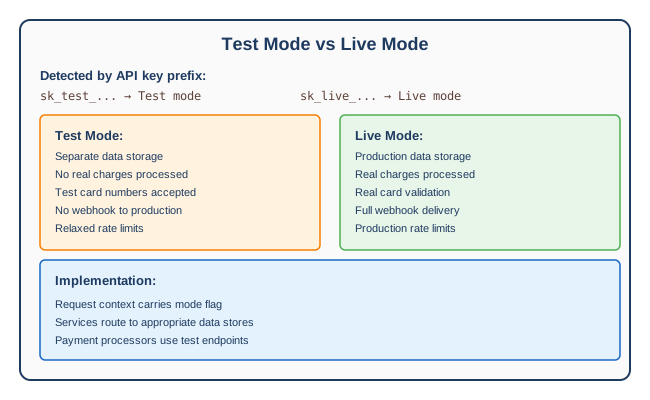
- Provide test mode vs live mode separation
Non-Functional Requirements
- Latency: < 20ms added overhead
- Availability: 99.99% uptime
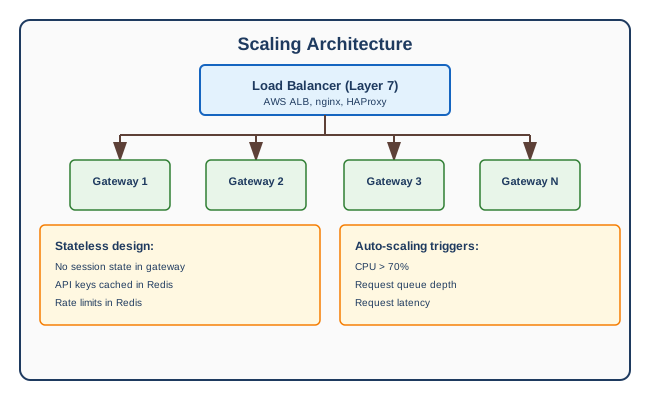
- Scalability: Handle 100K+ requests/second
- Security: PCI-DSS compliant, DDoS protection
- Observability: Complete request tracing
High-Level Architecture
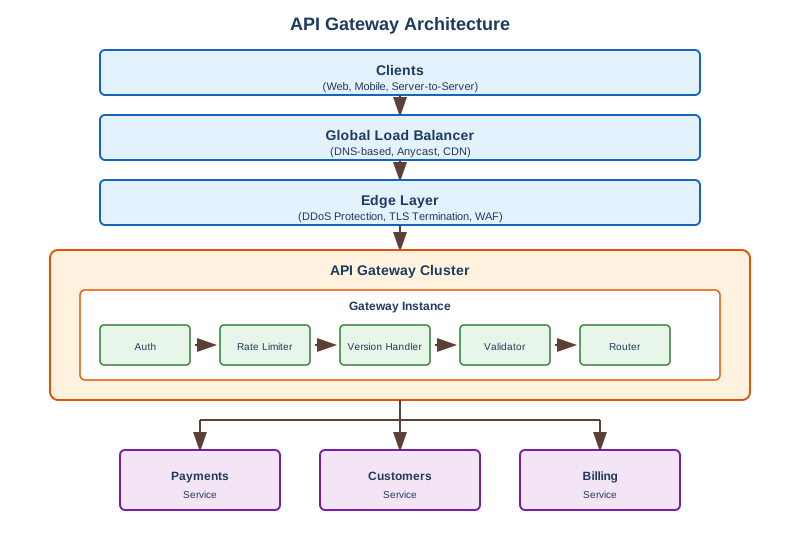
Core Components
1. Edge Layer
- DDoS protection (Cloudflare, AWS Shield)
- TLS termination
- Web Application Firewall (WAF)
- Geographic routing
2. Authentication Module
- API key validation
- OAuth 2.0 support
- Test vs Live mode detection
- Customer identification
3. Rate Limiter
- Per-customer limits
- Per-endpoint limits
- Tier-based quotas
- Burst handling
4. Version Handler
- API version routing
- Version transformation
- Deprecation handling
- Default version management
5. Request Validator
- Schema validation
- Required fields check
- Type validation
- Custom business rules
6. Router
- Service discovery
- Load balancing
- Circuit breaker
- Retry logic
7. Response Transformer
- Consistent error format
- Response filtering
- Pagination handling
- HATEOAS links
Request Processing Pipeline
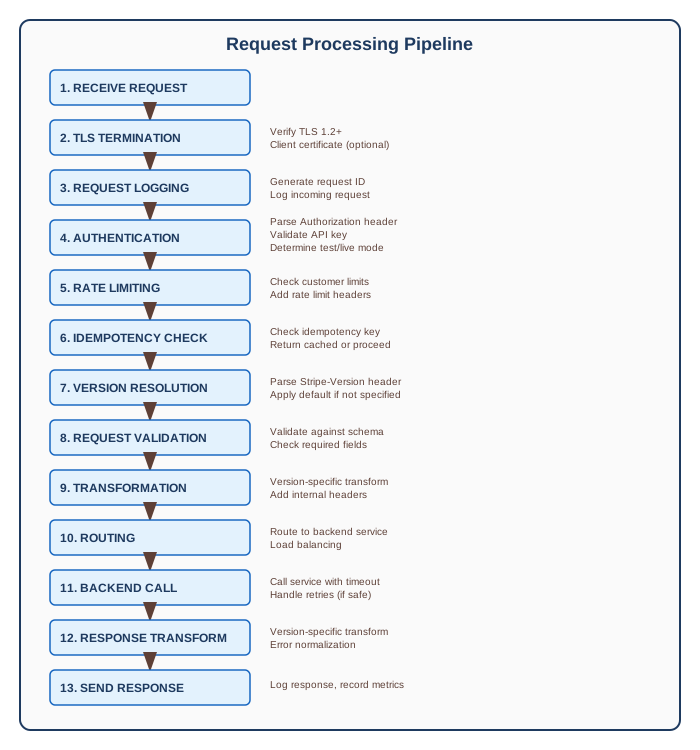
Authentication
API Key Structure
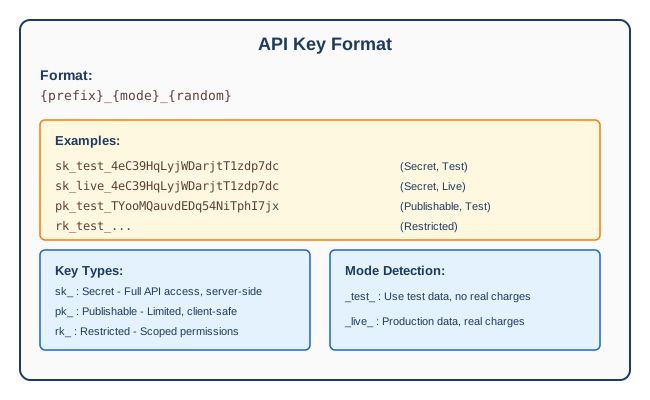
Authentication Flow
@Component
public class AuthenticationFilter {

    public AuthResult authenticate(HttpRequest request) {
        String authHeader = request.getHeader("Authorization");

        // 1. Parse API key
        if (authHeader == null || !authHeader.startsWith("Bearer ")) {
            throw new AuthenticationException("Missing or invalid Authorization header");
        }

        String apiKey = authHeader.substring(7);

        // 2. Validate key format
        ApiKeyType keyType = parseKeyType(apiKey);  // sk_, pk_, rk_
        boolean isTestMode = apiKey.contains("_test_");

        // 3. Lookup key in database/cache
        ApiKeyRecord keyRecord = apiKeyService.lookup(apiKey);
        if (keyRecord == null) {
            throw new AuthenticationException("Invalid API key");
        }

        // 4. Check key status
        if (keyRecord.isRevoked()) {
            throw new AuthenticationException("API key has been revoked");
        }

        // 5. Build auth context
        return AuthResult.builder()
            .customerId(keyRecord.getCustomerId())
            .accountId(keyRecord.getAccountId())
            .keyType(keyType)
            .isTestMode(isTestMode)
            .permissions(keyRecord.getPermissions())
            .build();
    }
}
Data Model
CREATE TABLE api_keys (
    id                  UUID PRIMARY KEY,
    key_hash            VARCHAR(64) NOT NULL UNIQUE,  -- SHA-256 of key
    key_prefix          VARCHAR(20) NOT NULL,         -- sk_test_, pk_live_, etc.

    -- Ownership
    account_id          UUID NOT NULL,

    -- Key properties
    key_type            VARCHAR(20) NOT NULL,         -- secret, publishable, restricted
    mode                VARCHAR(10) NOT NULL,         -- test, live
    name                VARCHAR(255),                 -- User-defined name

    -- Permissions (for restricted keys)
    permissions         JSONB,

    -- Status
    status              VARCHAR(20) DEFAULT 'active', -- active, revoked
    revoked_at          TIMESTAMP,

    -- Timestamps
    created_at          TIMESTAMP NOT NULL,
    last_used_at        TIMESTAMP,

    FOREIGN KEY (account_id) REFERENCES accounts(id)
);

CREATE INDEX idx_api_keys_hash ON api_keys(key_hash);
CREATE INDEX idx_api_keys_account ON api_keys(account_id, status);
API Versioning
Versioning Strategy
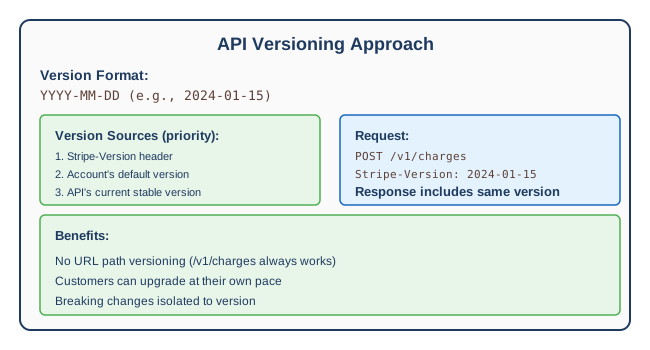
Version Transformation
@Component
public class VersionTransformer {

    private final Map<String, List<Migration>> migrations;

    public Object transformRequest(Object request, String fromVersion, String toVersion) {
        if (fromVersion.equals(toVersion)) {
            return request;
        }

        List<Migration> applicableMigrations = migrations.values().stream()
            .flatMap(List::stream)
            .filter(m -> m.appliesTo(fromVersion, toVersion))
            .sorted(Comparator.comparing(Migration::getVersion))
            .collect(toList());

        Object transformed = request;
        for (Migration migration : applicableMigrations) {
            transformed = migration.transformRequest(transformed);
        }

        return transformed;
    }

    public Object transformResponse(Object response, String toVersion, String fromVersion) {
        // Reverse transformations for response
        List<Migration> applicableMigrations = migrations.values().stream()
            .flatMap(List::stream)
            .filter(m -> m.appliesTo(fromVersion, toVersion))
            .sorted(Comparator.comparing(Migration::getVersion).reversed())
            .collect(toList());

        Object transformed = response;
        for (Migration migration : applicableMigrations) {
            transformed = migration.transformResponse(transformed);
        }

        return transformed;
    }
}

// Example migration
public class Migration_2024_01_15 implements Migration {

    @Override
    public String getVersion() {
        return "2024-01-15";
    }

    @Override
    public Object transformResponse(Object response) {
        // In 2024-01-15, we renamed "source" to "payment_method"
        if (response instanceof ChargeResponse charge) {
            // For older versions, include "source" for backwards compatibility
            charge.setSource(charge.getPaymentMethod());
        }
        return response;
    }
}
Request Routing
Route Configuration
routes:
  - path: /v1/charges
    methods: [GET, POST]
    service: payment-service
    timeout: 30s
    retries: 2
    circuit_breaker:
      threshold: 5
      timeout: 60s

  - path: /v1/charges/{id}
    methods: [GET, POST]
    service: payment-service
    timeout: 30s

  - path: /v1/customers
    methods: [GET, POST]
    service: customer-service
    timeout: 10s

  - path: /v1/subscriptions
    methods: [GET, POST, DELETE]
    service: billing-service
    timeout: 30s

  - path: /v1/files
    methods: [POST]
    service: file-service
    timeout: 120s
    max_body_size: 50MB
Service Discovery & Load Balancing
@Component
public class ServiceRouter {

    private final ServiceDiscovery serviceDiscovery;
    private final LoadBalancer loadBalancer;
    private final CircuitBreakerRegistry circuitBreakers;

    public HttpResponse route(RouteConfig route, HttpRequest request) {
        // 1. Get healthy instances
        List<ServiceInstance> instances = serviceDiscovery.getInstances(route.getService());

        if (instances.isEmpty()) {
            throw new ServiceUnavailableException("No instances available for " + route.getService());
        }

        // 2. Check circuit breaker
        CircuitBreaker cb = circuitBreakers.get(route.getService());
        if (cb.isOpen()) {
            throw new ServiceUnavailableException("Service temporarily unavailable");
        }

        // 3. Select instance (round-robin, least connections, etc.)
        ServiceInstance instance = loadBalancer.select(instances, request);

        // 4. Make request with retry
        int attempts = 0;
        Exception lastException = null;

        while (attempts < route.getRetries() + 1) {
            try {
                HttpResponse response = makeRequest(instance, request, route.getTimeout());

                if (response.getStatusCode() >= 500) {
                    cb.recordFailure();
                    throw new BackendException(response);
                }

                cb.recordSuccess();
                return response;

            } catch (TimeoutException | ConnectionException e) {
                cb.recordFailure();
                lastException = e;
                attempts++;

                // Try different instance
                instance = loadBalancer.select(instances, request);
            }
        }

        throw new ServiceUnavailableException("Failed after " + attempts + " attempts", lastException);
    }
}
Error Handling
Consistent Error Format
{
    "error": {
        "type": "invalid_request_error",
        "code": "parameter_missing",
        "message": "The 'amount' parameter is required.",
        "param": "amount",
        "doc_url": "https://stripe.com/docs/api/errors#missing_required_param"
    }
}
Error Types
public enum ErrorType {
    API_ERROR("api_error"),                      // Internal server error
    AUTHENTICATION_ERROR("authentication_error"), // Invalid API key
    CARD_ERROR("card_error"),                    // Card declined
    IDEMPOTENCY_ERROR("idempotency_error"),      // Idempotency key issue
    INVALID_REQUEST_ERROR("invalid_request_error"), // Bad request
    RATE_LIMIT_ERROR("rate_limit_error");        // Rate limited
}

public enum ErrorCode {
    // Authentication
    API_KEY_EXPIRED("api_key_expired"),
    API_KEY_REQUIRED("api_key_required"),

    // Request validation
    PARAMETER_MISSING("parameter_missing"),
    PARAMETER_INVALID("parameter_invalid"),
    PARAMETER_UNKNOWN("parameter_unknown"),

    // Rate limiting
    RATE_LIMIT_EXCEEDED("rate_limit_exceeded"),

    // Idempotency
    IDEMPOTENCY_KEY_IN_USE("idempotency_key_in_use"),

    // Card errors
    CARD_DECLINED("card_declined"),
    INSUFFICIENT_FUNDS("insufficient_funds"),
    EXPIRED_CARD("expired_card");
}
Error Handler
@ControllerAdvice
public class GlobalErrorHandler {

    @ExceptionHandler(ValidationException.class)
    public ResponseEntity<ApiError> handleValidation(ValidationException e) {
        return ResponseEntity
            .status(400)
            .body(ApiError.builder()
                .type(ErrorType.INVALID_REQUEST_ERROR)
                .code(ErrorCode.PARAMETER_INVALID)
                .message(e.getMessage())
                .param(e.getParam())
                .build());
    }

    @ExceptionHandler(AuthenticationException.class)
    public ResponseEntity<ApiError> handleAuth(AuthenticationException e) {
        return ResponseEntity
            .status(401)
            .body(ApiError.builder()
                .type(ErrorType.AUTHENTICATION_ERROR)
                .message(e.getMessage())
                .build());
    }

    @ExceptionHandler(RateLimitException.class)
    public ResponseEntity<ApiError> handleRateLimit(RateLimitException e) {
        return ResponseEntity
            .status(429)
            .header("Retry-After", String.valueOf(e.getRetryAfter()))
            .body(ApiError.builder()
                .type(ErrorType.RATE_LIMIT_ERROR)
                .code(ErrorCode.RATE_LIMIT_EXCEEDED)
                .message("Rate limit exceeded. Please retry after " + e.getRetryAfter() + " seconds.")
                .build());
    }
}
Test Mode vs Live Mode
Mode Separation
Request Validation
Schema Validation
# OpenAPI-style schema
paths:
  /v1/charges:
    post:
      requestBody:
        required: true
        content:
          application/json:
            schema:
              type: object
              required:
                - amount
                - currency
              properties:
                amount:
                  type: integer
                  minimum: 1
                  description: Amount in cents
                currency:
                  type: string
                  enum: [usd, eur, gbp]
                source:
                  type: string
                  pattern: ^tok_[a-zA-Z0-9]+$
                description:
                  type: string
                  maxLength: 500
                metadata:
                  type: object
                  additionalProperties:
                    type: string
                  maxProperties: 50
@Component
public class RequestValidator {

    public void validate(String path, String method, Object body) {
        Schema schema = schemaRegistry.getSchema(path, method);

        List<ValidationError> errors = new ArrayList<>();

        // Check required fields
        for (String required : schema.getRequired()) {
            if (!hasField(body, required)) {
                errors.add(new ValidationError(
                    ErrorCode.PARAMETER_MISSING,
                    "Missing required parameter: " + required,
                    required
                ));
            }
        }

        // Validate field types and constraints
        for (Map.Entry<String, FieldSchema> entry : schema.getProperties().entrySet()) {
            String field = entry.getKey();
            FieldSchema fieldSchema = entry.getValue();
            Object value = getField(body, field);

            if (value != null) {
                validateField(field, value, fieldSchema, errors);
            }
        }

        // Check for unknown fields (if strict mode)
        if (schema.isStrict()) {
            for (String field : getFields(body)) {
                if (!schema.getProperties().containsKey(field)) {
                    errors.add(new ValidationError(
                        ErrorCode.PARAMETER_UNKNOWN,
                        "Unknown parameter: " + field,
                        field
                    ));
                }
            }
        }

        if (!errors.isEmpty()) {
            throw new ValidationException(errors);
        }
    }
}
Observability
Request Tracing
public class TracingFilter {

    public void doFilter(HttpRequest request, HttpResponse response) {
        // Generate or extract request ID
        String requestId = request.getHeader("X-Request-Id");
        if (requestId == null) {
            requestId = "req_" + generateId();
        }

        // Add to response
        response.setHeader("Request-Id", requestId);

        // Create trace context
        TraceContext context = TraceContext.builder()
            .requestId(requestId)
            .customerId(authContext.getCustomerId())
            .startTime(Instant.now())
            .build();

        // Set in thread-local/context
        TraceContext.setCurrent(context);

        try {
            // Process request
            filterChain.doFilter(request, response);

        } finally {
            // Log request
            RequestLog log = RequestLog.builder()
                .requestId(requestId)
                .customerId(context.getCustomerId())
                .method(request.getMethod())
                .path(request.getPath())
                .statusCode(response.getStatusCode())
                .durationMs(Duration.between(context.getStartTime(), Instant.now()).toMillis())
                .build();

            requestLogService.log(log);
        }
    }
}
Metrics
@Component
public class MetricsCollector {

    private final MeterRegistry registry;

    public void recordRequest(String endpoint, int statusCode, long durationMs) {
        // Request count
        registry.counter("api.requests",
            "endpoint", endpoint,
            "status", String.valueOf(statusCode / 100) + "xx"
        ).increment();

        // Latency
        registry.timer("api.latency",
            "endpoint", endpoint
        ).record(durationMs, TimeUnit.MILLISECONDS);
    }

    public void recordRateLimit(String customerId, String endpoint) {
        registry.counter("api.rate_limit",
            "customer", customerId,
            "endpoint", endpoint
        ).increment();
    }
}
Scalability
Horizontal Scaling
Technology Choices
| Component | Technology Options |
|---|---|
| Gateway Framework | Kong, Envoy, Custom (Netty/Vert.x) |
| Cache | Redis Cluster |
| Config Store | etcd, Consul |
| Load Balancer | AWS ALB, nginx |
| Metrics | Prometheus, Datadog |
| Tracing | Jaeger, Zipkin |
| WAF | Cloudflare, AWS WAF |
Interview Discussion Points
- How do you handle API key security?
-
Store hashed, rotate regularly, rate limit failed attempts
-
How do you manage API versions over time?
-
Date-based versions, transformation layer, deprecation policy
-
How do you protect against DDoS attacks?
-
Edge layer, rate limiting, IP reputation, auto-scaling
-
How do you achieve low latency?
-
Caching, connection pooling, async processing, edge locations
-
How do you handle backend service failures?
-
Circuit breakers, retries, graceful degradation
-
How do you ensure consistency across gateway instances?
- Stateless design, centralized stores for state