Developer Dashboard
Problem Statement
Design a developer dashboard for a payment platform like Stripe that provides real-time transaction monitoring, API logs, usage analytics, and account management. The dashboard should support both test and live modes with clear separation.
Requirements
Functional Requirements
- Real-time transaction monitoring
- API request logs with search and filtering
- Usage analytics and metrics
- Webhook management and debugging
- API key management
- Account and team settings
- Test mode vs live mode toggle
- Event timeline and debugging tools
- Billing and usage reports
Non-Functional Requirements
- Latency: Dashboard loads in < 2 seconds
- Real-time: Transaction updates within 5 seconds
- Scalability: Support 100K+ concurrent dashboard users
- Availability: 99.9% uptime
- Data retention: Logs retained for 30 days (configurable)
High-Level Architecture
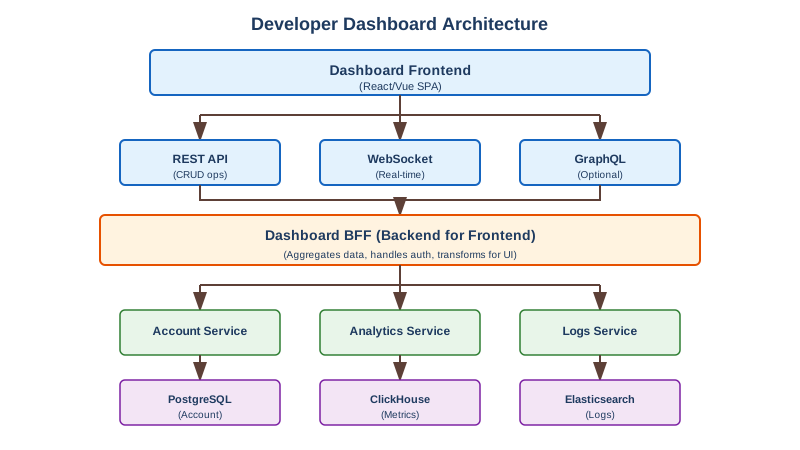
Core Features
1. Home Dashboard
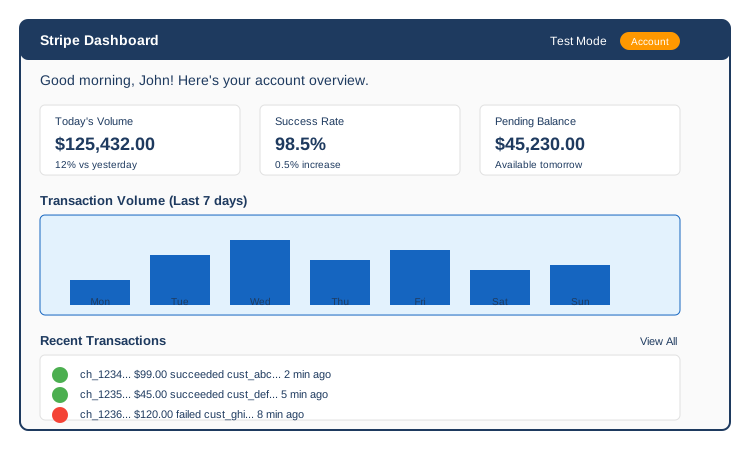
2. Payments View
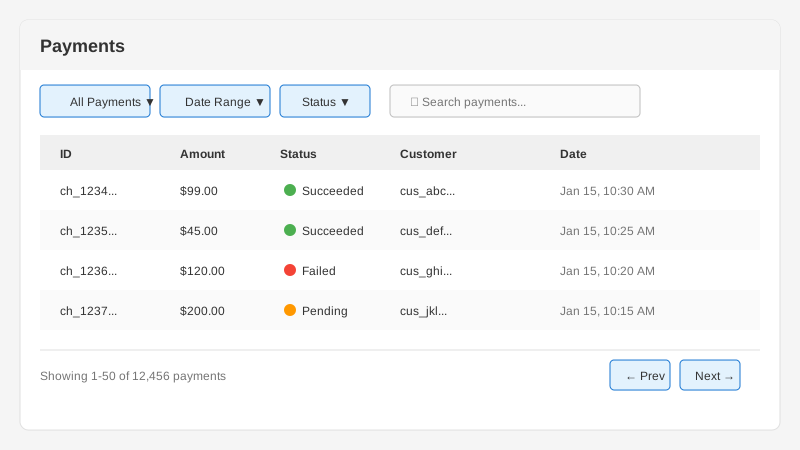
3. API Logs
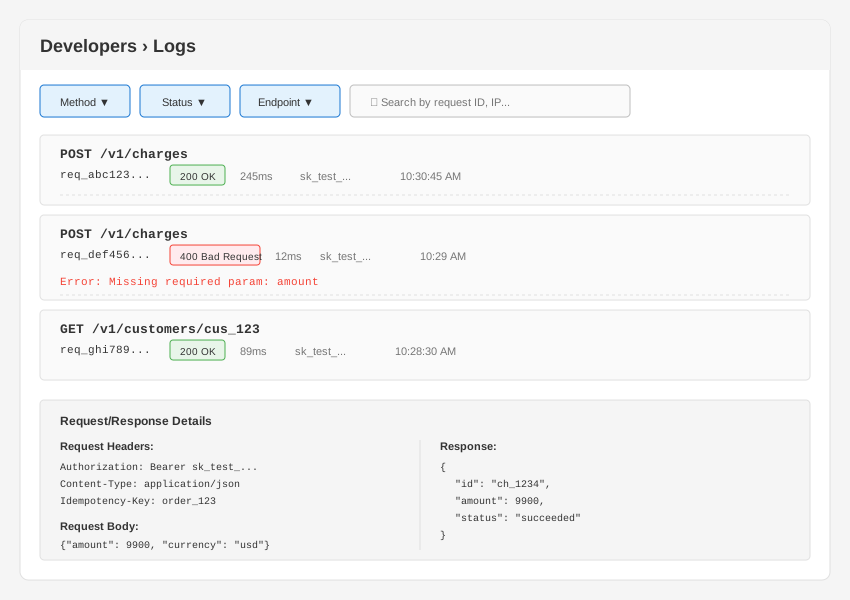
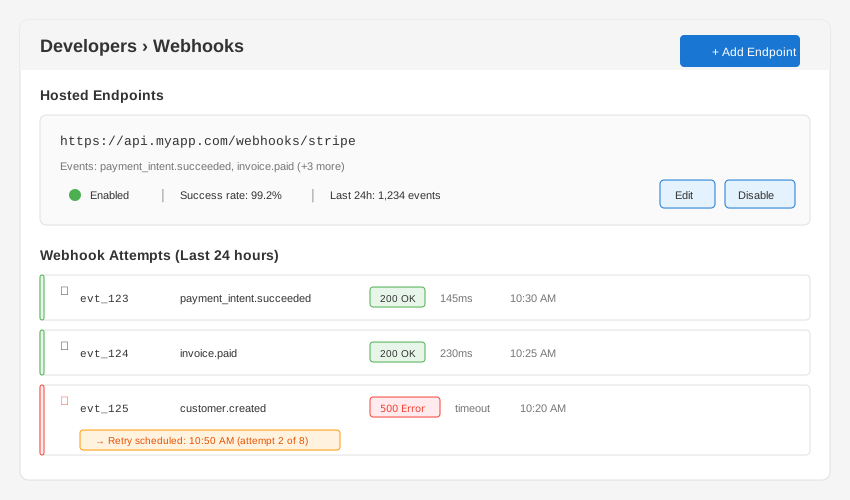
4. Webhooks Management
Data Models
API Request Log
CREATE TABLE api_request_logs (
    id                  UUID PRIMARY KEY,
    request_id          VARCHAR(50) UNIQUE NOT NULL,
    account_id          UUID NOT NULL,

    -- Request details
    method              VARCHAR(10) NOT NULL,
    path                VARCHAR(500) NOT NULL,
    query_params        JSONB,
    request_headers     JSONB,
    request_body        TEXT,

    -- Authentication
    api_key_id          UUID,
    api_key_type        VARCHAR(20),        -- secret, publishable
    ip_address          INET,

    -- Response details
    status_code         INT,
    response_headers    JSONB,
    response_body       TEXT,               -- Truncated if large
    error_type          VARCHAR(50),
    error_message       TEXT,

    -- Timing
    started_at          TIMESTAMP NOT NULL,
    duration_ms         INT,

    -- Mode
    livemode            BOOLEAN NOT NULL,

    -- Versioning
    api_version         VARCHAR(20),

    -- Idempotency
    idempotency_key     VARCHAR(255),
    idempotent_replayed BOOLEAN DEFAULT false
);

-- Partitioned by time for efficient queries and retention
CREATE INDEX idx_logs_account_time ON api_request_logs(account_id, started_at DESC);
CREATE INDEX idx_logs_request_id ON api_request_logs(request_id);
CREATE INDEX idx_logs_status ON api_request_logs(account_id, status_code, started_at DESC);
Analytics Aggregates (ClickHouse)
CREATE TABLE payment_metrics (
    account_id          UUID,
    date                Date,
    hour                UInt8,

    -- Volume metrics
    transaction_count   UInt64,
    gross_volume        Decimal(18, 2),
    net_volume          Decimal(18, 2),
    fee_volume          Decimal(18, 2),

    -- Status breakdown
    succeeded_count     UInt64,
    failed_count        UInt64,
    pending_count       UInt64,
    refunded_count      UInt64,

    -- Performance
    avg_response_time   Float32,
    p95_response_time   Float32,

    -- Currency
    currency            LowCardinality(String)
)
ENGINE = SummingMergeTree()
PARTITION BY toYYYYMM(date)
ORDER BY (account_id, date, hour, currency);
Real-Time Updates
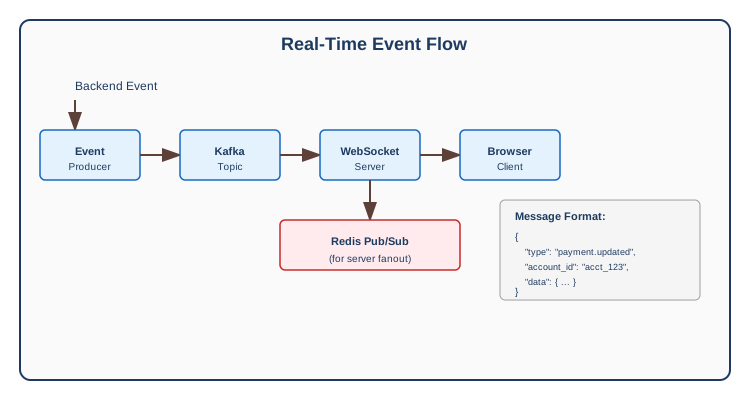
WebSocket Architecture
WebSocket Server
@Component
public class DashboardWebSocketHandler {

    private final Map<String, Set<WebSocketSession>> accountSessions = new ConcurrentHashMap<>();

    @OnOpen
    public void onConnect(WebSocketSession session, @PathParam("accountId") String accountId) {
        // Authenticate session
        String token = session.getRequestParameterMap().get("token").get(0);
        if (!authService.validateDashboardToken(token, accountId)) {
            session.close(CloseReason.UNAUTHORIZED);
            return;
        }

        // Register session
        accountSessions.computeIfAbsent(accountId, k -> ConcurrentHashMap.newKeySet())
            .add(session);
    }

    @OnClose
    public void onDisconnect(WebSocketSession session, String accountId) {
        Set<WebSocketSession> sessions = accountSessions.get(accountId);
        if (sessions != null) {
            sessions.remove(session);
        }
    }

    // Called when event occurs
    public void broadcastToAccount(String accountId, DashboardEvent event) {
        Set<WebSocketSession> sessions = accountSessions.get(accountId);
        if (sessions != null) {
            String message = objectMapper.writeValueAsString(event);
            for (WebSocketSession session : sessions) {
                session.getAsyncRemote().sendText(message);
            }
        }
    }
}
Search & Filtering
Log Search (Elasticsearch)
@Service
public class LogSearchService {

    private final ElasticsearchClient esClient;

    public SearchResult searchLogs(LogSearchRequest request) {
        BoolQuery.Builder query = new BoolQuery.Builder();

        // Must match account
        query.must(TermQuery.of(t -> t.field("account_id").value(request.getAccountId()))._toQuery());

        // Must match livemode
        query.must(TermQuery.of(t -> t.field("livemode").value(request.isLiveMode()))._toQuery());

        // Filter by date range
        query.filter(RangeQuery.of(r -> r
            .field("started_at")
            .gte(JsonData.of(request.getStartDate()))
            .lte(JsonData.of(request.getEndDate()))
        )._toQuery());

        // Optional filters
        if (request.getStatus() != null) {
            query.filter(TermQuery.of(t -> t.field("status_code").value(request.getStatus()))._toQuery());
        }

        if (request.getMethod() != null) {
            query.filter(TermQuery.of(t -> t.field("method").value(request.getMethod()))._toQuery());
        }

        if (request.getPath() != null) {
            query.filter(WildcardQuery.of(w -> w.field("path").value(request.getPath() + "*"))._toQuery());
        }

        // Full-text search on request/response body
        if (request.getSearchText() != null) {
            query.must(MultiMatchQuery.of(m -> m
                .query(request.getSearchText())
                .fields("request_id", "request_body", "response_body", "error_message")
            )._toQuery());
        }

        SearchResponse<ApiRequestLog> response = esClient.search(s -> s
            .index("api-logs-*")
            .query(query.build()._toQuery())
            .sort(SortOptions.of(so -> so.field(f -> f.field("started_at").order(SortOrder.Desc))))
            .from(request.getOffset())
            .size(request.getLimit()),
            ApiRequestLog.class
        );

        return SearchResult.from(response);
    }
}
Analytics Service
Metrics Aggregation
@Service
public class AnalyticsService {

    private final ClickHouseClient clickHouse;

    public DashboardMetrics getDashboardMetrics(String accountId, DateRange range, boolean liveMode) {
        // Volume metrics
        String volumeQuery = """
            SELECT
                sum(transaction_count) as total_transactions,
                sum(gross_volume) as gross_volume,
                sum(succeeded_count) as succeeded,
                sum(failed_count) as failed,
                sum(succeeded_count) / sum(transaction_count) as success_rate
            FROM payment_metrics
            WHERE account_id = ?
            AND date BETWEEN ? AND ?
            AND livemode = ?
            """;

        // Time series for chart
        String timeSeriesQuery = """
            SELECT
                date,
                sum(gross_volume) as volume,
                sum(transaction_count) as count
            FROM payment_metrics
            WHERE account_id = ?
            AND date BETWEEN ? AND ?
            AND livemode = ?
            GROUP BY date
            ORDER BY date
            """;

        // Execute queries and combine results
        VolumeMetrics volume = clickHouse.queryOne(volumeQuery, VolumeMetrics.class,
            accountId, range.getStart(), range.getEnd(), liveMode);

        List<TimeSeriesPoint> timeSeries = clickHouse.queryList(timeSeriesQuery, TimeSeriesPoint.class,
            accountId, range.getStart(), range.getEnd(), liveMode);

        return DashboardMetrics.builder()
            .volume(volume)
            .timeSeries(timeSeries)
            .build();
    }
}
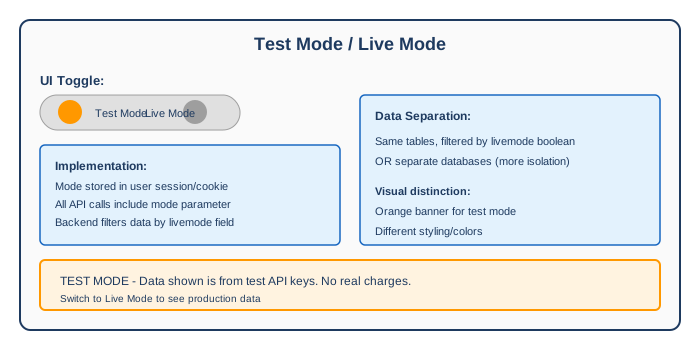
Test Mode vs Live Mode
Mode Switching
Authentication & Authorization
Dashboard Authentication
@Component
public class DashboardAuthService {

    // Dashboard uses session-based auth (not API keys)
    public AuthResult authenticate(String sessionToken) {
        Session session = sessionStore.get(sessionToken);

        if (session == null || session.isExpired()) {
            throw new UnauthorizedException("Session expired");
        }

        User user = userService.getUser(session.getUserId());
        Account account = accountService.getAccount(session.getAccountId());

        return AuthResult.builder()
            .user(user)
            .account(account)
            .permissions(user.getPermissions())
            .build();
    }

    // RBAC for dashboard features
    public boolean hasPermission(User user, Permission permission) {
        return user.getRoles().stream()
            .flatMap(role -> role.getPermissions().stream())
            .anyMatch(p -> p == permission || p == Permission.ADMIN);
    }
}

public enum Permission {
    VIEW_PAYMENTS,
    MANAGE_PAYMENTS,        // Refunds, captures
    VIEW_CUSTOMERS,
    MANAGE_CUSTOMERS,
    VIEW_API_LOGS,
    MANAGE_API_KEYS,
    MANAGE_WEBHOOKS,
    VIEW_ANALYTICS,
    MANAGE_TEAM,
    ADMIN
}
Performance Optimization
Caching Strategy
@Service
public class DashboardCacheService {

    private final RedisTemplate<String, Object> redis;

    // Cache dashboard summary (short TTL, frequently accessed)
    @Cacheable(value = "dashboard-summary", key = "#accountId + ':' + #liveMode", ttl = 60)
    public DashboardSummary getDashboardSummary(String accountId, boolean liveMode) {
        return analyticsService.computeSummary(accountId, liveMode);
    }

    // Cache API key list (medium TTL, less frequent changes)
    @Cacheable(value = "api-keys", key = "#accountId", ttl = 300)
    public List<ApiKey> getApiKeys(String accountId) {
        return apiKeyService.listKeys(accountId);
    }

    // Invalidate on changes
    @CacheEvict(value = "api-keys", key = "#accountId")
    public void onApiKeyChanged(String accountId) {
        // Cache evicted
    }
}
Pagination & Lazy Loading
// Frontend: Virtual scrolling for large lists
const TransactionList = () => {
    const [transactions, setTransactions] = useState([]);
    const [hasMore, setHasMore] = useState(true);
    const [cursor, setCursor] = useState(null);

    const loadMore = async () => {
        const response = await api.get('/v1/dashboard/transactions', {
            params: { limit: 50, starting_after: cursor }
        });

        setTransactions(prev => [...prev, ...response.data]);
        setCursor(response.data[response.data.length - 1]?.id);
        setHasMore(response.has_more);
    };

    return (
        <VirtualList
            items={transactions}
            onEndReached={loadMore}
            hasMore={hasMore}
        />
    );
};
Technology Choices
| Component | Technology Options |
|---|---|
| Frontend | React, Vue.js, Next.js |
| API Layer | Node.js, Go, Java |
| Real-time | WebSocket, Server-Sent Events |
| Log Storage | Elasticsearch, Loki |
| Analytics | ClickHouse, TimescaleDB |
| Cache | Redis |
| Search | Elasticsearch |
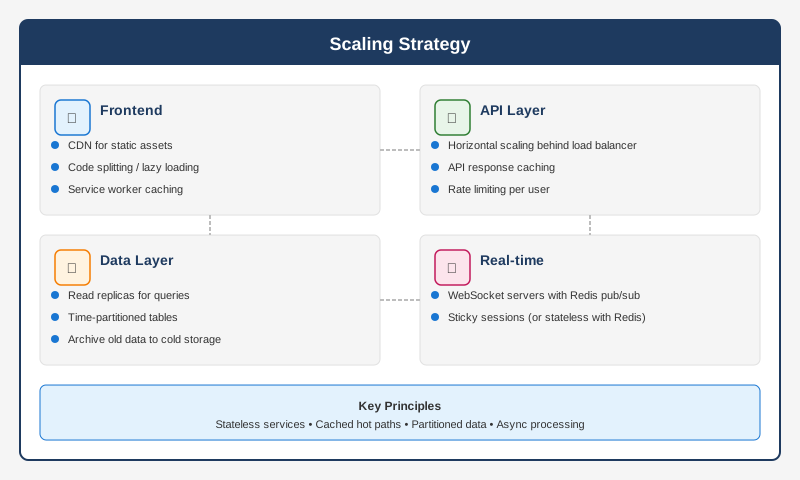
Scalability Considerations
Interview Discussion Points
- How do you handle large log volumes?
-
Time-based partitioning, retention policies, tiered storage
-
How do you ensure real-time updates are reliable?
-
WebSocket with reconnection, polling fallback, event deduplication
-
How do you handle search across millions of logs?
-
Elasticsearch indexing, pre-aggregated metrics, pagination
-
How do you ensure data consistency between test and live modes?
-
Separate flag in all tables, strict filtering, separate API keys
-
How do you optimize dashboard load time?
- Caching, lazy loading, CDN, code splitting, pre-computed aggregates