Fraud Detection System
Problem Statement
Design a real-time fraud detection system for a payment platform that can identify and prevent fraudulent transactions while minimizing false positives. The system should score transactions in real-time and support both rules-based and ML-based detection.
Requirements
Functional Requirements
- Score transactions in real-time (< 100ms)
- Support rules-based fraud detection
- Support ML-based fraud detection
- Provide explanations for fraud decisions
- Allow manual review workflow
- Support merchant-configurable rules
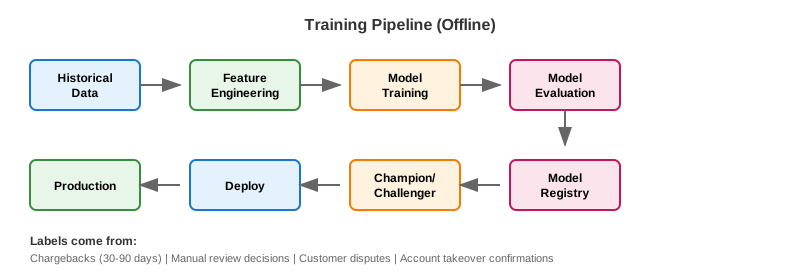
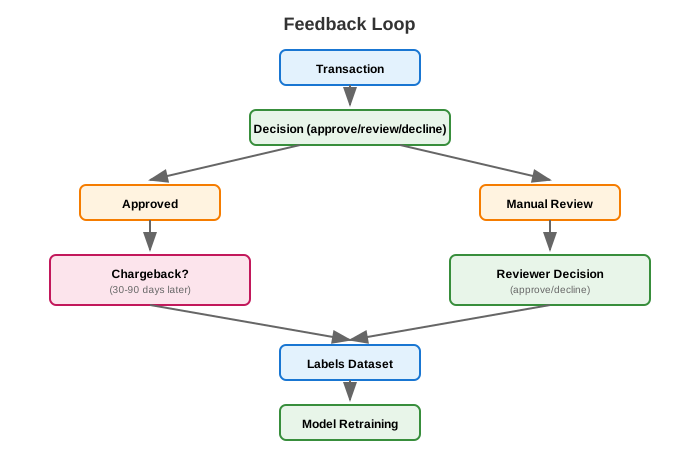
- Track and learn from confirmed fraud
- Provide fraud analytics and reporting
Non-Functional Requirements
- Latency: P99 < 100ms (in payment critical path)
- Availability: 99.99% (payment dependency)
- Accuracy: High precision (minimize false positives)
- Scalability: Handle 10,000+ TPS
- Adaptability: Detect new fraud patterns quickly
High-Level Architecture
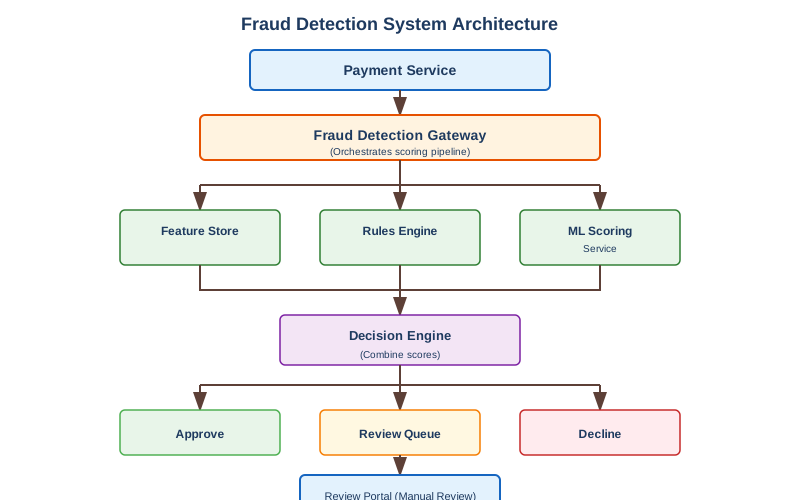
Core Components
1. Feature Store
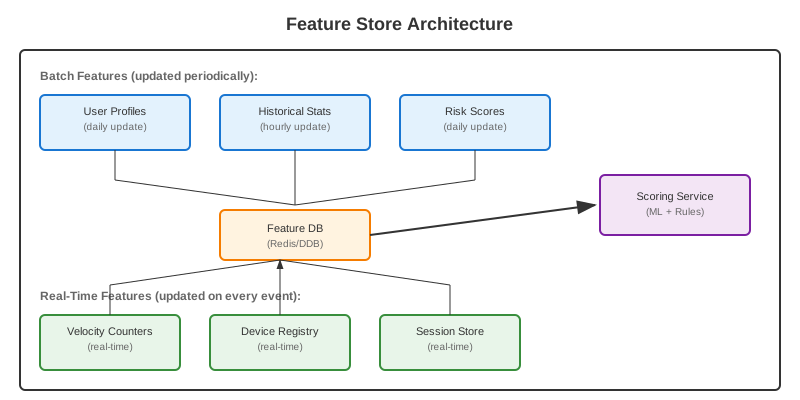
- Pre-computed features for real-time lookup
- Historical aggregations (velocity, patterns)
- Device fingerprints
- User behavior profiles
2. Rules Engine
- Configurable business rules
- Velocity checks
- Blocklists/Allowlists
- Geographic rules
- Amount thresholds
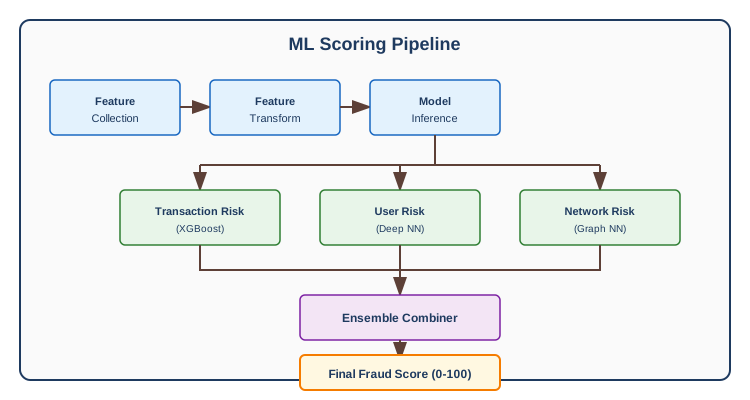
3. ML Scoring Service
- Real-time model inference
- Multiple model ensemble
- Feature vector construction
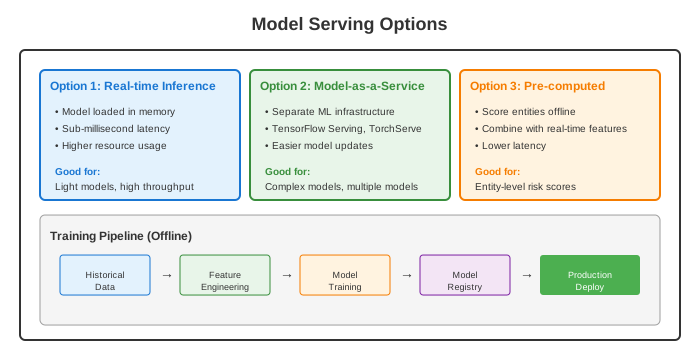
- Model versioning and A/B testing
4. Decision Engine
- Combines rule and ML scores
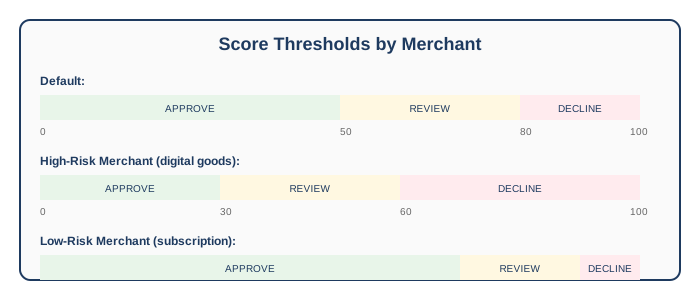
- Applies merchant-specific policies
- Determines final action (approve/review/decline)
- Provides explanation for decision
5. Review Queue
- Manual review workflow
- Case assignment
- Decision recording
- Feedback loop for model training
Feature Engineering
Real-Time Features
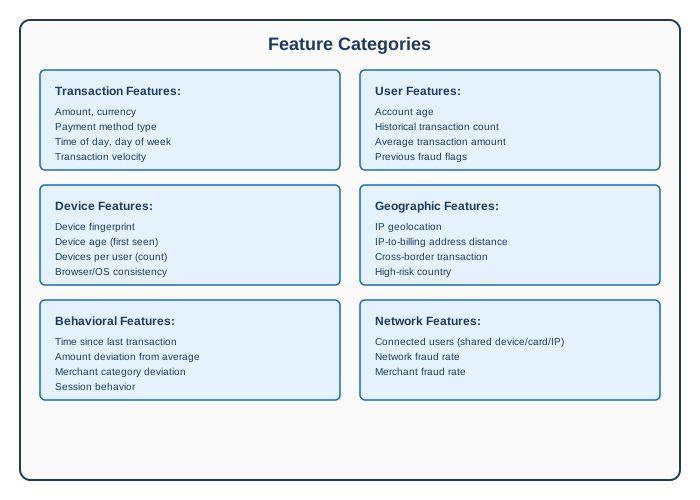
Feature Store Architecture
Rules Engine
Rule Types
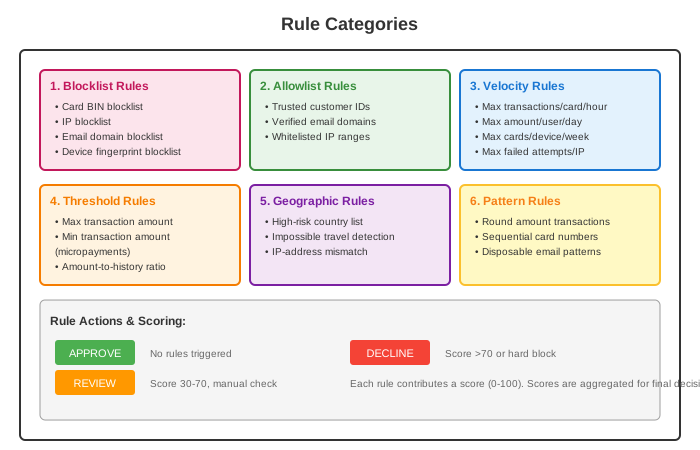
Rule Definition
# Example rule definitions
rules:
  - id: velocity_card_hourly
    name: "Card velocity - hourly limit"
    condition: |
      velocity.card_transactions_1h > 5
    action: REVIEW
    score: 30

  - id: high_amount_new_user
    name: "High amount from new user"
    condition: |
      transaction.amount > 500 AND
      user.account_age_days < 7 AND
      user.transaction_count < 3
    action: REVIEW
    score: 40

  - id: impossible_travel
    name: "Impossible travel detection"
    condition: |
      geo.distance_from_last_transaction > 500 AND
      time.hours_since_last_transaction < 2
    action: DECLINE
    score: 80

  - id: blocklist_ip
    name: "Blocked IP address"
    condition: |
      blocklist.contains(request.ip)
    action: DECLINE
    score: 100
Rule Evaluation
public class RulesEngine {

    private final List<Rule> globalRules;
    private final Map<String, List<Rule>> merchantRules;

    public RuleResult evaluate(Transaction tx, Features features) {
        List<TriggeredRule> triggered = new ArrayList<>();
        int totalScore = 0;
        Action worstAction = Action.APPROVE;

        // Evaluate global rules
        for (Rule rule : globalRules) {
            if (rule.evaluate(tx, features)) {
                triggered.add(new TriggeredRule(rule));
                totalScore += rule.getScore();
                worstAction = max(worstAction, rule.getAction());
            }
        }

        // Evaluate merchant-specific rules
        List<Rule> merchantSpecific = merchantRules.get(tx.getMerchantId());
        if (merchantSpecific != null) {
            for (Rule rule : merchantSpecific) {
                if (rule.evaluate(tx, features)) {
                    triggered.add(new TriggeredRule(rule));
                    totalScore += rule.getScore();
                    worstAction = max(worstAction, rule.getAction());
                }
            }
        }

        return new RuleResult(triggered, totalScore, worstAction);
    }
}
ML Scoring
Model Architecture
Model Serving
Model Training Pipeline
Decision Engine
Combining Scores
public class DecisionEngine {

    public FraudDecision decide(
            Transaction tx,
            RuleResult ruleResult,
            MLScore mlScore,
            MerchantConfig config
    ) {
        // Early exit for hard blocks
        if (ruleResult.getAction() == Action.DECLINE) {
            return FraudDecision.decline(
                ruleResult.getTriggeredRules(),
                "Rule-based decline"
            );
        }

        // Calculate combined score
        double combinedScore = calculateCombinedScore(ruleResult, mlScore, config);

        // Apply thresholds
        if (combinedScore >= config.getDeclineThreshold()) {
            return FraudDecision.decline(combinedScore, getReasons(ruleResult, mlScore));
        } else if (combinedScore >= config.getReviewThreshold()) {
            return FraudDecision.review(combinedScore, getReasons(ruleResult, mlScore));
        } else {
            return FraudDecision.approve(combinedScore);
        }
    }

    private double calculateCombinedScore(
            RuleResult ruleResult,
            MLScore mlScore,
            MerchantConfig config
    ) {
        // Weighted combination
        double ruleWeight = config.getRuleWeight();      // e.g., 0.3
        double mlWeight = config.getMlWeight();          // e.g., 0.7

        return (ruleResult.getNormalizedScore() * ruleWeight) +
               (mlScore.getScore() * mlWeight);
    }
}
Threshold Configuration
Data Flow
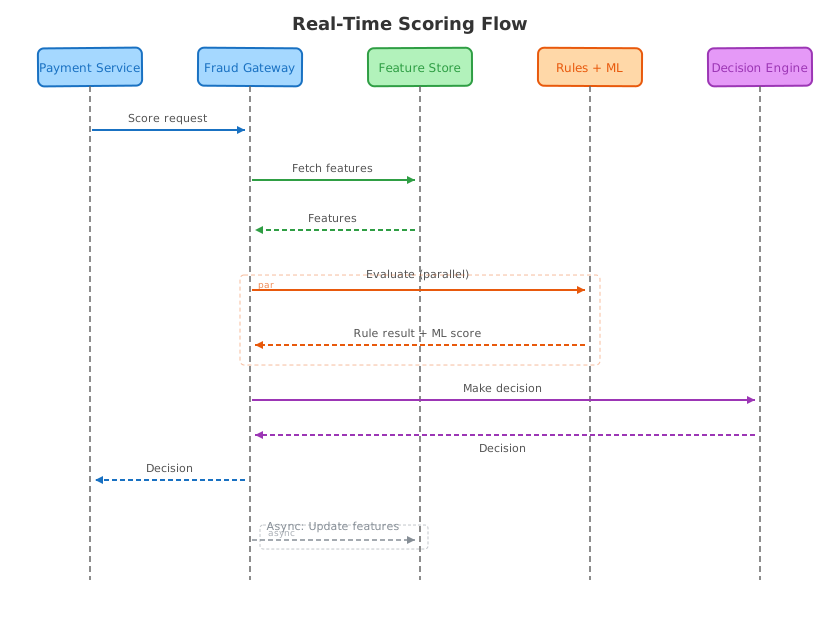
Real-Time Scoring
Feedback Loop
Performance Optimization
Latency Budget
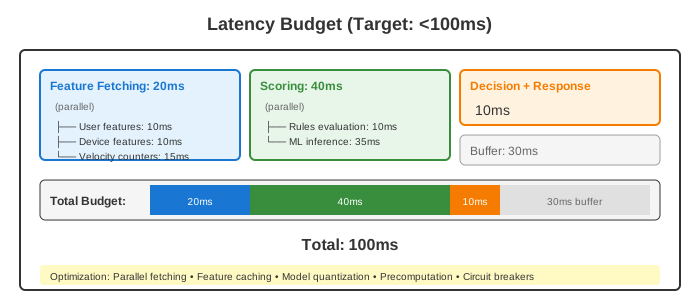
Optimization Strategies
1. Parallel Fetching
   • Fetch all features concurrently
   • Use async/await or CompletableFuture

2. Feature Caching
   • Cache computed features in Redis
   • TTL based on feature volatility

3. Model Optimization
   • Quantization (reduce model size)
   • Pruning (remove unnecessary neurons)
   • Distillation (smaller student model)

4. Precomputation
   • Pre-compute entity risk scores offline
   • Aggregate features in batch

5. Circuit Breakers
   • Skip ML scoring if latency exceeds budget
   • Fall back to rules-only scoring
Data Models
Transaction Risk Assessment
CREATE TABLE fraud_assessments (
    id                  UUID PRIMARY KEY,
    transaction_id      UUID NOT NULL,

    -- Scores
    rule_score          DECIMAL(5,2),
    ml_score            DECIMAL(5,2),
    combined_score      DECIMAL(5,2),

    -- Decision
    decision            VARCHAR(20) NOT NULL,  -- approve, review, decline
    decision_reason     TEXT,

    -- Triggered rules
    triggered_rules     JSONB,

    -- Features used
    features_snapshot   JSONB,

    -- Timing
    processing_time_ms  INT,
    created_at          TIMESTAMP NOT NULL,

    -- Review (if applicable)
    reviewed_by         UUID,
    reviewed_at         TIMESTAMP,
    review_decision     VARCHAR(20),
    review_notes        TEXT,

    -- Outcome (feedback)
    is_fraud            BOOLEAN,
    fraud_confirmed_at  TIMESTAMP,
    fraud_source        VARCHAR(50)  -- chargeback, manual_report, etc.
);

CREATE INDEX idx_fraud_assessments_tx ON fraud_assessments(transaction_id);
CREATE INDEX idx_fraud_assessments_decision ON fraud_assessments(decision, created_at);
CREATE INDEX idx_fraud_assessments_review ON fraud_assessments(decision, reviewed_at)
    WHERE decision = 'review';
Velocity Counters (Redis)
# Card velocity (transactions per hour)
INCR fraud:velocity:card:{card_hash}:1h
EXPIRE fraud:velocity:card:{card_hash}:1h 3600

# User velocity (amount per day)
INCRBY fraud:velocity:user:{user_id}:amount:1d {amount}
EXPIRE fraud:velocity:user:{user_id}:amount:1d 86400

# Device velocity (users per device)
SADD fraud:velocity:device:{fingerprint}:users {user_id}
EXPIRE fraud:velocity:device:{fingerprint}:users 604800  # 7 days
Technology Choices
| Component | Technology Options |
|---|---|
| Feature Store | Redis, DynamoDB, Feast |
| Rules Engine | Drools, Custom, JSON-based |
| ML Serving | TensorFlow Serving, TorchServe, SageMaker |
| ML Framework | XGBoost, LightGBM, PyTorch |
| Message Queue | Kafka (for async updates) |
| Graph Analysis | Neo4j, Amazon Neptune |
| Monitoring | Datadog, Prometheus + Grafana |
Metrics & Monitoring
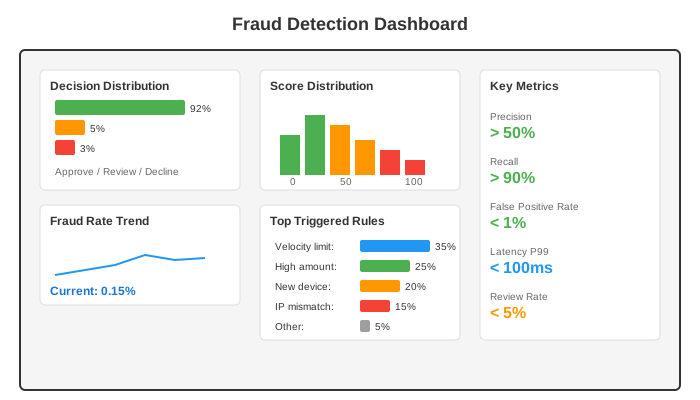
Key Metrics
| Metric | Description | Target |
|---|---|---|
| Precision | % of declined that were actually fraud | > 50% |
| Recall | % of fraud correctly identified | > 90% |
| False Positive Rate | Good transactions declined | < 1% |
| Latency P99 | Scoring latency | < 100ms |
| Review Rate | % of transactions sent to review | < 5% |
| Auto-Approval Rate | % approved without review | > 90% |
Monitoring Dashboard
Interview Discussion Points
- How do you handle cold start for new users?
-
Use network features, device fingerprint, email analysis, behavioral signals
-
How do you minimize false positives?
-
Multiple signals, ML calibration, merchant-specific thresholds, 3D Secure
-
How do you detect new fraud patterns?
-
Anomaly detection, unsupervised learning, rule suggestions from analysts
-
How do you handle latency requirements?
-
Parallel processing, feature caching, model optimization, fallback rules
-
How do you deal with label delay (chargebacks take 90 days)?
-
Use proxy labels (reviews), semi-supervised learning, synthetic labels
-
How do you prevent adversarial attacks?
- Feature diversity, model ensemble, continuous monitoring, behavioral analysis