Ledger System
Problem Statement
Design a ledger system for a financial platform that tracks all money movements with double-entry accounting. The system should be immutable, auditable, and support real-time balance queries while handling high transaction volumes.
Requirements
Functional Requirements
- Record all financial transactions (credits/debits)
- Implement double-entry accounting (every transaction has two sides)
- Support real-time balance queries
- Maintain complete audit trail (immutable)
- Support multiple currencies
- Handle account holds/reserves
- Generate financial reports and statements
- Support reconciliation with external systems
Non-Functional Requirements
- Consistency: Strong consistency for balances (money must never be lost or created)
- Durability: Zero data loss
- Scalability: Handle millions of entries per day
- Auditability: Complete, immutable history
- Latency: Balance queries < 50ms
High-Level Architecture
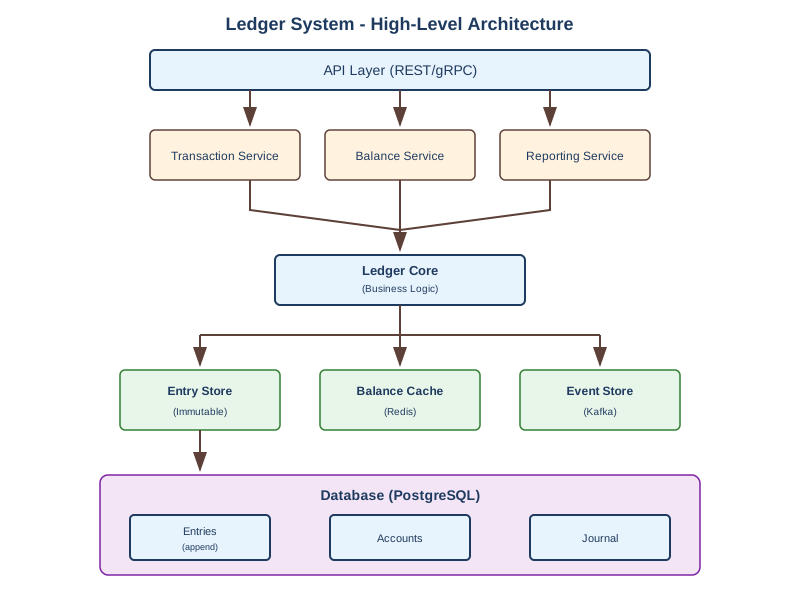
Core Concepts
Double-Entry Accounting
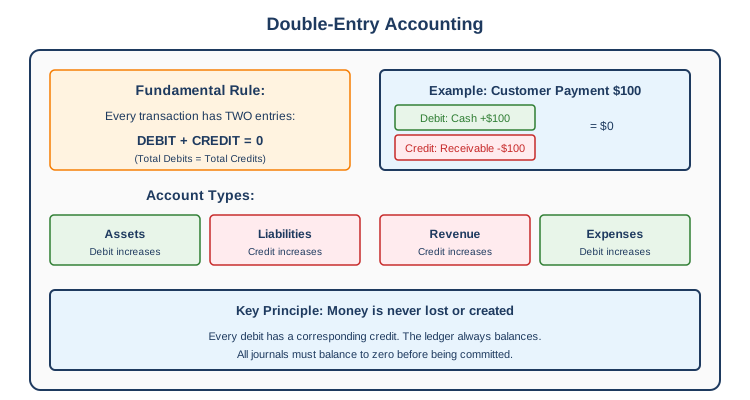
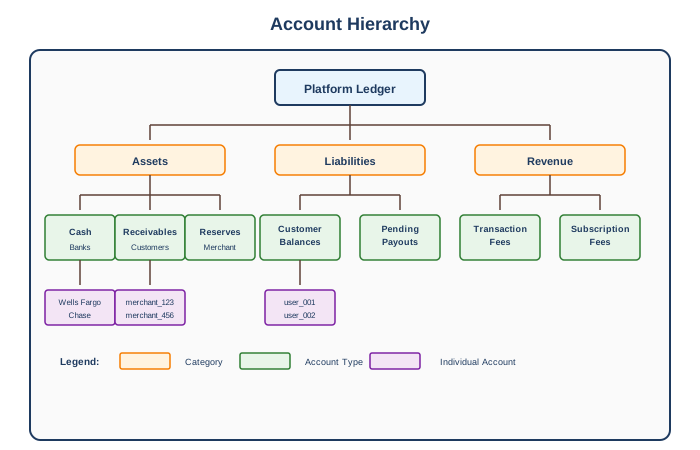
Account Structure
Core Components
1. Account Service
- Create and manage accounts
- Account hierarchy and relationships
- Account metadata and settings
- Account status (active, frozen, closed)
2. Transaction Service
- Process financial transactions
- Validate double-entry rules
- Ensure atomicity
- Generate transaction references
3. Balance Service
- Real-time balance queries
- Available vs pending balance
- Balance validation
- Hold management
4. Ledger Core
- Enforces double-entry rules
- Validates entries sum to zero
- Applies business rules
- Generates journal entries
5. Reporting Service
- Account statements
- Financial reports
- Reconciliation reports
- Audit exports
Data Models
Account
CREATE TABLE accounts (
    id                  UUID PRIMARY KEY,

    -- Hierarchy
    parent_id           UUID REFERENCES accounts(id),
    account_type        VARCHAR(50) NOT NULL,   -- asset, liability, revenue, expense
    account_subtype     VARCHAR(50),            -- cash, receivable, customer_balance

    -- Identification
    code                VARCHAR(50) UNIQUE,     -- ACC-001, for human reference
    name                VARCHAR(255) NOT NULL,
    description         TEXT,

    -- Currency
    currency            VARCHAR(3) NOT NULL,

    -- Status
    status              VARCHAR(20) DEFAULT 'active',

    -- Balance direction (for validation)
    normal_balance      VARCHAR(10) NOT NULL,   -- debit or credit

    -- Constraints
    allow_negative      BOOLEAN DEFAULT false,
    min_balance         BIGINT DEFAULT 0,

    -- Metadata
    metadata            JSONB,
    created_at          TIMESTAMP NOT NULL,
    updated_at          TIMESTAMP NOT NULL
);

CREATE INDEX idx_accounts_type ON accounts(account_type);
CREATE INDEX idx_accounts_parent ON accounts(parent_id);
Ledger Entry (Immutable)
CREATE TABLE ledger_entries (
    id                  UUID PRIMARY KEY,

    -- Journal reference (groups related entries)
    journal_id          UUID NOT NULL,

    -- Account
    account_id          UUID NOT NULL REFERENCES accounts(id),

    -- Entry details
    entry_type          VARCHAR(10) NOT NULL,   -- debit or credit
    amount              BIGINT NOT NULL,        -- Always positive, in smallest unit
    currency            VARCHAR(3) NOT NULL,

    -- Running balance (denormalized for performance)
    balance_after       BIGINT NOT NULL,

    -- Description
    description         TEXT,

    -- Timing
    effective_date      DATE NOT NULL,          -- When it counts for reporting
    posted_at           TIMESTAMP NOT NULL,     -- When it was recorded

    -- Immutability (no updates, only appends)
    -- To reverse: create a new reversing entry

    -- Sequence for ordering
    sequence_num        BIGSERIAL,

    CONSTRAINT positive_amount CHECK (amount > 0)
);

-- Append-only: no UPDATE or DELETE triggers
CREATE INDEX idx_entries_account ON ledger_entries(account_id, posted_at DESC);
CREATE INDEX idx_entries_journal ON ledger_entries(journal_id);
CREATE INDEX idx_entries_effective ON ledger_entries(account_id, effective_date);
Journal (Transaction Group)
CREATE TABLE journals (
    id                  UUID PRIMARY KEY,

    -- Reference
    reference_type      VARCHAR(50) NOT NULL,   -- payment, refund, transfer, fee
    reference_id        UUID,                   -- External reference (payment_id, etc.)

    -- Description
    description         TEXT NOT NULL,

    -- Validation
    entry_count         INT NOT NULL,
    total_debits        BIGINT NOT NULL,
    total_credits       BIGINT NOT NULL,

    -- Status
    status              VARCHAR(20) NOT NULL,   -- pending, posted, void

    -- Timing
    effective_date      DATE NOT NULL,
    posted_at           TIMESTAMP,
    created_at          TIMESTAMP NOT NULL,
    created_by          UUID,

    -- Ensure balance
    CONSTRAINT balanced CHECK (total_debits = total_credits)
);

CREATE INDEX idx_journals_reference ON journals(reference_type, reference_id);
CREATE INDEX idx_journals_effective ON journals(effective_date);
Balance Cache
-- Materialized balance for fast queries
CREATE TABLE account_balances (
    account_id          UUID PRIMARY KEY REFERENCES accounts(id),

    -- Current balance
    balance             BIGINT NOT NULL,
    currency            VARCHAR(3) NOT NULL,

    -- Holds/Reserves
    pending_debits      BIGINT DEFAULT 0,
    pending_credits     BIGINT DEFAULT 0,
    held_amount         BIGINT DEFAULT 0,

    -- Calculated fields
    available_balance   BIGINT GENERATED ALWAYS AS
                        (balance - pending_debits + pending_credits - held_amount) STORED,

    -- Sync tracking
    last_entry_id       UUID,
    last_entry_seq      BIGINT,
    updated_at          TIMESTAMP NOT NULL
);
Key Flows
Recording a Transaction
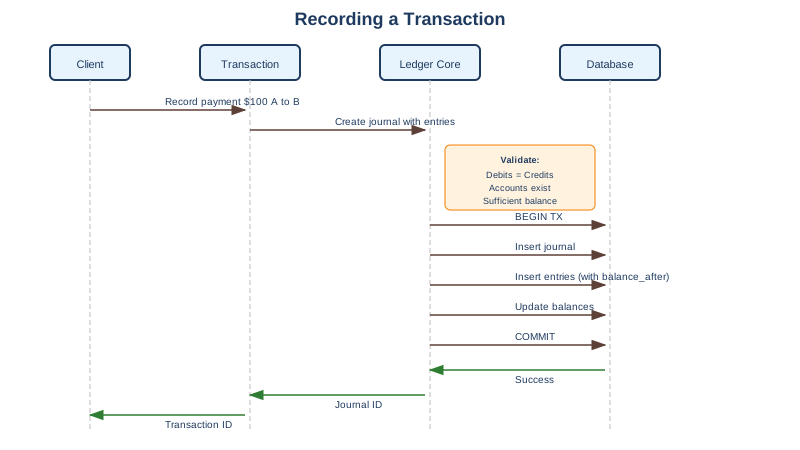
Payment Transaction Example
public class LedgerService {

    @Transactional(isolation = Isolation.SERIALIZABLE)
    public Journal recordPayment(PaymentRequest request) {
        // 1. Create journal
        Journal journal = Journal.builder()
            .referenceType("payment")
            .referenceId(request.getPaymentId())
            .description("Payment from " + request.getCustomerId())
            .effectiveDate(LocalDate.now())
            .build();

        // 2. Get accounts
        Account customerAccount = accountService.getCustomerAccount(request.getCustomerId());
        Account merchantAccount = accountService.getMerchantAccount(request.getMerchantId());
        Account feeAccount = accountService.getFeeRevenueAccount();

        long amount = request.getAmount();
        long fee = calculateFee(amount);
        long netAmount = amount - fee;

        // 3. Create entries (must balance to zero)
        List<LedgerEntry> entries = List.of(
            // Debit customer (decrease their liability to us)
            LedgerEntry.debit(customerAccount, amount, "Payment to " + request.getMerchantId()),

            // Credit merchant (increase our liability to them)
            LedgerEntry.credit(merchantAccount, netAmount, "Payment received"),

            // Credit fee revenue
            LedgerEntry.credit(feeAccount, fee, "Transaction fee")
        );

        // 4. Validate balance
        long totalDebits = entries.stream()
            .filter(e -> e.getType() == EntryType.DEBIT)
            .mapToLong(LedgerEntry::getAmount)
            .sum();
        long totalCredits = entries.stream()
            .filter(e -> e.getType() == EntryType.CREDIT)
            .mapToLong(LedgerEntry::getAmount)
            .sum();

        if (totalDebits != totalCredits) {
            throw new UnbalancedJournalException(totalDebits, totalCredits);
        }

        // 5. Validate sufficient balance
        for (LedgerEntry entry : entries) {
            if (entry.getType() == EntryType.DEBIT) {
                Account account = entry.getAccount();
                long currentBalance = getBalance(account);
                if (currentBalance < entry.getAmount() && !account.isAllowNegative()) {
                    throw new InsufficientBalanceException(account, currentBalance, entry.getAmount());
                }
            }
        }

        // 6. Calculate balance_after for each entry and persist
        journal.setEntries(entries);
        journal.setTotalDebits(totalDebits);
        journal.setTotalCredits(totalCredits);

        return journalRepository.save(journal);
    }
}
Balance Calculation
Real-Time Balance
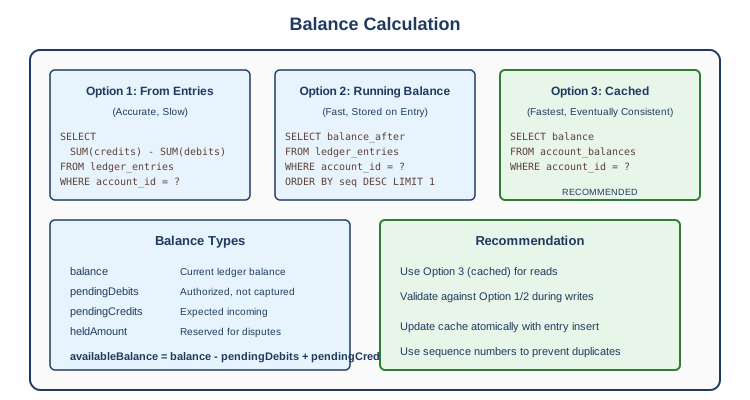
Balance Types
public class AccountBalance {
    private long balance;           // Current ledger balance
    private long pendingDebits;     // Authorized but not captured
    private long pendingCredits;    // Expected incoming
    private long heldAmount;        // Reserved for disputes, etc.

    public long getAvailableBalance() {
        return balance - pendingDebits + pendingCredits - heldAmount;
    }

    public long getTotalBalance() {
        return balance;
    }
}
Balance Cache Synchronization
// Update cache atomically with entry insert
@Transactional
public void postEntry(LedgerEntry entry) {
    // Insert entry
    entryRepository.save(entry);

    // Update balance cache atomically
    int delta = entry.getType() == EntryType.CREDIT ?
                entry.getAmount() : -entry.getAmount();

    balanceRepository.updateBalance(
        entry.getAccountId(),
        delta,
        entry.getId(),
        entry.getSequenceNum()
    );
}

// SQL for atomic update
UPDATE account_balances
SET balance = balance + :delta,
    last_entry_id = :entryId,
    last_entry_seq = :entrySeq,
    updated_at = NOW()
WHERE account_id = :accountId
AND last_entry_seq < :entrySeq;  -- Prevent duplicate updates
Immutability & Corrections
Reversal Pattern
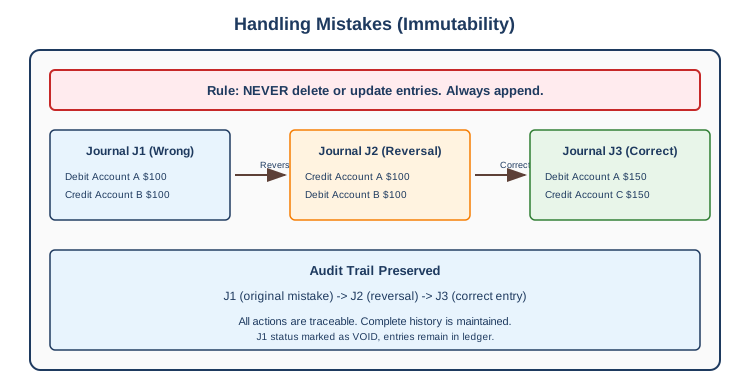
Void vs Reversal
public Journal voidJournal(UUID journalId, String reason) {
    Journal original = journalRepository.findById(journalId)
        .orElseThrow(() -> new JournalNotFoundException(journalId));

    if (original.getStatus() == JournalStatus.VOID) {
        throw new AlreadyVoidedException(journalId);
    }

    // Create reversing journal
    Journal reversal = Journal.builder()
        .referenceType("reversal")
        .referenceId(original.getId())
        .description("Reversal of " + original.getId() + ": " + reason)
        .effectiveDate(LocalDate.now())
        .build();

    // Reverse each entry
    List<LedgerEntry> reversedEntries = original.getEntries().stream()
        .map(entry -> LedgerEntry.builder()
            .accountId(entry.getAccountId())
            .entryType(entry.getEntryType().opposite())  // Debit ↔ Credit
            .amount(entry.getAmount())
            .currency(entry.getCurrency())
            .description("Reversal: " + entry.getDescription())
            .build())
        .collect(toList());

    reversal.setEntries(reversedEntries);

    // Mark original as void (status only, entries remain)
    original.setStatus(JournalStatus.VOID);
    journalRepository.save(original);

    return journalRepository.save(reversal);
}
Holds and Reserves
Hold Management
CREATE TABLE account_holds (
    id                  UUID PRIMARY KEY,
    account_id          UUID NOT NULL REFERENCES accounts(id),

    -- Hold details
    amount              BIGINT NOT NULL,
    currency            VARCHAR(3) NOT NULL,
    reason              VARCHAR(50) NOT NULL,   -- authorization, dispute, reserve
    reference_type      VARCHAR(50),
    reference_id        UUID,

    -- Status
    status              VARCHAR(20) NOT NULL,   -- active, released, captured

    -- Timing
    created_at          TIMESTAMP NOT NULL,
    expires_at          TIMESTAMP,
    released_at         TIMESTAMP,

    CONSTRAINT positive_hold CHECK (amount > 0)
);

CREATE INDEX idx_holds_account ON account_holds(account_id, status);
Hold Flow
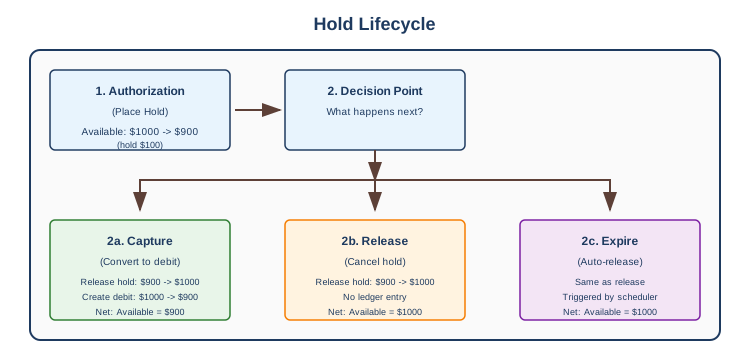
Multi-Currency Support
Currency Handling
public class MultiCurrencyLedger {

    // Each currency has separate accounts
    // User has: user_123_usd, user_123_eur, user_123_gbp

    public Journal recordCurrencyConversion(
            UUID userId,
            long sourceAmount,
            String sourceCurrency,
            long targetAmount,
            String targetCurrency,
            BigDecimal exchangeRate
    ) {
        Account sourceAccount = getAccountForCurrency(userId, sourceCurrency);
        Account targetAccount = getAccountForCurrency(userId, targetCurrency);
        Account fxGainsAccount = getFxGainsAccount();

        // Debit source currency
        // Credit target currency
        // Any difference goes to FX gains/losses

        return createJournal(List.of(
            LedgerEntry.debit(sourceAccount, sourceAmount, sourceCurrency,
                "FX conversion to " + targetCurrency),
            LedgerEntry.credit(targetAccount, targetAmount, targetCurrency,
                "FX conversion from " + sourceCurrency)
        ));
    }
}
Exchange Rate Tracking
CREATE TABLE exchange_rates (
    id                  UUID PRIMARY KEY,
    source_currency     VARCHAR(3) NOT NULL,
    target_currency     VARCHAR(3) NOT NULL,
    rate                DECIMAL(18, 8) NOT NULL,
    effective_at        TIMESTAMP NOT NULL,
    source              VARCHAR(50) NOT NULL,   -- Provider name

    UNIQUE(source_currency, target_currency, effective_at)
);
Reconciliation
Internal Reconciliation
-- Verify all journals balance
SELECT j.id, j.total_debits, j.total_credits,
       SUM(CASE WHEN e.entry_type = 'debit' THEN e.amount ELSE 0 END) as actual_debits,
       SUM(CASE WHEN e.entry_type = 'credit' THEN e.amount ELSE 0 END) as actual_credits
FROM journals j
JOIN ledger_entries e ON e.journal_id = j.id
GROUP BY j.id, j.total_debits, j.total_credits
HAVING SUM(CASE WHEN e.entry_type = 'debit' THEN e.amount ELSE 0 END) != j.total_debits
    OR SUM(CASE WHEN e.entry_type = 'credit' THEN e.amount ELSE 0 END) != j.total_credits;

-- Verify cached balances match entry trail
SELECT ab.account_id, ab.balance as cached,
       (SELECT SUM(CASE WHEN entry_type = 'credit' THEN amount ELSE -amount END)
        FROM ledger_entries WHERE account_id = ab.account_id) as calculated
FROM account_balances ab
WHERE ab.balance != (
    SELECT SUM(CASE WHEN entry_type = 'credit' THEN amount ELSE -amount END)
    FROM ledger_entries WHERE account_id = ab.account_id
);
External Reconciliation
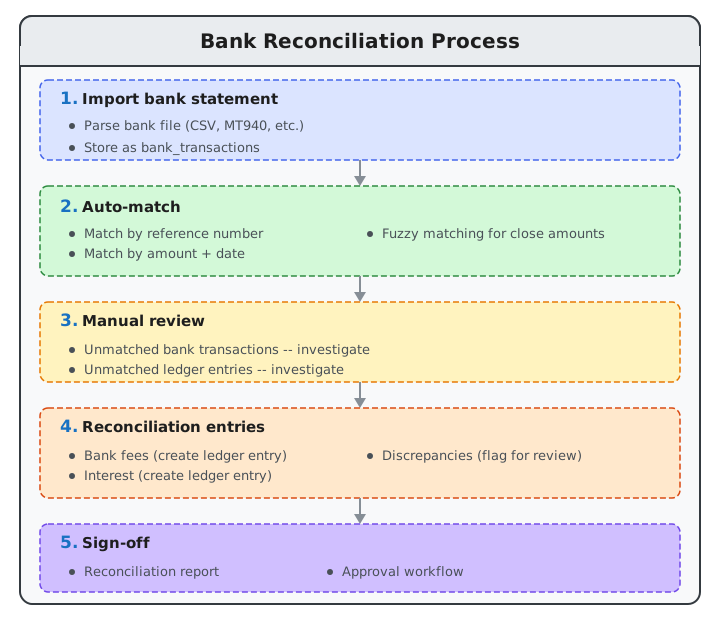
Scalability
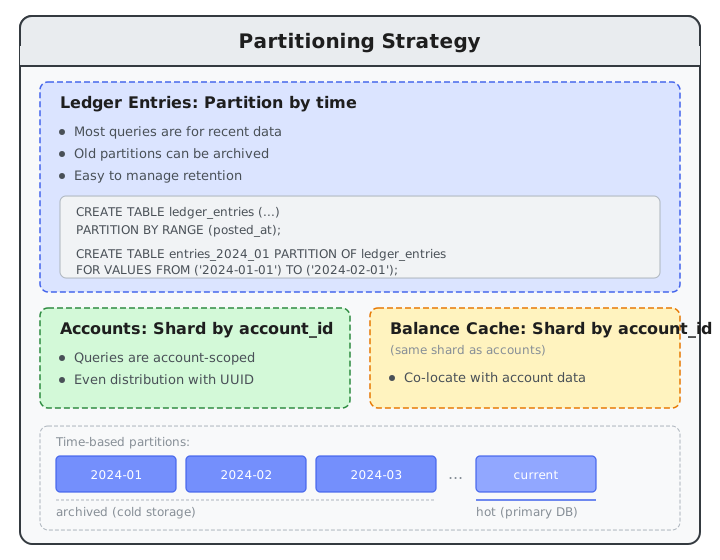
Partitioning Strategy
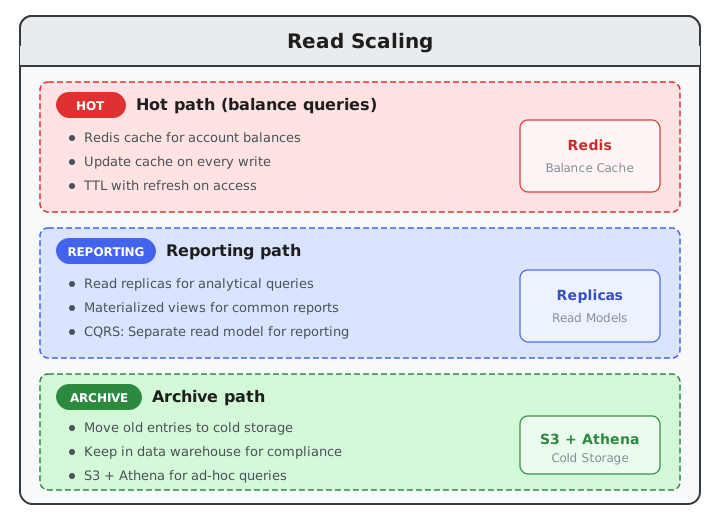
Read Scaling
Technology Choices
| Component | Technology Options |
|---|---|
| Primary Database | PostgreSQL (strong consistency) |
| Balance Cache | Redis |
| Event Streaming | Kafka (for audit events) |
| Time-Series Archive | TimescaleDB, ClickHouse |
| Cold Storage | S3 + Parquet |
| Reporting | PostgreSQL replicas, Snowflake |
Interview Discussion Points
- How do you ensure no money is lost or created?
-
Double-entry accounting, all journals must balance, database constraints
-
How do you handle concurrent balance updates?
-
Serializable transactions, optimistic locking, sequence numbers
-
How do you scale for high transaction volume?
-
Time-based partitioning, sharding, async balance cache updates
-
How do you handle mistakes without deleting data?
-
Reversing entries, void journals, complete audit trail
-
How do you ensure fast balance queries?
-
Cached balances in Redis, running balance on entries
-
How do you reconcile with external systems?
- Automated matching, reconciliation reports, discrepancy handling