Payment Processing System
Problem Statement
Design a payment processing system that can handle credit card transactions at scale, similar to Stripe's core payment infrastructure. The system should process payments reliably, handle failures gracefully, and ensure exactly-once processing.
Requirements
Functional Requirements
- Process credit/debit card payments
- Support multiple payment methods (cards, bank transfers, wallets)
- Handle authorization, capture, and settlement
- Support refunds and chargebacks
- Multi-currency support
- Provide transaction status and history
- Generate receipts and notifications
Non-Functional Requirements
- Availability: 99.99% uptime (payment is critical)
- Latency: < 500ms for authorization
- Throughput: 10,000+ TPS
- Consistency: Exactly-once processing (no duplicate charges)
- Security: PCI-DSS compliant
- Auditability: Complete audit trail
High-Level Architecture
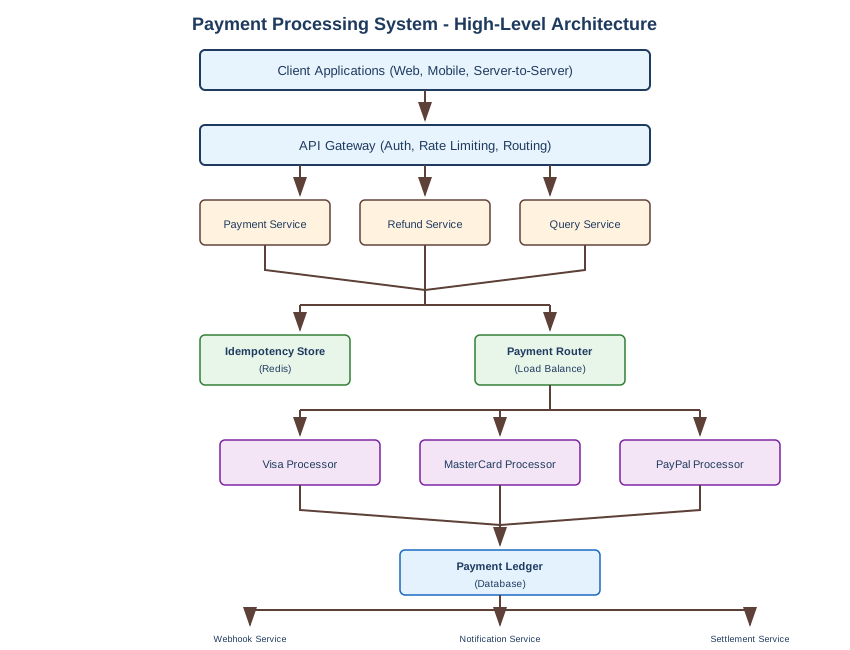
Core Components
1. API Gateway
- Authentication (API keys, OAuth)
- Rate limiting per merchant
- Request validation
- TLS termination
- Request/response logging
2. Payment Service
- Orchestrates payment flow
- Validates payment request
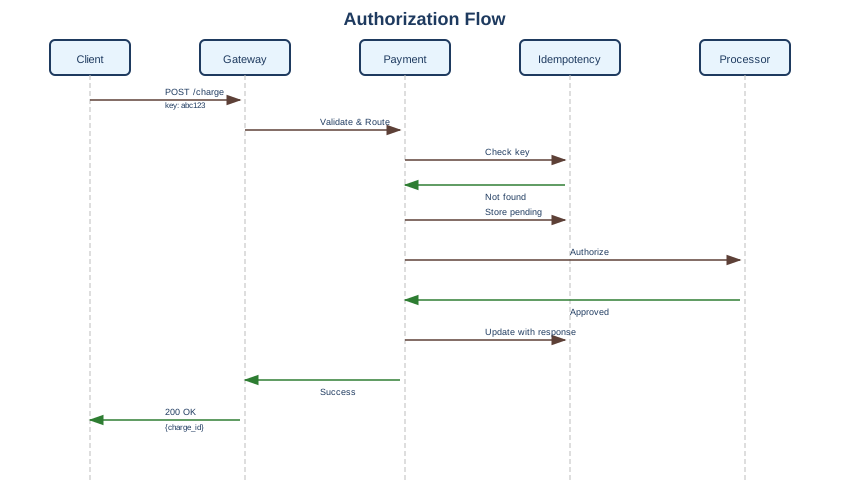
- Checks idempotency
- Routes to appropriate processor
- Handles retries and failures
3. Idempotency Store
- Stores idempotency keys with request hash
- TTL-based expiration (24-48 hours)
- Prevents duplicate charges on retries
- Returns cached response for duplicate requests
4. Payment Router
- Routes to appropriate payment processor
- Handles processor failover
- Load balances across processors
- Applies routing rules (cost optimization, success rate)
5. Payment Processors (Adapters)
- Abstracts different card networks (Visa, MasterCard, Amex)
- Handles protocol differences
- Manages credentials and encryption
- Implements circuit breakers
6. Payment Ledger
- Double-entry accounting
- Immutable transaction log
- Supports audit queries
- Handles currency conversion
7. Settlement Service
- Batches transactions for settlement
- Reconciles with processor reports
- Handles disputes and chargebacks
- Initiates fund transfers
Payment Flow
Authorization Flow
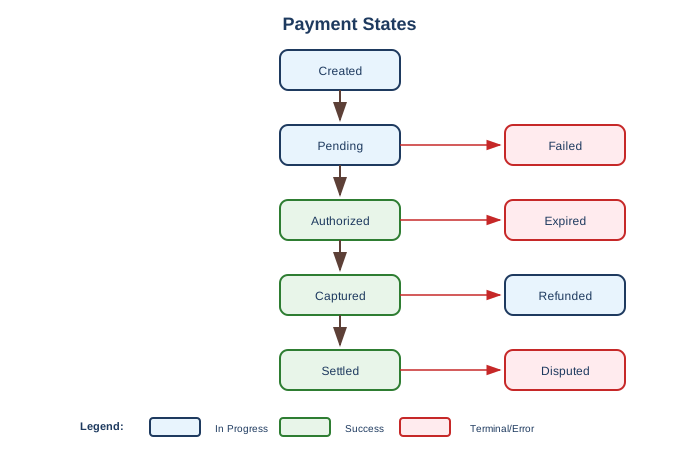
Payment States
Data Models
Payment (Primary Record)
CREATE TABLE payments (
    id                  UUID PRIMARY KEY,
    merchant_id         UUID NOT NULL,
    idempotency_key     VARCHAR(255),

    -- Amount
    amount              BIGINT NOT NULL,        -- In smallest currency unit (cents)
    currency            VARCHAR(3) NOT NULL,    -- ISO 4217

    -- Payment method
    payment_method_id   UUID,
    payment_method_type VARCHAR(50),            -- card, bank_transfer, wallet

    -- Card details (tokenized)
    card_last_four      VARCHAR(4),
    card_brand          VARCHAR(20),

    -- Status
    status              VARCHAR(20) NOT NULL,   -- pending, authorized, captured, failed
    failure_code        VARCHAR(50),
    failure_message     TEXT,

    -- Processor
    processor           VARCHAR(50),
    processor_tx_id     VARCHAR(255),

    -- Timestamps
    created_at          TIMESTAMP NOT NULL,
    authorized_at       TIMESTAMP,
    captured_at         TIMESTAMP,
    settled_at          TIMESTAMP,

    -- Metadata
    description         TEXT,
    metadata            JSONB,

    UNIQUE(merchant_id, idempotency_key)
);

CREATE INDEX idx_payments_merchant ON payments(merchant_id, created_at DESC);
CREATE INDEX idx_payments_status ON payments(status, created_at);
Ledger Entry (Double-Entry)
CREATE TABLE ledger_entries (
    id              UUID PRIMARY KEY,
    payment_id      UUID NOT NULL,
    entry_type      VARCHAR(50) NOT NULL,   -- authorization, capture, refund, settlement

    -- Double entry
    debit_account   VARCHAR(100) NOT NULL,
    credit_account  VARCHAR(100) NOT NULL,
    amount          BIGINT NOT NULL,
    currency        VARCHAR(3) NOT NULL,

    -- Audit
    created_at      TIMESTAMP NOT NULL,
    created_by      VARCHAR(100),

    FOREIGN KEY (payment_id) REFERENCES payments(id)
);
Idempotency Record
-- Redis structure (preferred for performance)
-- Key: idempotency:{merchant_id}:{idempotency_key}
-- Value: {
--     "request_hash": "sha256...",
--     "status": "pending|completed",
--     "payment_id": "uuid",
--     "response": { ... },
--     "created_at": "timestamp"
-- }
-- TTL: 24-48 hours
Key Design Decisions
1. Idempotency
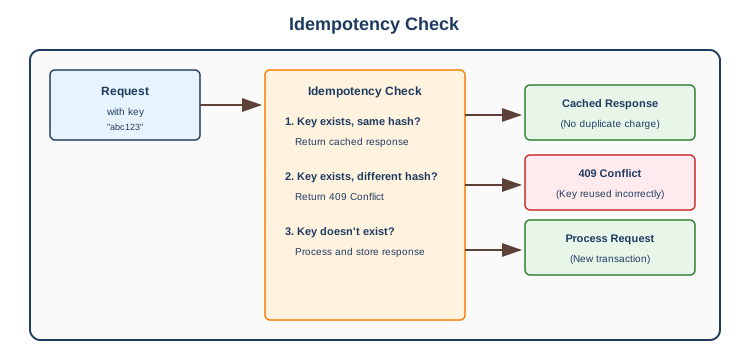
2. Two-Phase Payment (Auth + Capture)
Why separate authorization and capture?

Authorization (immediate):
- Validates card
- Checks funds availability
- Places hold on funds
- No money moves yet

Capture (can be delayed):
- Actually transfers funds
- Can be partial capture
- Can auto-expire if not captured

Use cases:
- E-commerce: Auth at checkout, capture at shipment
- Hotels: Auth at booking, capture at checkout
- Gas stations: Auth for max, capture actual amount
3. Processor Failover
public class PaymentRouter {
    private List<Processor> processors;  // Ordered by preference

    public AuthorizationResult authorize(PaymentRequest request) {
        for (Processor processor : processors) {
            if (!processor.isHealthy()) {
                continue;  // Circuit breaker open
            }

            try {
                return processor.authorize(request);
            } catch (ProcessorUnavailableException e) {
                // Try next processor
                continue;
            } catch (PaymentDeclinedException e) {
                // Don't retry declines
                throw e;
            }
        }
        throw new AllProcessorsUnavailableException();
    }
}
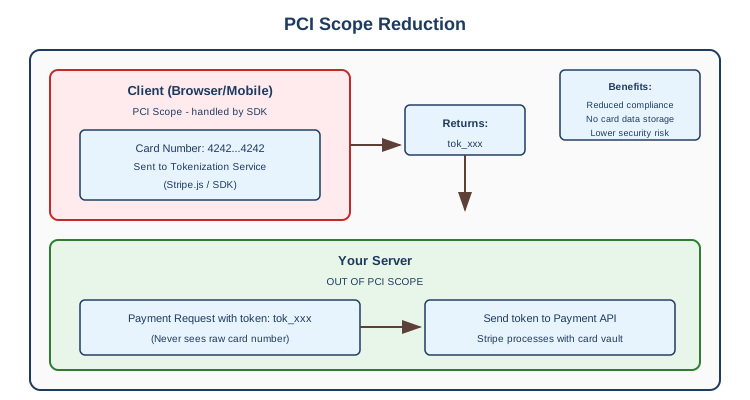
4. PCI Compliance
Handling Failures
Retry Strategy
public class PaymentRetryPolicy {
    // Retryable errors (network issues, timeouts)
    private static final Set<String> RETRYABLE = Set.of(
        "NETWORK_ERROR",
        "TIMEOUT",
        "PROCESSOR_UNAVAILABLE",
        "RATE_LIMITED"
    );

    // Non-retryable errors (business logic)
    private static final Set<String> NON_RETRYABLE = Set.of(
        "CARD_DECLINED",
        "INSUFFICIENT_FUNDS",
        "INVALID_CARD",
        "FRAUD_DETECTED"
    );

    public boolean shouldRetry(PaymentError error, int attempt) {
        if (NON_RETRYABLE.contains(error.getCode())) {
            return false;
        }
        return RETRYABLE.contains(error.getCode()) && attempt < MAX_RETRIES;
    }
}
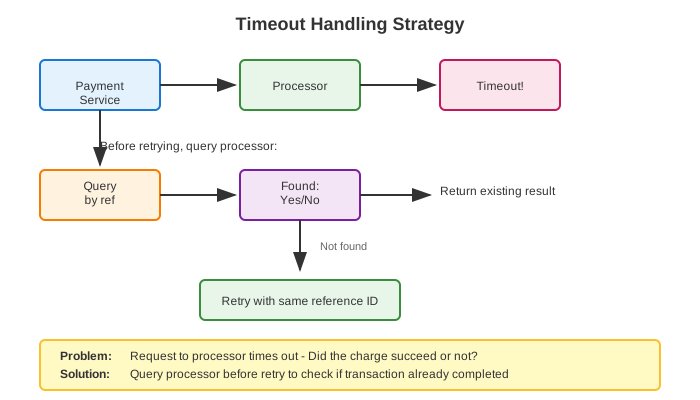
Timeout Handling
Scalability Considerations
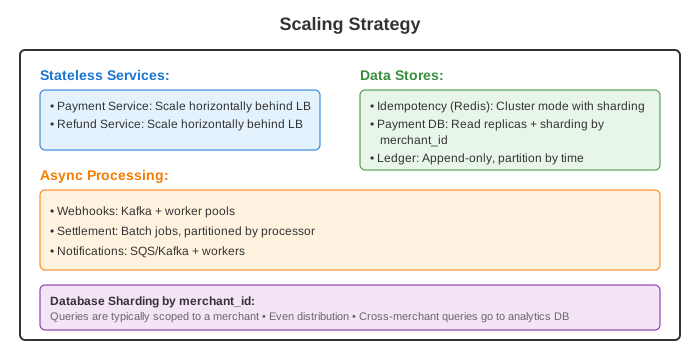
Horizontal Scaling
Database Sharding
Shard by merchant_id:
• Queries are typically scoped to a merchant
• Even distribution (large merchants may need dedicated shards)
• Cross-merchant queries go to analytics/reporting DB

Shard 0: merchant_id % 4 == 0
Shard 1: merchant_id % 4 == 1
Shard 2: merchant_id % 4 == 2
Shard 3: merchant_id % 4 == 3
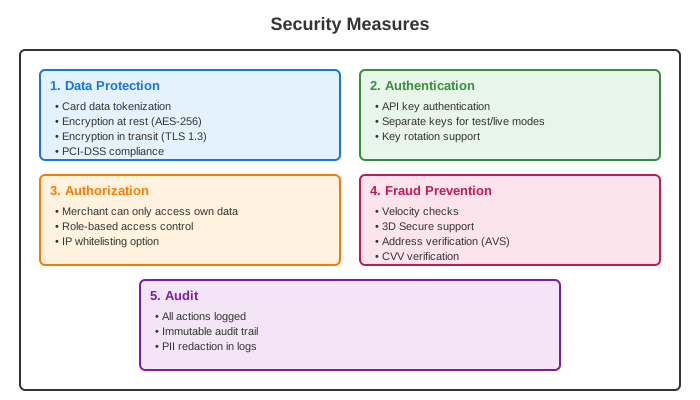
Security Considerations
Monitoring & Alerting
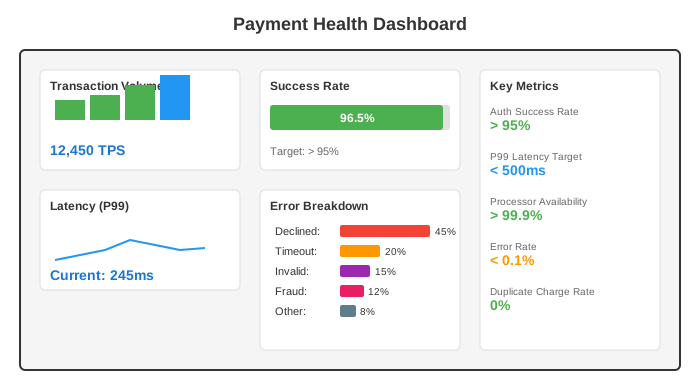
Key Metrics
| Metric | Target | Alert Threshold |
|---|---|---|
| Authorization success rate | > 95% | < 90% |
| P99 latency | < 500ms | > 1s |
| Processor availability | > 99.9% | < 99% |
| Error rate | < 0.1% | > 1% |
| Duplicate charge rate | 0% | > 0 |
Dashboards
Technology Choices
| Component | Technology Options |
|---|---|
| API Gateway | Kong, AWS API Gateway, Custom |
| Payment Service | Java/Kotlin, Go |
| Idempotency Store | Redis Cluster |
| Primary Database | PostgreSQL, CockroachDB |
| Message Queue | Kafka, SQS |
| Caching | Redis, Memcached |
| Monitoring | Datadog, Prometheus + Grafana |
| Secrets | HashiCorp Vault, AWS Secrets Manager |
Interview Discussion Points
- How do you ensure exactly-once processing?
-
Idempotency keys + atomic operations
-
How do you handle processor timeouts?
-
Query before retry, use unique reference IDs
-
How do you scale to handle Black Friday traffic?
-
Pre-scale, auto-scaling, graceful degradation
-
How do you handle multi-currency?
-
Store in original currency, convert at settlement
-
What happens if your database goes down?
-
Read replicas, multi-region, queue writes
-
How do you prevent fraud?
- ML models, velocity checks, 3DS, manual review