Webhook Delivery System
Problem Statement
Design a webhook delivery system that reliably delivers event notifications to customer endpoints. The system should guarantee at-least-once delivery, handle failures gracefully, and scale to millions of webhooks per day.
Requirements
Functional Requirements
- Deliver webhooks for various event types
- Support customer endpoint configuration
- Guarantee at-least-once delivery
- Retry failed deliveries with exponential backoff
- Support webhook signing for security
- Provide delivery logs and debugging tools
- Allow customers to filter events
- Support webhook replay/resend
Non-Functional Requirements
- Reliability: At-least-once delivery guarantee
- Latency: < 30 seconds for initial delivery attempt
- Scalability: Handle millions of webhooks/day
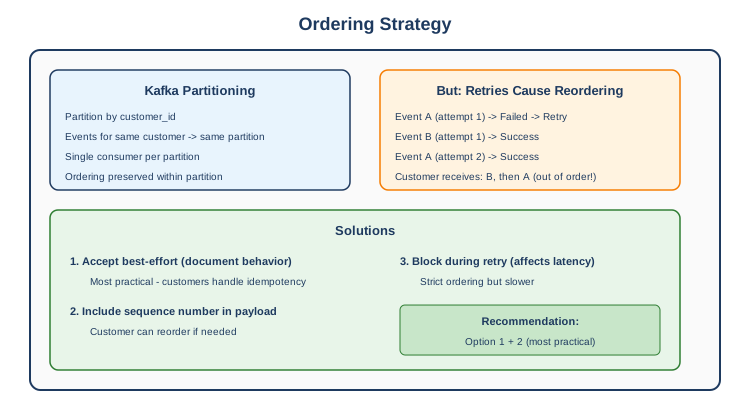
- Ordering: Best-effort ordering per resource
- Observability: Complete delivery audit trail
High-Level Architecture
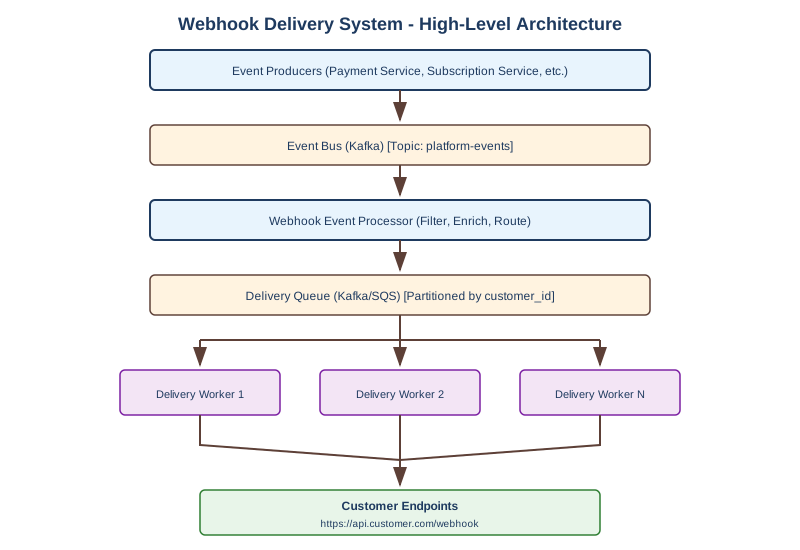
Core Components
1. Event Processor
- Consumes platform events
- Filters events per customer subscription
- Enriches event with additional data
- Routes to delivery queue
2. Webhook Config Service
- Manages endpoint configurations
- Stores event subscriptions
- Handles webhook secrets
- Manages enabled/disabled state
3. Delivery Workers
- Process delivery queue
- Make HTTP requests to endpoints
- Handle timeouts and errors
- Schedule retries
4. Retry Scheduler
- Manages retry backoff
- Re-enqueues failed webhooks
- Tracks retry attempts
- Handles dead letter queue
5. Delivery Log Service
- Records all delivery attempts
- Stores request/response details
- Enables debugging and replay
- Provides delivery analytics
Data Models
Webhook Endpoint Configuration
CREATE TABLE webhook_endpoints (
    id                  UUID PRIMARY KEY,
    customer_id         UUID NOT NULL,

    -- Endpoint details
    url                 VARCHAR(2048) NOT NULL,
    description         TEXT,

    -- Security
    secret              VARCHAR(255) NOT NULL,      -- For signing
    api_version         VARCHAR(20),                -- API version for payload format

    -- Subscriptions
    enabled_events      TEXT[] NOT NULL,            -- ['payment.succeeded', 'invoice.*']

    -- Status
    status              VARCHAR(20) DEFAULT 'enabled',  -- enabled, disabled, deleted

    -- Settings
    connect_timeout_ms  INT DEFAULT 5000,
    read_timeout_ms     INT DEFAULT 30000,

    -- Metadata
    metadata            JSONB,
    created_at          TIMESTAMP NOT NULL,
    updated_at          TIMESTAMP NOT NULL,

    FOREIGN KEY (customer_id) REFERENCES customers(id)
);

CREATE INDEX idx_webhook_endpoints_customer ON webhook_endpoints(customer_id, status);
Webhook Event
CREATE TABLE webhook_events (
    id                  UUID PRIMARY KEY,
    customer_id         UUID NOT NULL,
    endpoint_id         UUID NOT NULL,

    -- Event details
    event_type          VARCHAR(100) NOT NULL,      -- payment.succeeded
    event_id            UUID NOT NULL,              -- Original event ID
    payload             JSONB NOT NULL,
    api_version         VARCHAR(20),

    -- Delivery status
    status              VARCHAR(20) NOT NULL,       -- pending, delivered, failed, dead
    attempt_count       INT DEFAULT 0,
    max_attempts        INT DEFAULT 5,

    -- Scheduling
    created_at          TIMESTAMP NOT NULL,
    scheduled_at        TIMESTAMP NOT NULL,         -- Next attempt time
    delivered_at        TIMESTAMP,
    failed_at           TIMESTAMP,

    -- Idempotency
    idempotency_key     VARCHAR(255) UNIQUE,

    FOREIGN KEY (endpoint_id) REFERENCES webhook_endpoints(id)
);

CREATE INDEX idx_webhook_events_status ON webhook_events(status, scheduled_at);
CREATE INDEX idx_webhook_events_customer ON webhook_events(customer_id, created_at DESC);
Delivery Attempt Log
CREATE TABLE webhook_delivery_attempts (
    id                  UUID PRIMARY KEY,
    event_id            UUID NOT NULL,
    attempt_number      INT NOT NULL,

    -- Request
    request_url         VARCHAR(2048),
    request_headers     JSONB,
    request_body        TEXT,

    -- Response
    response_status     INT,
    response_headers    JSONB,
    response_body       TEXT,                       -- First 10KB

    -- Timing
    started_at          TIMESTAMP NOT NULL,
    completed_at        TIMESTAMP,
    duration_ms         INT,

    -- Result
    success             BOOLEAN NOT NULL,
    error_type          VARCHAR(50),                -- timeout, connection_error, http_error
    error_message       TEXT,

    FOREIGN KEY (event_id) REFERENCES webhook_events(id)
);

CREATE INDEX idx_delivery_attempts_event ON webhook_delivery_attempts(event_id, attempt_number);
Webhook Payload
Standard Payload Format
{
    "id": "evt_1234567890",
    "object": "event",
    "api_version": "2024-01-01",
    "created": 1640000000,
    "type": "payment.succeeded",
    "livemode": true,
    "pending_webhooks": 2,
    "request": {
        "id": "req_abc123",
        "idempotency_key": "key_xyz789"
    },
    "data": {
        "object": {
            "id": "pay_123",
            "object": "payment",
            "amount": 10000,
            "currency": "usd",
            "status": "succeeded",
            "customer": "cus_456"
        },
        "previous_attributes": {
            "status": "pending"
        }
    }
}
Signature Generation
public class WebhookSigner {

    public static String sign(String payload, String secret, long timestamp) {
        String signedPayload = timestamp + "." + payload;

        Mac mac = Mac.getInstance("HmacSHA256");
        SecretKeySpec keySpec = new SecretKeySpec(secret.getBytes(), "HmacSHA256");
        mac.init(keySpec);

        byte[] hash = mac.doFinal(signedPayload.getBytes(UTF_8));
        String signature = "v1=" + bytesToHex(hash);

        return signature;
    }

    public static String buildHeader(String payload, String secret) {
        long timestamp = System.currentTimeMillis() / 1000;
        String signature = sign(payload, secret, timestamp);

        return "t=" + timestamp + ",v1=" + signature;
    }
}

// HTTP Headers sent:
// Stripe-Signature: t=1640000000,v1=abc123def456...
// Or custom:
// X-Webhook-Signature: t=1640000000,v1=abc123def456...
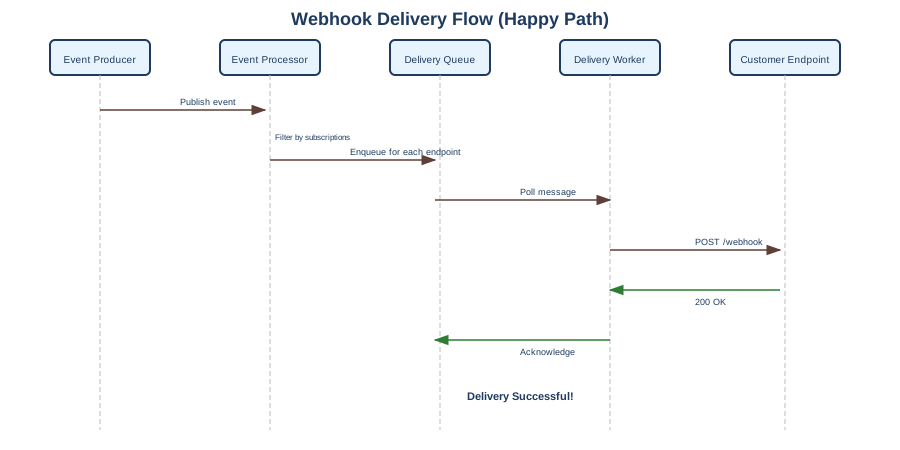
Delivery Flow
Happy Path
Retry Flow
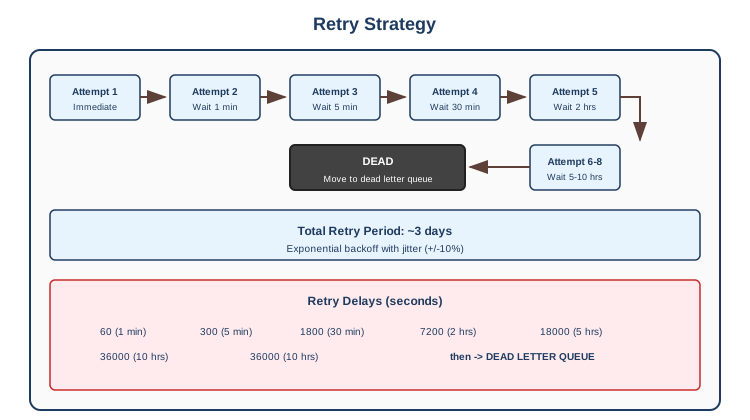
public class RetryStrategy {

    private static final int[] RETRY_DELAYS_SECONDS = {
        60,         // 1 minute
        300,        // 5 minutes
        1800,       // 30 minutes
        7200,       // 2 hours
        18000,      // 5 hours
        36000,      // 10 hours
        36000       // 10 hours
    };

    public Instant getNextRetryTime(int attemptCount) {
        if (attemptCount >= RETRY_DELAYS_SECONDS.length) {
            return null;  // No more retries
        }

        int delay = RETRY_DELAYS_SECONDS[attemptCount];
        // Add jitter (±10%)
        delay = delay + (int)(delay * (Math.random() * 0.2 - 0.1));

        return Instant.now().plusSeconds(delay);
    }
}
Delivery Worker
Worker Implementation
@Service
public class WebhookDeliveryWorker {

    private final WebhookEventRepository eventRepository;
    private final DeliveryAttemptRepository attemptRepository;
    private final HttpClient httpClient;
    private final RetryStrategy retryStrategy;

    @Scheduled(fixedDelay = 100)  // Poll every 100ms
    public void processDeliveryQueue() {
        List<WebhookEvent> events = eventRepository.findPendingEvents(
            Instant.now(),
            100  // Batch size
        );

        for (WebhookEvent event : events) {
            processEvent(event);
        }
    }

    private void processEvent(WebhookEvent event) {
        WebhookEndpoint endpoint = endpointRepository.findById(event.getEndpointId());

        if (endpoint.getStatus() != EndpointStatus.ENABLED) {
            event.setStatus(EventStatus.SKIPPED);
            eventRepository.save(event);
            return;
        }

        DeliveryResult result = attemptDelivery(event, endpoint);

        if (result.isSuccess()) {
            handleSuccess(event, result);
        } else {
            handleFailure(event, result);
        }
    }

    private DeliveryResult attemptDelivery(WebhookEvent event, WebhookEndpoint endpoint) {
        String payload = buildPayload(event);
        String signature = WebhookSigner.buildHeader(payload, endpoint.getSecret());

        DeliveryAttempt attempt = DeliveryAttempt.builder()
            .eventId(event.getId())
            .attemptNumber(event.getAttemptCount() + 1)
            .requestUrl(endpoint.getUrl())
            .requestBody(payload)
            .startedAt(Instant.now())
            .build();

        try {
            HttpResponse response = httpClient.post(endpoint.getUrl())
                .header("Content-Type", "application/json")
                .header("X-Webhook-Signature", signature)
                .header("X-Webhook-ID", event.getId().toString())
                .body(payload)
                .connectTimeout(endpoint.getConnectTimeoutMs())
                .readTimeout(endpoint.getReadTimeoutMs())
                .execute();

            attempt.setResponseStatus(response.getStatusCode());
            attempt.setResponseBody(truncate(response.getBody(), 10240));
            attempt.setCompletedAt(Instant.now());
            attempt.setSuccess(response.getStatusCode() >= 200 && response.getStatusCode() < 300);

            if (!attempt.isSuccess()) {
                attempt.setErrorType("http_error");
                attempt.setErrorMessage("HTTP " + response.getStatusCode());
            }

            return DeliveryResult.fromAttempt(attempt);

        } catch (ConnectTimeoutException e) {
            attempt.setErrorType("connect_timeout");
            attempt.setErrorMessage(e.getMessage());
            attempt.setSuccess(false);
            return DeliveryResult.failed(attempt, e);

        } catch (ReadTimeoutException e) {
            attempt.setErrorType("read_timeout");
            attempt.setErrorMessage(e.getMessage());
            attempt.setSuccess(false);
            return DeliveryResult.failed(attempt, e);

        } catch (Exception e) {
            attempt.setErrorType("connection_error");
            attempt.setErrorMessage(e.getMessage());
            attempt.setSuccess(false);
            return DeliveryResult.failed(attempt, e);

        } finally {
            attemptRepository.save(attempt);
        }
    }

    private void handleSuccess(WebhookEvent event, DeliveryResult result) {
        event.setStatus(EventStatus.DELIVERED);
        event.setDeliveredAt(Instant.now());
        event.setAttemptCount(event.getAttemptCount() + 1);
        eventRepository.save(event);
    }

    private void handleFailure(WebhookEvent event, DeliveryResult result) {
        event.setAttemptCount(event.getAttemptCount() + 1);

        Instant nextRetry = retryStrategy.getNextRetryTime(event.getAttemptCount());

        if (nextRetry != null) {
            event.setStatus(EventStatus.PENDING);
            event.setScheduledAt(nextRetry);
        } else {
            event.setStatus(EventStatus.DEAD);
            event.setFailedAt(Instant.now());
            // Move to dead letter queue
            deadLetterService.enqueue(event);
        }

        eventRepository.save(event);
    }
}
Endpoint Health Management
Circuit Breaker
public class EndpointCircuitBreaker {

    private static final int FAILURE_THRESHOLD = 10;
    private static final Duration OPEN_DURATION = Duration.ofMinutes(30);

    @Cacheable("endpoint-health")
    public EndpointHealth getHealth(UUID endpointId) {
        // Check recent delivery attempts
        int recentFailures = attemptRepository.countRecentFailures(
            endpointId,
            Instant.now().minus(Duration.ofHours(1))
        );

        if (recentFailures >= FAILURE_THRESHOLD) {
            return EndpointHealth.UNHEALTHY;
        }

        return EndpointHealth.HEALTHY;
    }

    // When circuit is open:
    // - Queue webhooks but delay delivery
    // - Periodically test with single webhook
    // - Close circuit when test succeeds
}
Automatic Endpoint Disabling
public void checkEndpointHealth(WebhookEndpoint endpoint) {
    // Get failure rate over last 24 hours
    DeliveryStats stats = statsService.getStats(endpoint.getId(), Duration.ofHours(24));

    if (stats.getFailureRate() > 0.95 && stats.getTotalAttempts() > 100) {
        // 95%+ failure rate with significant volume
        endpoint.setStatus(EndpointStatus.DISABLED);
        endpoint.setDisabledReason("High failure rate: " + stats.getFailureRate());

        // Notify customer
        notificationService.sendEndpointDisabledNotification(endpoint);

        endpointRepository.save(endpoint);
    }
}
Event Filtering & Routing
Subscription Matching
public class EventRouter {

    public List<WebhookEndpoint> findMatchingEndpoints(PlatformEvent event) {
        List<WebhookEndpoint> endpoints = endpointRepository
            .findByCustomerId(event.getCustomerId());

        return endpoints.stream()
            .filter(e -> e.getStatus() == EndpointStatus.ENABLED)
            .filter(e -> matchesEventType(e.getEnabledEvents(), event.getType()))
            .collect(toList());
    }

    private boolean matchesEventType(List<String> patterns, String eventType) {
        for (String pattern : patterns) {
            if (pattern.equals("*")) {
                return true;  // All events
            }
            if (pattern.endsWith(".*")) {
                // Wildcard: payment.* matches payment.succeeded, payment.failed
                String prefix = pattern.substring(0, pattern.length() - 1);
                if (eventType.startsWith(prefix)) {
                    return true;
                }
            }
            if (pattern.equals(eventType)) {
                return true;
            }
        }
        return false;
    }
}
Ordering Guarantees
Best-Effort Ordering
Customer-Facing Features
Webhook Logs API
// GET /v1/webhooks/events?limit=10
{
    "object": "list",
    "data": [
        {
            "id": "evt_123",
            "type": "payment.succeeded",
            "created": 1640000000,
            "status": "delivered",
            "endpoint_id": "we_456",
            "attempt_count": 1,
            "next_retry_at": null,
            "last_attempt": {
                "status": 200,
                "response_time_ms": 150,
                "attempted_at": 1640000001
            }
        }
    ]
}
Webhook Test & Replay
// Test endpoint with sample payload
@PostMapping("/v1/webhook_endpoints/{id}/test")
public TestResult testEndpoint(@PathVariable UUID id) {
    WebhookEndpoint endpoint = endpointRepository.findById(id);

    // Create test event
    WebhookEvent testEvent = WebhookEvent.builder()
        .endpointId(id)
        .eventType("test.webhook")
        .payload(createTestPayload())
        .build();

    DeliveryResult result = deliveryService.attemptDelivery(testEvent, endpoint);

    return TestResult.builder()
        .success(result.isSuccess())
        .statusCode(result.getStatusCode())
        .responseBody(result.getResponseBody())
        .durationMs(result.getDurationMs())
        .build();
}

// Replay failed webhook
@PostMapping("/v1/webhook_events/{id}/retry")
public WebhookEvent retryEvent(@PathVariable UUID id) {
    WebhookEvent event = eventRepository.findById(id);

    event.setStatus(EventStatus.PENDING);
    event.setScheduledAt(Instant.now());

    return eventRepository.save(event);
}
Scalability
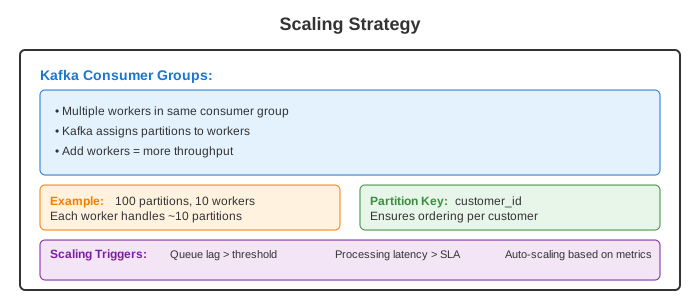
Horizontal Scaling
Batching for High-Volume Customers
// For customers with many endpoints or high event volume
public void processBatch(List<WebhookEvent> events) {
    // Group by endpoint URL (allows connection reuse)
    Map<String, List<WebhookEvent>> byEndpoint = events.stream()
        .collect(groupingBy(e -> e.getEndpoint().getUrl()));

    for (Map.Entry<String, List<WebhookEvent>> entry : byEndpoint.entrySet()) {
        try (HttpConnection conn = connectionPool.get(entry.getKey())) {
            for (WebhookEvent event : entry.getValue()) {
                deliverWithConnection(event, conn);
            }
        }
    }
}
Monitoring
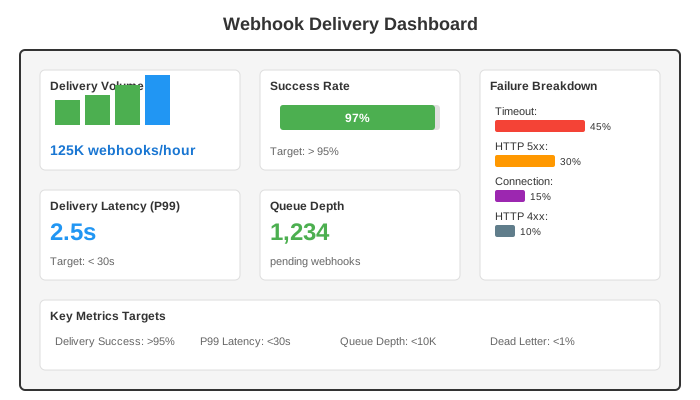
Key Metrics
| Metric | Description | Alert Threshold |
|---|---|---|
| Delivery success rate | % successful first attempts | < 95% |
| P99 delivery latency | Time from event to delivery | > 30s |
| Queue depth | Pending webhooks | > 10K |
| Retry rate | % of events needing retry | > 10% |
| Dead letter rate | % of events failing all retries | > 1% |
Dashboard
Technology Choices
| Component | Technology Options |
|---|---|
| Event Bus | Kafka, AWS SNS |
| Delivery Queue | Kafka, SQS, RabbitMQ |
| Database | PostgreSQL |
| HTTP Client | OkHttp, Apache HttpClient |
| Scheduling | Kafka, SQS delayed messages |
Interview Discussion Points
- How do you guarantee at-least-once delivery?
-
Persistent queue, ack after success, retries with backoff
-
How do you handle slow/unresponsive endpoints?
-
Timeouts, circuit breaker, endpoint health monitoring
-
How do you ensure ordering?
-
Kafka partitioning, best-effort ordering, sequence numbers
-
How do you handle malicious endpoints?
-
IP blocklist, rate limiting outbound, resource limits
-
How do you scale for millions of webhooks?
-
Horizontal scaling, partitioning, connection pooling
-
How do you debug delivery failures?
- Complete delivery logs, request/response capture, replay feature