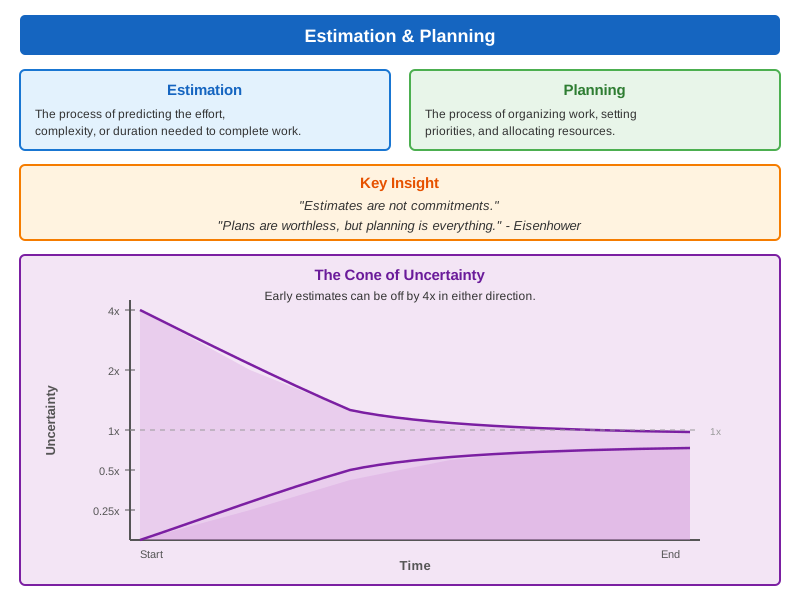
Estimation & Planning
Definition
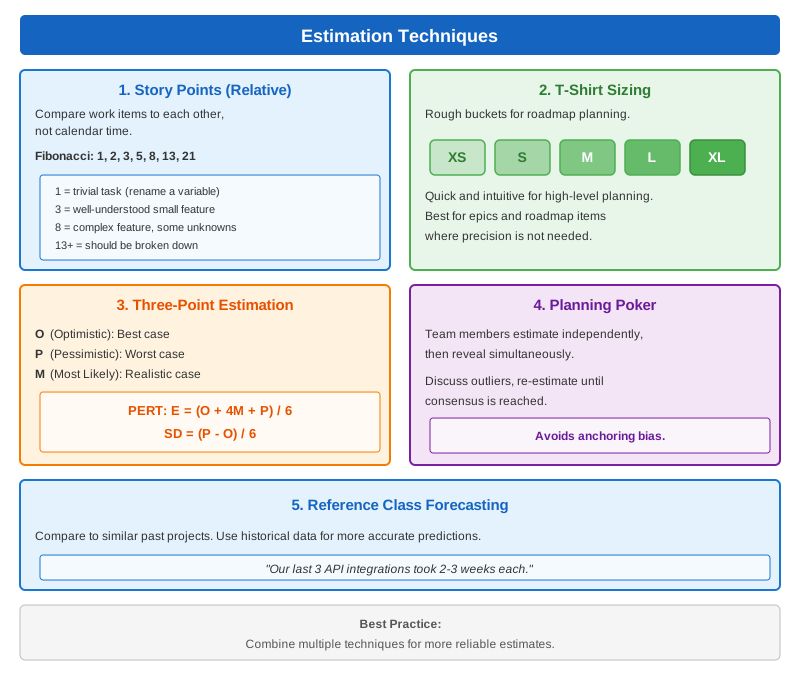
Estimation Techniques
Breaking Down Work
// EPIC → FEATURE → STORY → TASK

// EPIC: Large initiative (weeks to months)
// "Implement user authentication system"

// FEATURE: Deliverable piece of functionality (days to weeks)
// "Password-based login"
// "OAuth integration"
// "Two-factor authentication"

// USER STORY: Small user-facing value (hours to days)
// "As a user, I can log in with email and password"
// "As a user, I can reset my forgotten password"
// "As a user, I can enable 2FA for my account"

// TASK: Technical work items (hours)
// - Create login API endpoint
// - Implement password hashing
// - Build login form UI
// - Write unit tests
// - Add rate limiting

// Good story characteristics (INVEST):
// Independent - Can be delivered alone
// Negotiable - Details can be discussed
// Valuable - Delivers user value
// Estimable - Can be sized
// Small - Fits in a sprint
// Testable - Has clear acceptance criteria
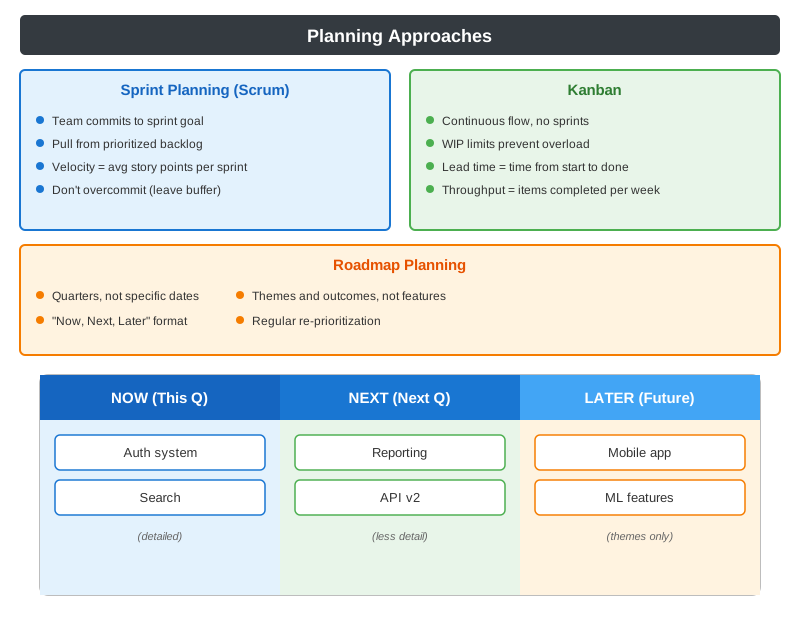
Planning Approaches
Handling Uncertainty
// Strategies for dealing with unknowns

// 1. SPIKE: Time-boxed research
// "Spend 2 days investigating OAuth providers"
// - Has clear question to answer
// - Fixed duration
// - Output: findings/recommendation, not code

// 2. BUFFER: Add contingency
// Don't plan at 100% capacity
// 70-80% planned, 20-30% buffer

Sprint capacity: 40 story points
Planned work:   30 story points  (75%)
Buffer:         10 story points  (25%)

// 3. RANGES instead of point estimates
"This will take 2-4 weeks"
// Not: "This will take 3 weeks"

// 4. CONFIDENCE LEVELS
"70% confident we'll finish by end of sprint"
"90% confident we'll finish within 2 sprints"

// 5. PROGRESSIVE ELABORATION
// Early: "Q2 - Auth system (L)"
// Later: "March - Password auth (M), OAuth (M)"
// Now:   "Sprint 7 - Login endpoint (3), Reset password (5)"

// 6. COMMUNICATE ASSUMPTIONS
// "Estimate assumes:
//  - API docs are accurate
//  - No major scope changes
//  - One developer full-time"
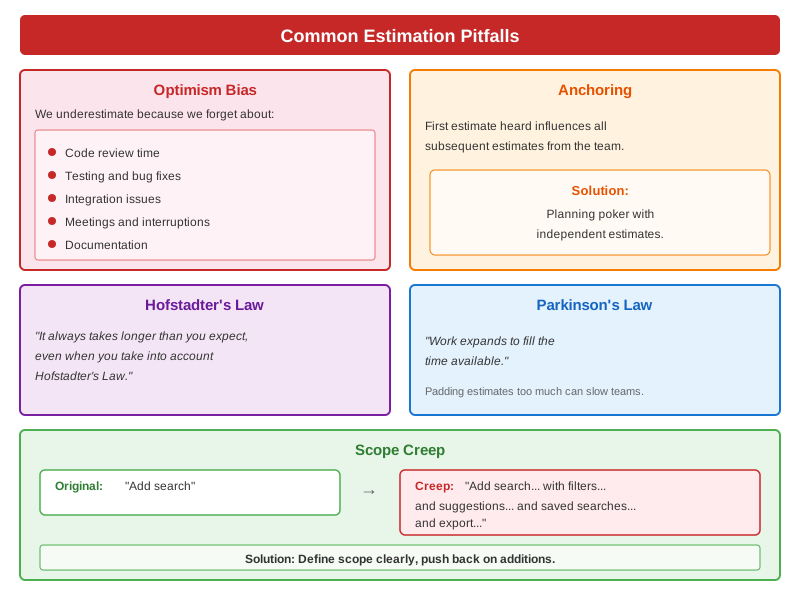
Common Estimation Pitfalls
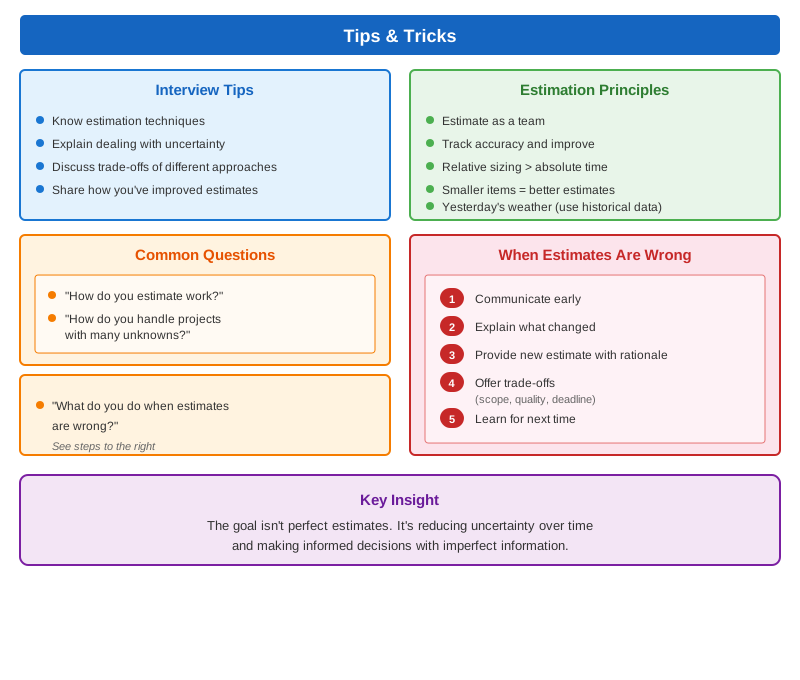
Tips & Tricks